West and Central Africa unite to stop polio outbreak
19 Country Synchronized Polio Campaign
Joint GPEI / IFRC Factsheet – March 2010
Dr Sambo urges countries to address TB resistance to medicines
Malabo (Equatorial Guinea) 31 August 2010 – WHO Regional Director for Africa, Dr Luis Sambo, has urged countries in the Region to take concrete steps to check the emergence and spread of multidrug-resistant tuberculosis (MDR – TB) and extensively resistant TB (XDR-TB), high priority TB complications which continue to pose serious health threats to people in the African Region.
WHO, Ministers To Discuss Humanitarian Crisis In Southern Africa
Health Ministers from ten southern African countries and senior officials of the World Health Organization meet from 26 - 28 August in Harare, Zimbabwe, to examine the response of the health sector to the acute and large-scale humanitarian crisis facing the region.
Meningitis vaccination campaign to reach 300 million by 2016
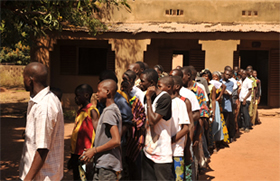
Chad has launched a mass campaign to vaccinate nearly 2 million people against meningitis A, the primary cause of epidemic meningitis in sub-Saharan Africa. This is part of a multi-year immunization campaign covering the 25 countries of the African meningitis belt. Cameroon and Nigeria also began campaigns last week, with Mali and Niger completing the campaigns which they began last year.
Health needs from humanitarian emergencies at an all-time high
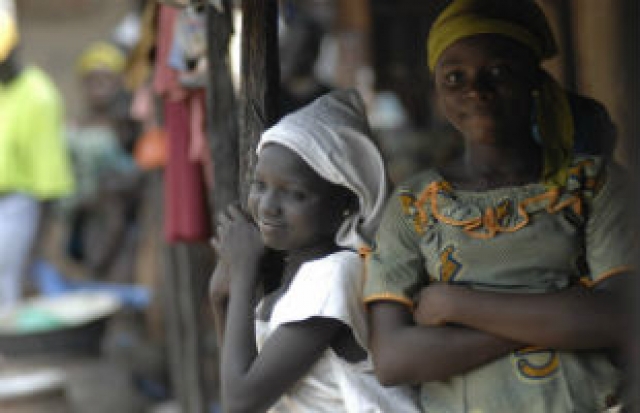 05 April 2016 -WHO and partners need US$ 2.2 billion to provide lifesaving health services to more than 79 million people in more than 30 countries facing protracted emergencies this year, according to WHO’s Humanitarian Response Plans 2016 launched today.
WHO encourages countries to act now to reduce deaths from viral hepatitis
20 July 2016, Geneva - Ahead of World Hepatitis Day, 28 July 2016, WHO is urging countries to take rapid action to improve knowledge about the disease, and to increase access to testing and treatment services. Today, only 1 in 20 people with viral hepatitis know they have it. And just 1 in 100 with the disease is being treated.
Tanzanian Prime Minister Calls for Greater Government-Private Sector Cooperation in Malaria Control
Arusha, 19 November -- Tanzania's Prime Minister, Frederick Sumaye, on Tuesday called for increased government-private sector cooperation in malaria control in Africa.
Officiallly opening the Third Multilateral Initiative on Malaria Pan-African Conference in Arusha, Mr Sumaye said African governments alone could not control the scourge of malaria on the continent.
Poverty and health : WHO proposes a strategy for the African region
On the basis of the clear linkage between poverty and health, the WHO Regional Office for Africa has developed a strategy which explores the potential contribution of health to poverty reduction, economic growth and human development.
The overall objective of the strategy is to have the health sector, given its comparative advantage, contribute to poverty reduction by improving health. The strategy is to be discussed by the 52nd session of the WHO Regional Committee for Africa scheduled for 8-12 October in Brazzaville, Congo.
It aims to :
52nd session of WHO Regional Committee to take place in Harare
Harare -- The 52nd session of the WHO Regional Committee for Africa (RC52) is scheduled to take place from 8 to 12 October in Harare, Zimbabwe.
This year's meeting of the Regional Committee, WHO's Governing Body at the Regional level, will discuss a report on the work of WHO in the African Region during the 2000-2001 biennium, to be presented by the Regional Director, Dr Ebrahim M. Samba,
Video: The Mothers of Africa
Women's health is recognized as a human rights issue and should be promoted and defended as such. Women in Africa represent slightly over 50% of the continent's human resources and so women's health has huge implications for the Region's development. Focusing in particular on the unacceptably high level of maternal mortality in sub-Saharan Africa, the report calls for a fundamental rethinking of approaches to improving women's health informed by an understanding of the sociocultural determinants that are so important in shaping it.