African First Ladies Unite to End Polio
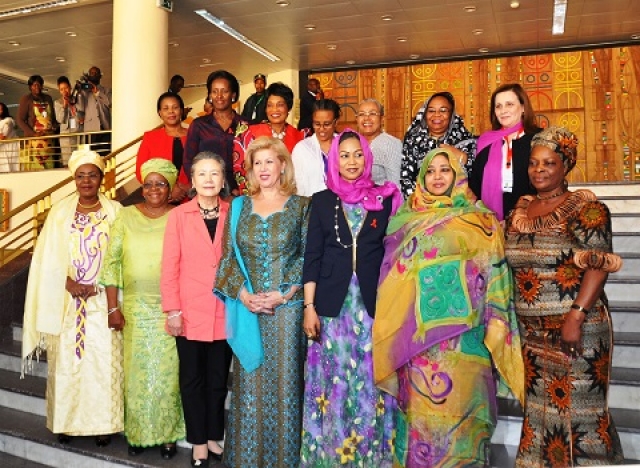
The African Union First Ladies made a call for action on 31 January 2015 for continent-wide efforts, leadership and political commitment to kick polio out of Africa. The First Ladies agreed to advocate for a polio-free Africa as a top priority for their governments in 2015 at an event jointly organized by the Organization of African First Ladies Against HIV/AIDS (OAFLA), Centers for Disease Control (CDC) and the Global Polio Eradication Initiative (WHO, Rotary, CDC and UNICEF) at the African Union Headquarters in Addis Ababa.
Increasing community engagement for Ebola on-air
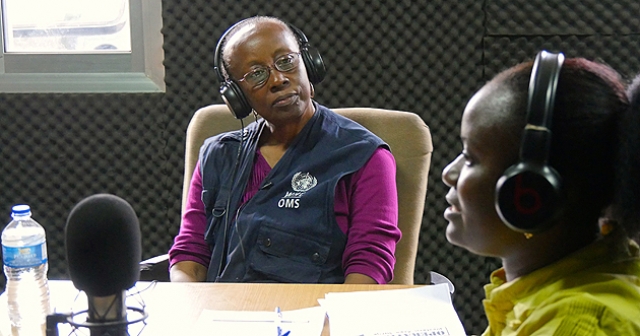
WHO’s social mobilization team is using radio to reach communities with information about how to prevent the spread of Ebola in Sierra Leone.
Reaching communities not just physically, but psychologically and emotionally as well.
“My work as a social mobilizer is to pass on key messages to convince people to stop the cultural and traditional practices that are fuelling the spread of Ebola,” says Zainab Akiwumi, who leads the WHO social mobilization team in Sierra Leone.
Using Data to Save Lives
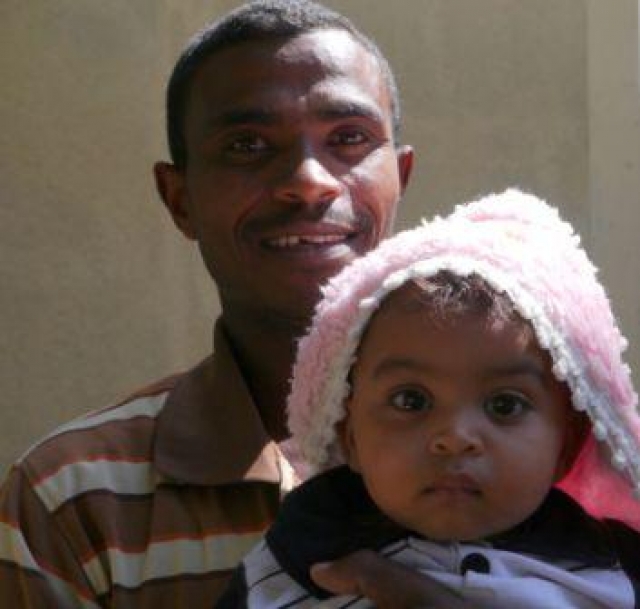
Every day, approximately 35 women die in Ethiopia from preventable causes related to pregnancy and childbirth. Although maternal deaths have declined by 70% in Ethiopia between 1990 and 2013, maternal mortality remains unacceptably high and more efforts are needed to meet the Millennium Development Goal 5 target of 267 per 100,000 live births. Access to antenatal care in pregnancy, skilled care during childbirth, and care and support in the weeks after childbirth are what makes the difference between life and death.
WHO and Partners Come Together to Reinforce Ebola Preparedness in High Risk Countries
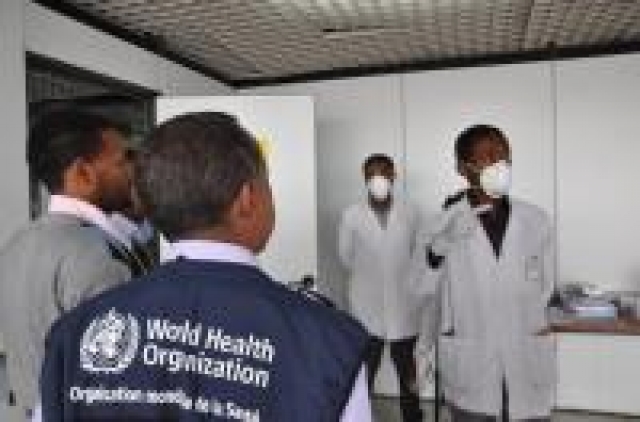
The evolving Ebola Virus Disease (EVD) outbreak highlights the risk of cases being imported into unaffected countries. WHO’s preparedness activities aim to ensure that all countries are ready to effectively and safely detect, investigate and report potential EVD cases, and to mount an effective response. Ethiopia is among the high priority countries for WHO and partners’ support due to the volume of travellers arriving to and transiting in Addis Ababa every day.
South Sudan Inches Closer to Eliminating Guinea Worm Disease
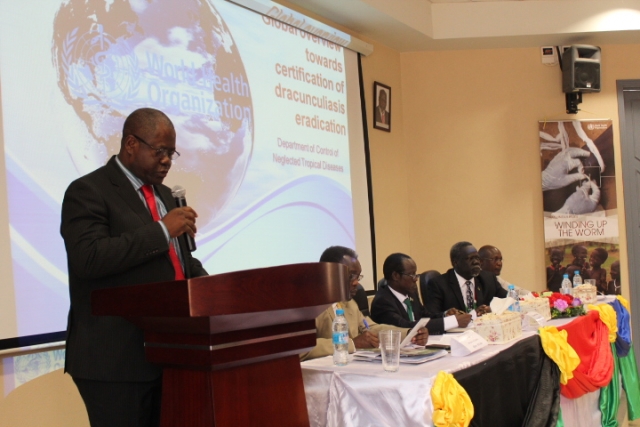
“Imagine living with a snake-like worm about a metre long in your body?” It sounds unthinkable, but that is the painful reality that people affected by Guinea Worm Disease (GWD) have to live with. The question was posed by State Minister of Health for Western Equatoria, Dr. John Bona during the ninth annual review meeting of the Guinea Worm Programme in South Sudan, held under the theme: “Together for a final push to eliminate Guinea Worm Disease in South Sudan.”
Stopping WPV Importations: Kaduna vaccinates over 43,000 children on Transit
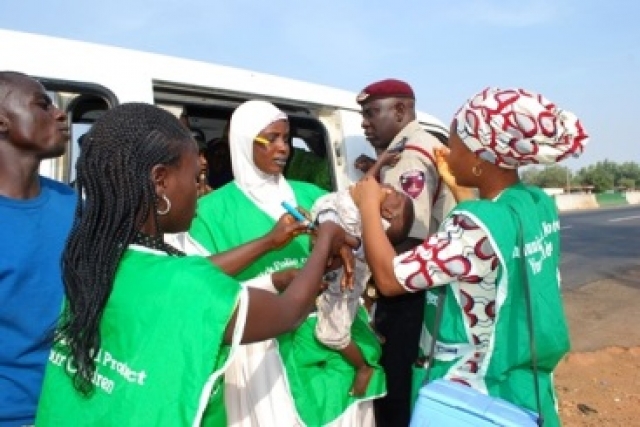
Abuja, Nigeria 02 February, 2015 - In Kaduna, 43,201 children were vaccinated on highway check points, markets and motor parks during the January 2015 polio supplemental immunization days conducted between 24-27 January across the 23 Local Government Areas (LGAs) to avoid importation and exportation of polio viruses in the state. This activity is in line with the state’s resolve to remain polio free and working in tandem with the most recent Polio Expert Review Committee’s (ERC) recommendation.
Zimbabwe launches Accelerated VMMC strategic plan
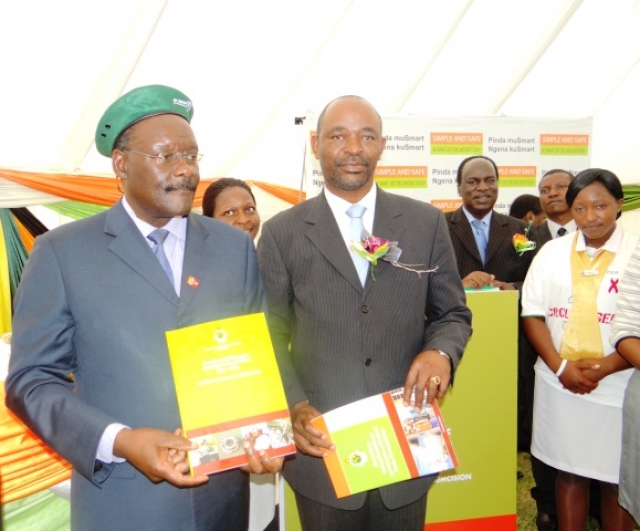
Marondera, 2015 Zimbabwe has mounted an effective response to the HIV epidemic, and HIV prevalence has come down from 27% in 1997 to 15% to date. In addition to the prevention and treatment interventions that have been deployed, voluntary medical male circumcision (VMMC) is a high impact intervention that has been adopted, which has the potential to to drive further dramatic declines in the trajectory of HIV in Zimbabwe.
‘Ebola solidarity run’ organised to create awareness
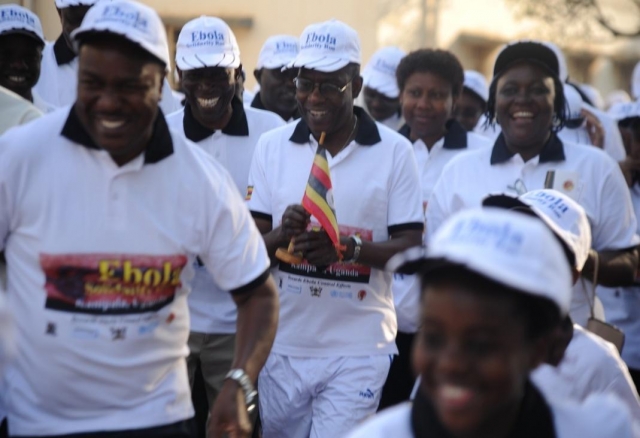
Kampala, 2nd February 2015 -- The Ebola virus disease (EVD) continues to ravage Liberia, Sierra Leone and Guinea in West Africa. Uganda, through WHO, international NGOs and partners continues to support the response efforts sending teams of health workers to help contain the disease.
Liberia: Channelling hope – how psychosocial support breaks boundaries between families and Ebola patients
The Ebola outbreak in West Africa has produced increasing circles of victims beyond the infected and the dead. Survivors, families, children, and health workers are dealing with the stress and trauma left behind by the disease.
“Health workers have done, and continue to do, long shifts attending to too many patients while witnessing their colleagues’ deaths and working under a lot of fear and stress,” says Florence Baingana, mental health specialist for WHO Liberia.
WHO Executive Board appoints Dr Matshidiso Moeti as new Regional Director for Africa
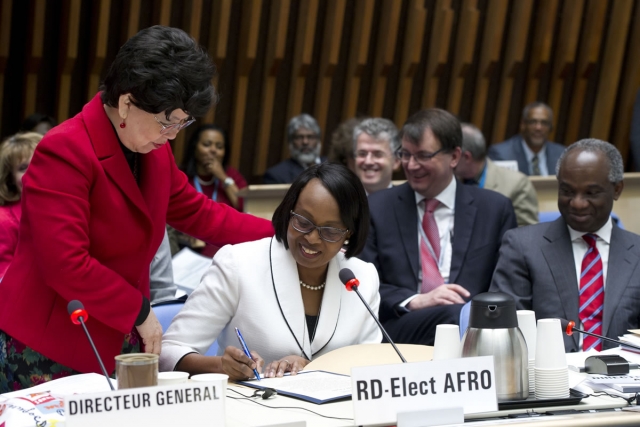
GENEVA, 27 January 2015 -- The WHO Executive Board, currently holding its 136th session, has appointed Dr Matshidiso Rebecca Moeti as the new Regional Director for WHO's Africa Region. Dr Moeti was nominated Regional Director by the health ministers of the 47 Member States of the WHO African Region at the annual Regional Committee for Africa in Cotonou, Benin, in November 2014. Dr Moeti will take up her appointment for a five-year term on 1 February 2015, succeeding Dr Luis Gomes Sambo who has served as Regional Director for the past 10 years.