WHO Perspectives on Maternal Mortality in Zimbabwe: A Reflection of the Year 2014
Key Highlights
- Maternal Mortality Ratio (MMR) for Zimbabwe has declined from 960 deaths per 100,000 live births in 2010 to 614 deaths per 100,000 live births in 2014.
- This is commendable progress, but the ratio still remains unacceptably high.
- Zimbabwe’s MDG target is to reduce MMR to 71 deaths per 100,000 live births by 2015.
- The media has a critical role to play in promoting social accountability on maternal health.
Sexual and intimate partner violence affects millions in Africa
KOICA and WHO Join Forces to Support Ebola Preparedness in Ethiopia
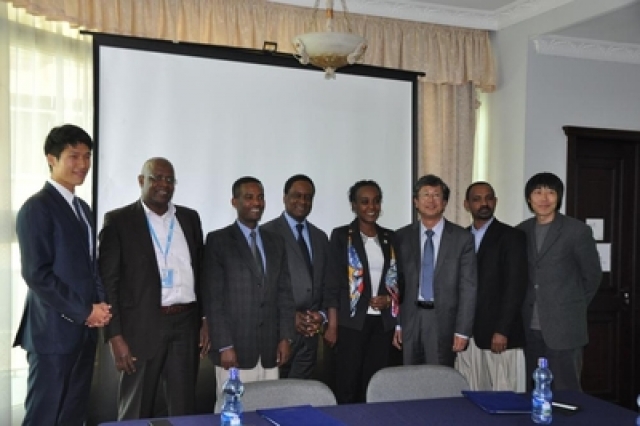
Addis Ababa. 29 December 2014 – Korea International Cooperation Agency (KOICA) and the World Health Organization Country Office for Ethiopia (WCO) joined forces in the effort to heighten Ebola virus disease (EDV) preparedness in Ethiopia. KOICA’s support to WHO will contribute to strengthening the capacity of the Ethiopian health system to prepare for Ebola in line with the country’s EVD outbreak preparedness plan.
How Kailahun district kicked Ebola out
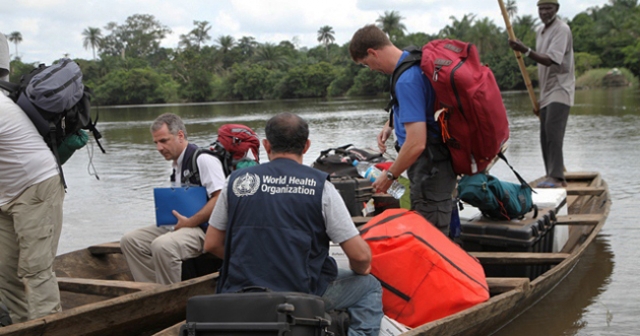
Kailahun district in eastern Sierra Leone was one of the country’s first hotspots in the Ebola outbreak, at its peak reporting more than 80 new cases per week in late June 2014. With the assistance of WHO and partners, combined with the close involvement of community leaders, the district has managed to beat the disease and has reported no new cases for several weeks. There is no room for complacency however. Community teams and health workers are on high alert and are ready to react quickly to any possible new infection.
Ebola trained health care workers received certification.
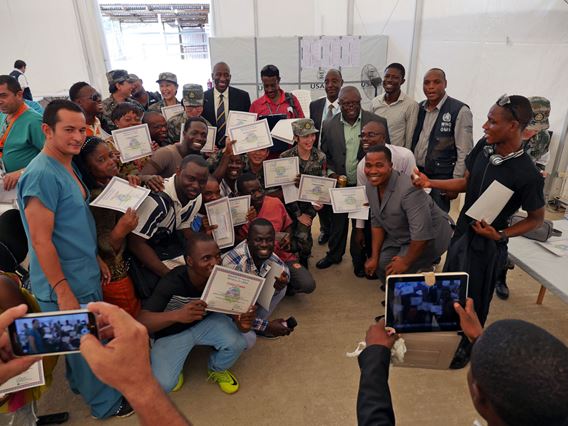
Just before the holiday season started a certification ceremony was held for all the health care workers that had completed all the stages of the WHO led clinical Ebola training in Monrovia.
The training program started back in late September and was developed into a two- staged program, separated as a “Cold” training and the “Hot” training.
The Cold training was held in an Ebola realistic environment, and consisted of five days training. From mid November the Hot training started with a three days training in a real Ebola Treatment unit.
Sierra Leone: How Kailahun district kicked Ebola out
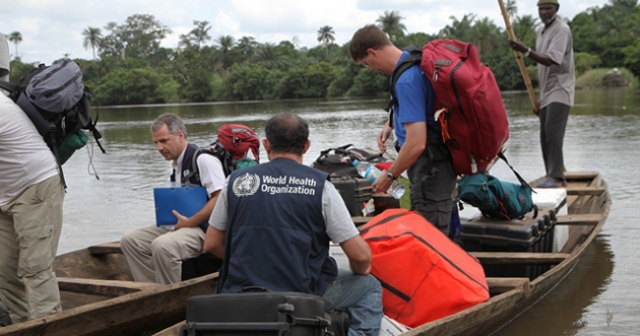
Kailahun district in eastern Sierra Leone was one of the country’s first hotspots in the Ebola outbreak, at its peak reporting more than 80 new cases per week in late June 2014. With the assistance of WHO and partners, combined with the close involvement of community leaders, the district has managed to beat the disease and has reported no new cases for several weeks. There is no room for complacency however. Community teams and health workers are on high alert and are ready to react quickly to any possible new infection.
Sierra Leone communities organize Ebola response
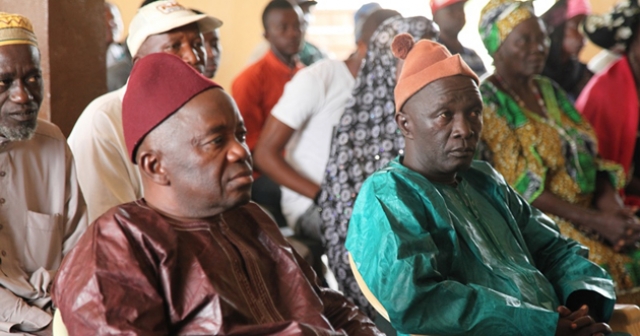
“In our chiefdom we have the necessary structures in place — leaders of all the villages are part of the Ebola response and fully involved, we have an active surveillance approach, and the population is well informed,” explains Philip Musa Koroma, Deputy Paramount Chief of Nimiyama Chiefdom in Kono district in Eastern Sierra Leone.
Striving to eradicate polio in the African Region
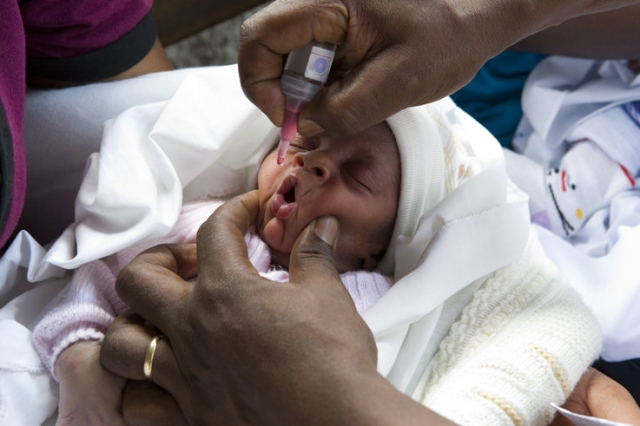
The WHO African Region is reporting rapid progress towards interrupting wild poliovirus (WPV) transmission. Following the steady decline since 2006, only 17 cases of polio have been reported in 2014 compared to 74 cases in the same period in 2013.
For the first time in history, no cases of WPV have been reported in the African Region in over 4 months. In 2014, six cases of polio were reported in Nigeria, five in Cameroon, five in Equatorial Guinea, and one in Ethiopia.
Cured of Ebola, Rebecca returns to cure others
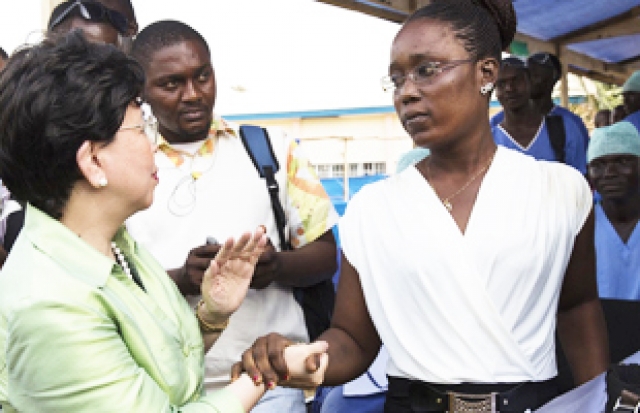
For many people, December 22 was the beginning of the holiday season. But for Rebeca Johnson, a Sierra Leone nurse who survived Ebola, it marked a return to work - and a new lease on life.
"I will take the work normally as I did before. I will wear the full PPE, but I won’t ever be scared again because I have immunity."
Ebola survivor tells her story
Nigeria Introduces New Vaccine – PCV 10
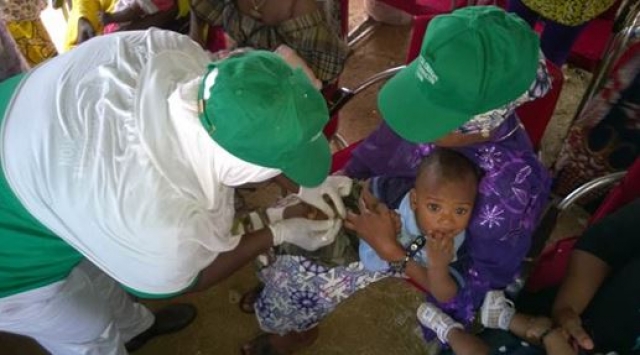
On 22nd December 2014 the Government of Nigeria joined other African countries to launch a new vaccine - Pneumococcal Conjugate Vaccine (PCV10) as part of its Routine Immunization schedule. Pneumococcal conjugate vaccine 10 (PCV10), is a vaccine that prevents diseases caused by the pneumococcal bacteria.