Liberia ministry of health dedicates e-library at phebe regional hospital
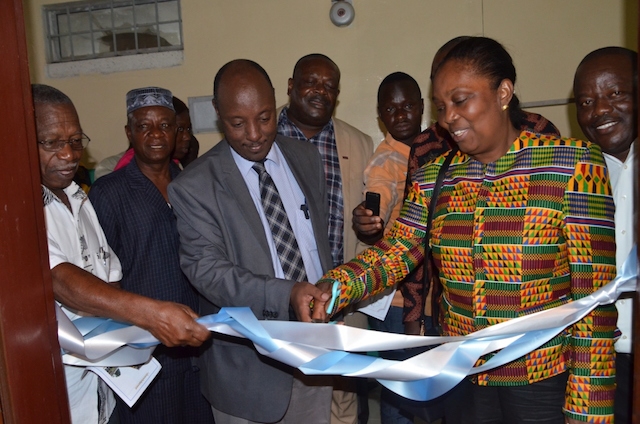
2nd September, 2016 - The Liberia Ministry of Health with support from the World Bank and the World Health Organization (WHO) dedicated the “Dr Walter T. Gwenigale Electronic Library” at Phebe Regional Hospital. The Library which is a training resource will facilitate easy access to real time information by health workers. Improving access to health information will contribute towards building a fit-for-purpose health workforce which is a key priority of the Liberia Investment Plan to Building a Resilient Health System.
WHO to strengthen partnership with CDC
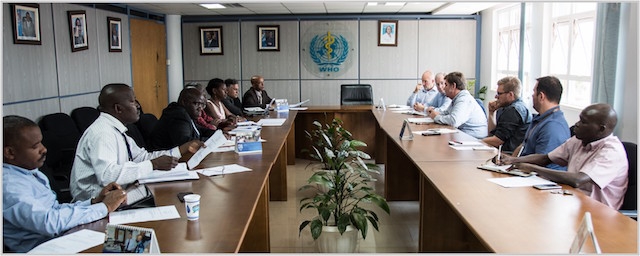
The World Health Organization Country Office in Uganda and the Centre for Disease Control (CDC) convened to discuss the proposed CDC-WHO Cooperative Agreement (CoAg) on Health information architecture and interoperable standards for public health surveillance of Ebola and other highly infectious diseases. The meeting took place at the WHO country office in Uganda.
Uganda hosts orientation workshop on New Standard Operating Procedures in responding to a Poliovirus event or outbreak
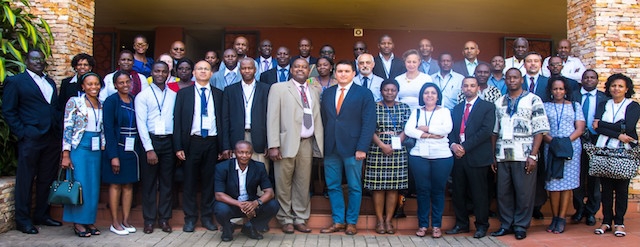
The World Health Organization Regional Office in Africa (WHO AFRO) and United Nations Children’s Education fund (UNICEF) together convened a workshop to orient 14 Anglophone countries on theNew Standard Operating Procedures (SOPs) in responding to a Poliovirus event or outbreak, at the Common Wealth Resort Hotel in Munyonyo, Kampala.
Cholera in Equateur province, northern DRC: local authorities get support from WHO and other partners for strengthened contingency plan for better epidemic response.
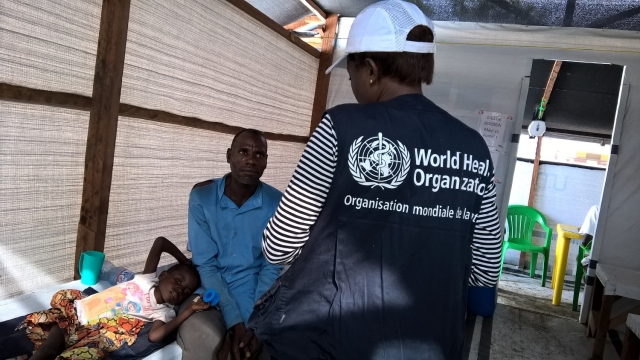
Makanza (Equateur), 30 August 2016. To halt the spread of epidemic cholera outbreaks in Equateur province, the local authorities are getting support from WHO in their efforts to control the present epidemic in health districts where a large number of cholera cases have been recorded in the last few weeks.
Outbreaks and Emergencies in the WHO African Region Bulletin Vol. 6 Issue 5, 31 August 2016
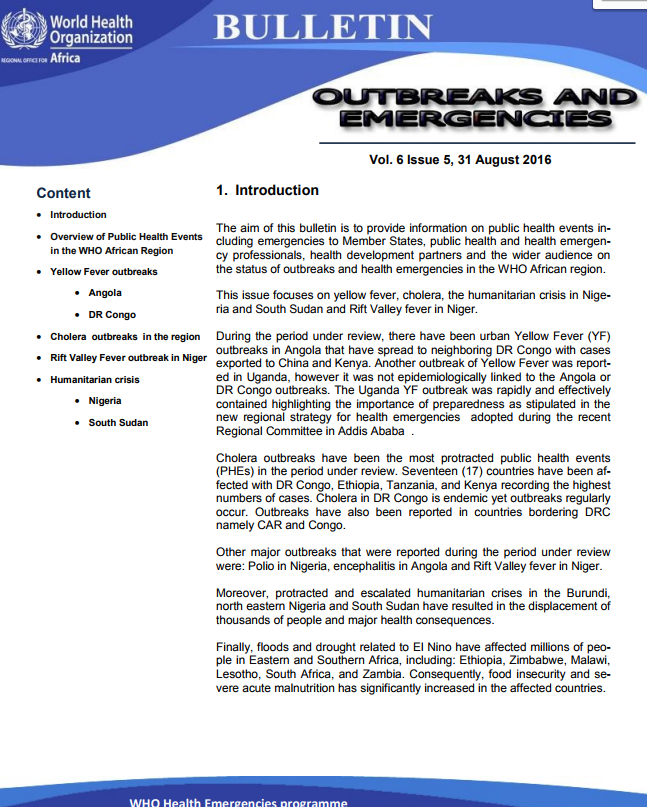
This issue focuses on yellow fever, cholera, the humanitarian crisis in Nigeria and South Sudan and Rift Valley fever in Niger.
Improving access to mental health services in Sierra Leone
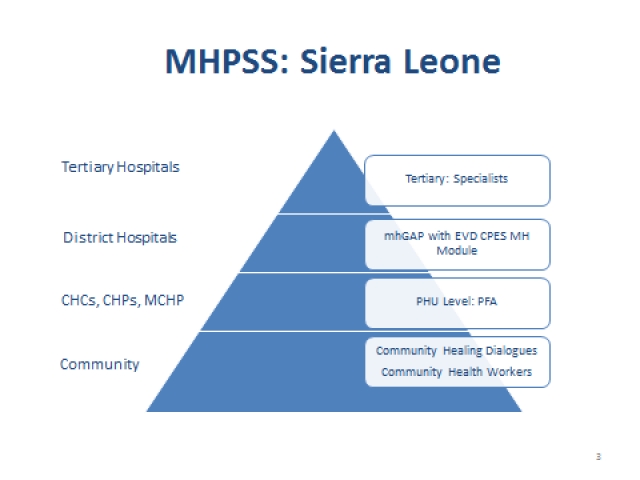
Mental health service delivery remains challenging in Sierra Leone and critical gaps in staffing mean thousands are unable to access the services they need. Steps are now being taken to increase psychosocial support available within communities and health facilities.
With a population of 7,000,000 people, Sierra Leone only has two psychiatrists, two Clinical Psychologists, and 19 Mental Health Nurses. Just four nurses have specialized in Child and Adolescent mental health.
Eritrea has received an Award in EPI
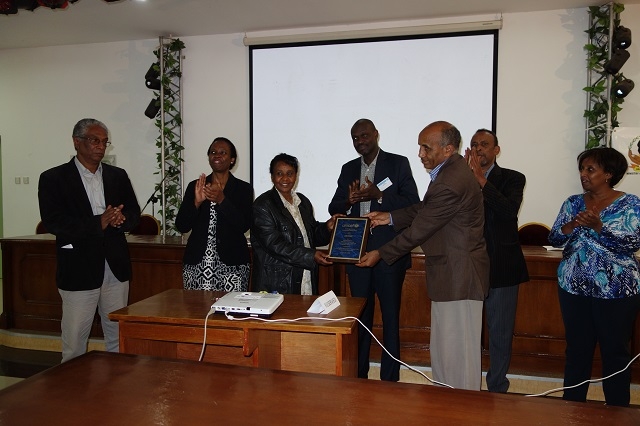
Eritrea received an award of recognition for its exceptional achievement for effective utilization of stock management for immunization services for the third time.
National Malaria Control Program Strengthens staff management for effective malaria response
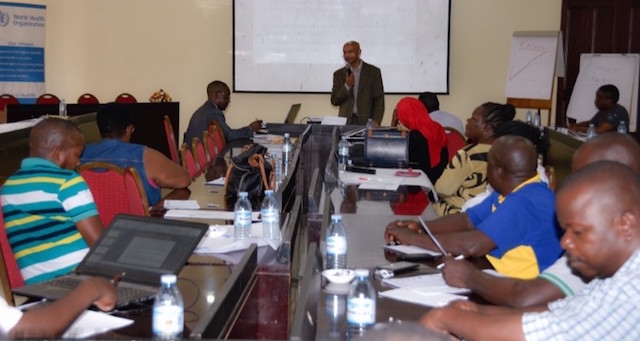
Jinja, 29 August 2016 - The Ministry of Health (MoH) and partners with support from World Health Organization (WHO), convened a four-day orientation retreat for new and old staff of the Uganda National Malaria Control Program. The new staff were recruited through WHO and UNICEF with support from (DFID), Global Fund against Malaria, HIV and TB, Clinton Health Access Initiative (CHAI) and Presidential Malaria Initiative (PMI).
WHO health worker killed in Yambio, Western Equatoria State, South Sudan
Juba, 29 August 2016 - Two unidentified gunmen killed Mr Benty Rubben Mangbondo, a World Health Organization (WHO) health worker, in Yambio, South Sudan on 17 August.
The attack took place on Wednesday, 17 August 2016, at around 21:00, at Mr Mangbondo’s home in Tindoka residential area, Yambio. The motive behind the incident is unknown but police confirmed they are investigating the case.
The World Health Organization releases a report on health financing in Africa
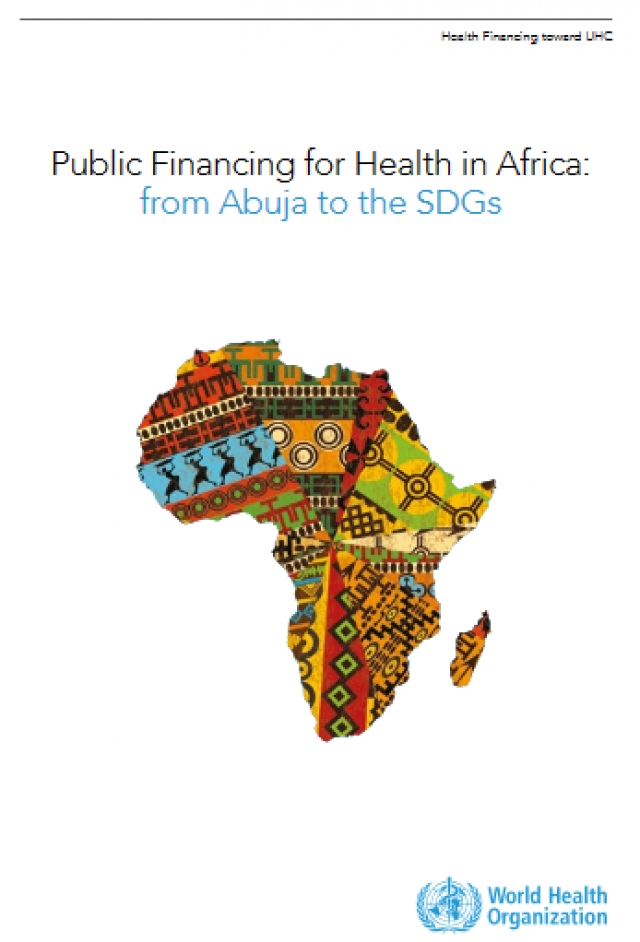 Nairobi, Kenya, 26 August 2016 - The World Health Organization has released a report on health financing in Africa titled, ‘Public Financing for Health in Africa: from Abuja to the SDGs’,