The World Health Organization (WHO) has donated desktop computers and accessories, valued at GHS 401,051.00 to the Ghana Health Service (GHS) and the Christian Health Association of Ghana (CHAG) to boost the monitoring and management of Non-Communicable Diseases (NCDs) such as diabetes and hypertension.
The donation is part of ongoing efforts to support Ghana’s Ministry of Health in advancing its digital health agenda. With technical support from WHO, Ghana’s Ministry of Health is rolling out the WHO NCD eTracker, a DHIS2-based digital tool designed to capture individual-level and aggregate facility data for more effective patient monitoring.
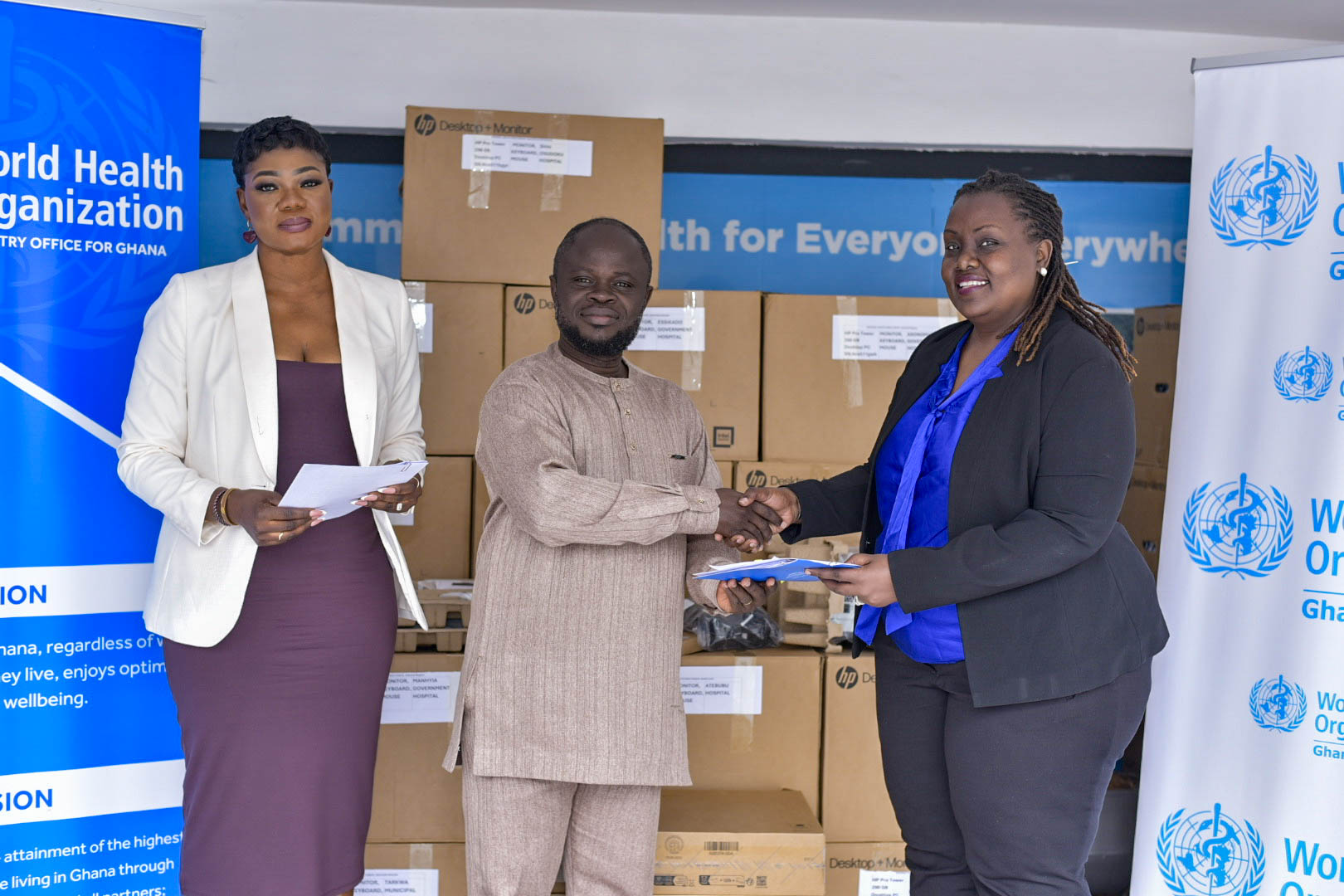
Photo @Abdul-Rahim Naa Abdul-Lahie/WHOGhana
At the heart of this transformation is the WHO NCD eTracker, a DHIS2-based digital tool designed to capture both individual-level and aggregate facility data. Recognizing that over 70 countries, including Ghana, use DHIS2 as their Health Management Information System, WHO developed the eTracker to align with global standards while remaining adaptable to local needs.
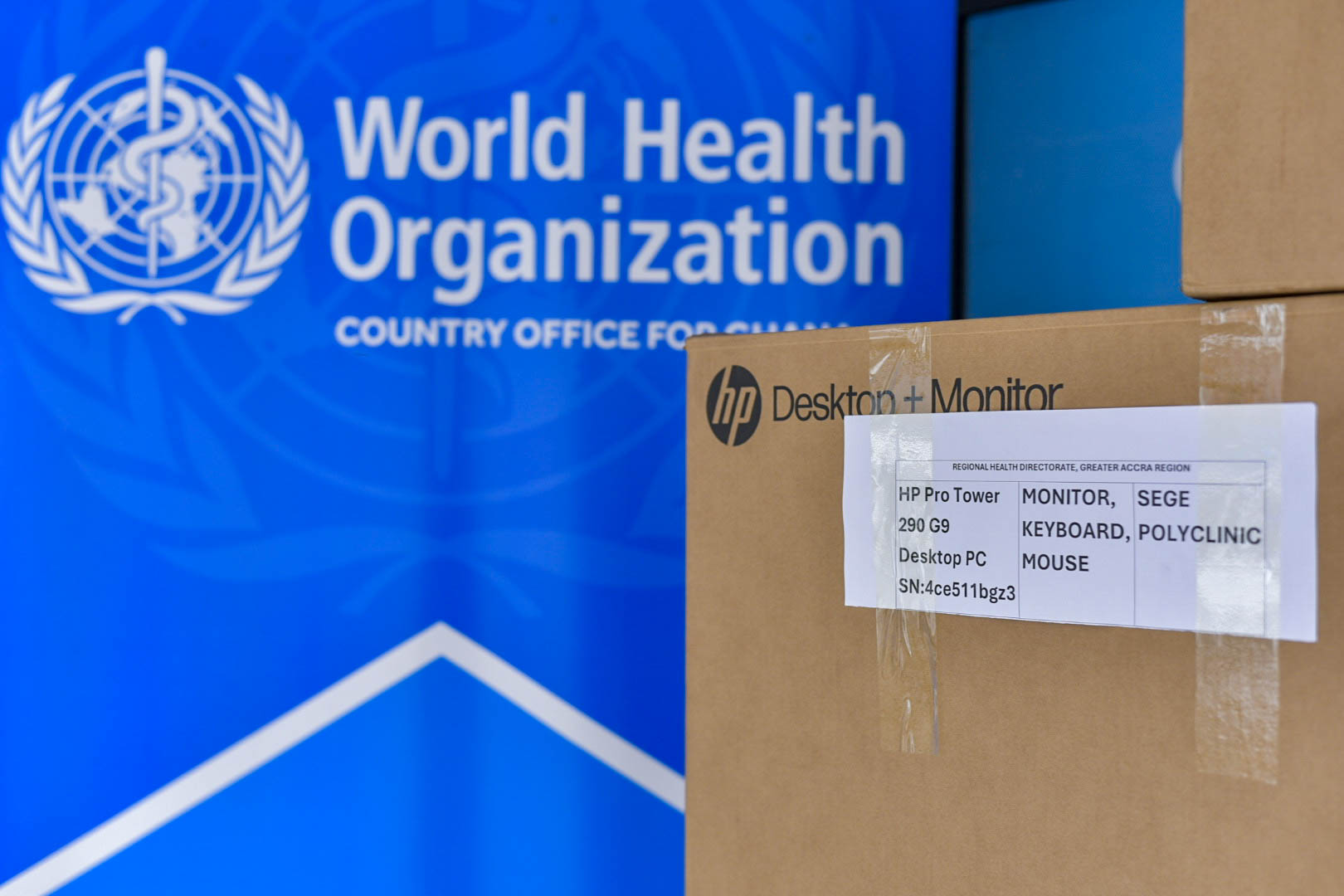
Photo @Abdul-Lahie Abdul-Rahim Naa/WHOGhana
Ghana has customized the eTracker for case management of diabetes and hypertension, incorporating feedback from frontline health workers to ensure the tool is user-friendly and context appropriate. The deployment will begin in 40 facilities across the Northern, Bono East. Ashanti, Volta, Greater Accra and Western regions, marking the first implementation of the eTracker in the WHO African Region.
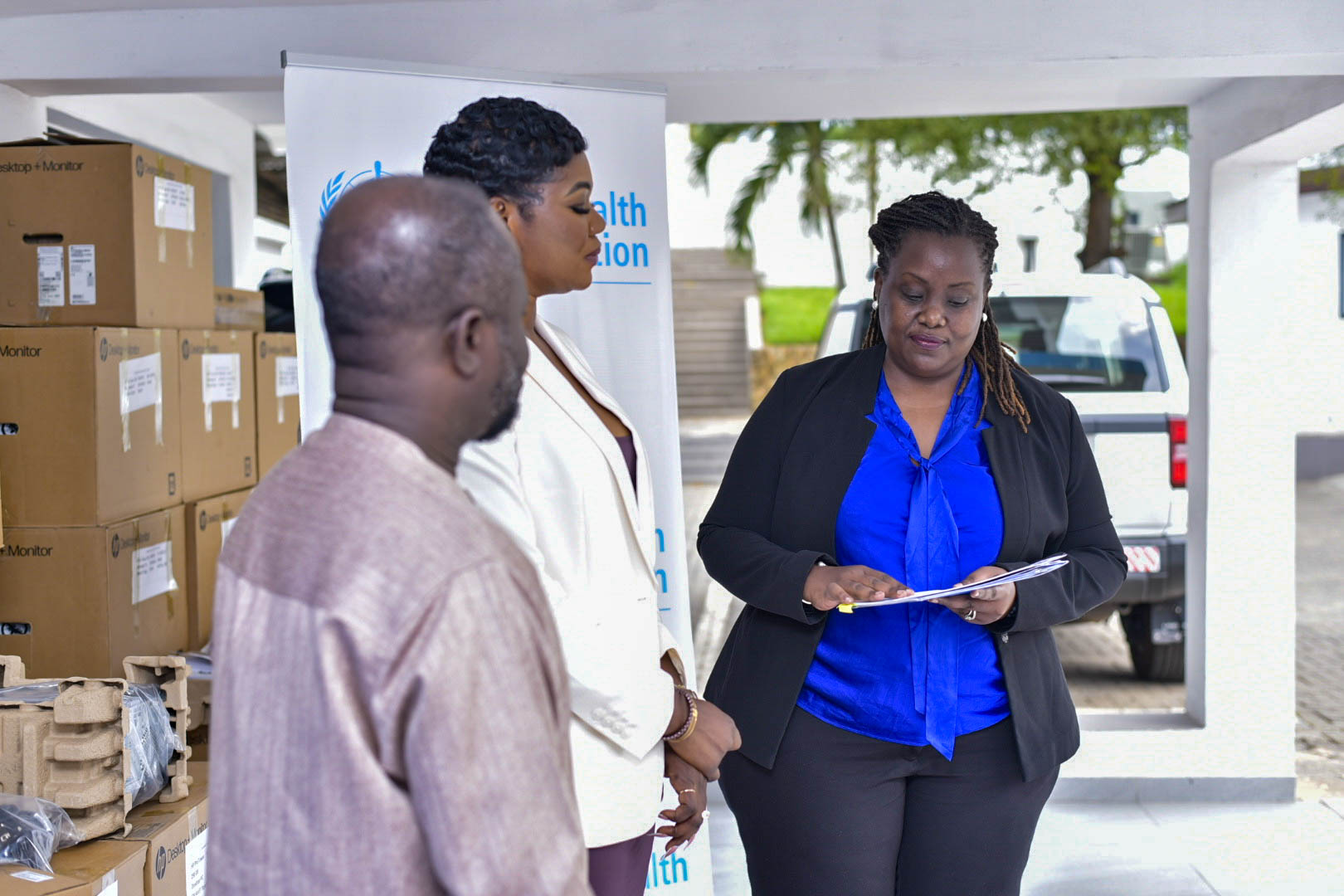
Photo @Abdul-Lahie Abdul-Rahim Naa/WHOGhana
Speaking at the presentation ceremony, WHO Representative to Ghana, Dr Fiona Braka, emphasized the importance of equipping facilities with the right tools.
Dr Fiona Braka, the WHO representative of Ghana, shared that “The donation of computers and accessories is a critical enabler of this digital shift. Equipped with the necessary hardware, frontline health facilities will be better positioned to capture real-time data, monitor patient progress, and make informed decisions that improve care delivery”.
Dr Fiona Braka, the WHO representative of Ghana, shared that “The donation of computers and accessories is a critical enabler of this digital shift. Equipped with the necessary hardware, frontline health facilities will be better positioned to capture real-time data, monitor patient progress, and make informed decisions that improve care delivery”.
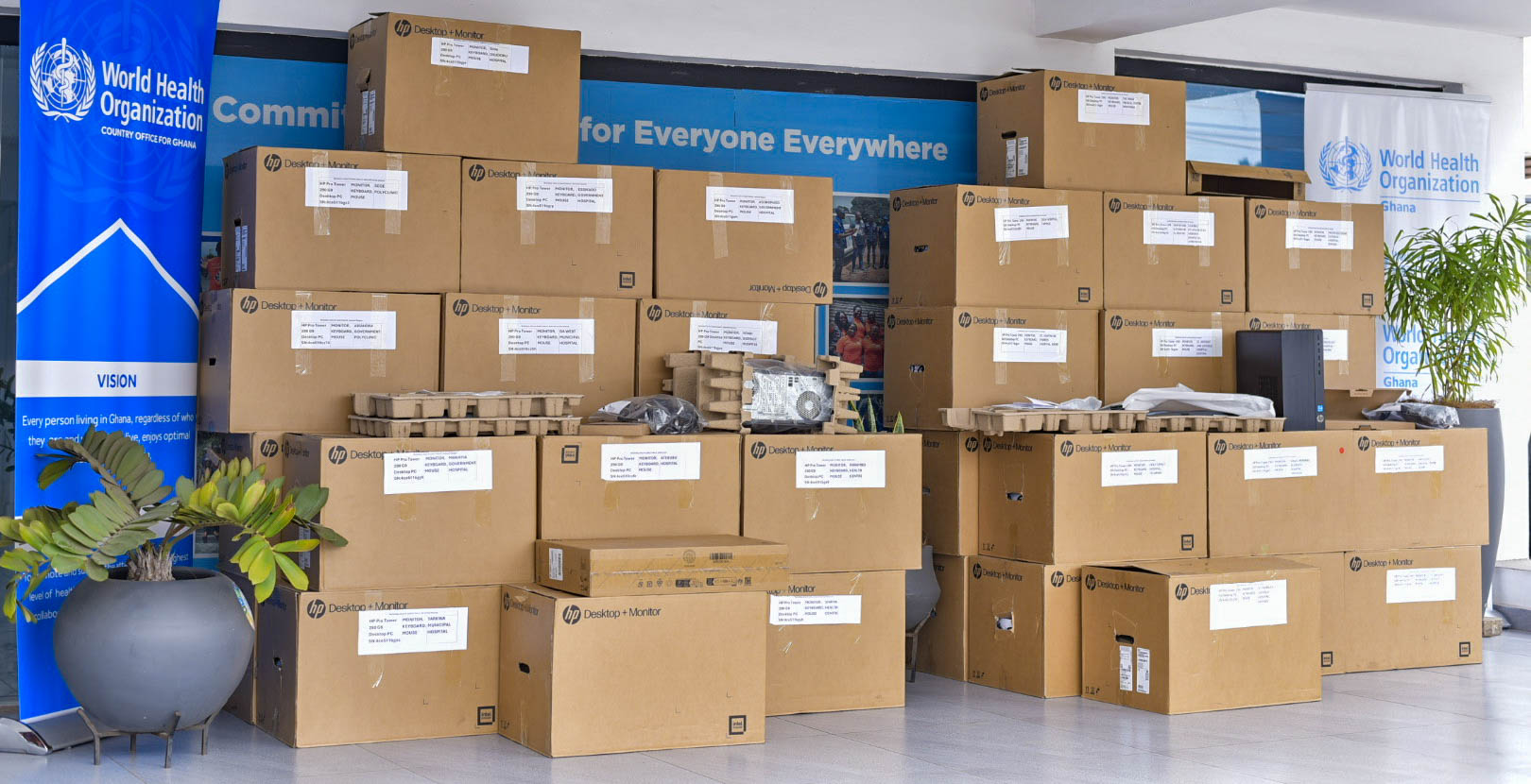
Photo @Abdul-Lahie Abdul-Rahim Naa/WHOGhana
The Ghana Health Service (GHS), the public agency responsible for implementing national health policies, and the Christian Health Association of Ghana (CHAG), the largest faith-based provider of health services in the country, delivers care to millions of Ghanaians every year, including those in hard-to-reach communities. Both institutions play a central role in managing the rising burden of noncommunicable diseases. However, limited digital infrastructure has made it difficult to track patients consistently and generate timely data for decision-making. The provision of computers and the rollout of the WHO NCD eTracker will therefore greatly enhance their ability to capture, analyze, and use data for improved patient management and stronger health system performance.
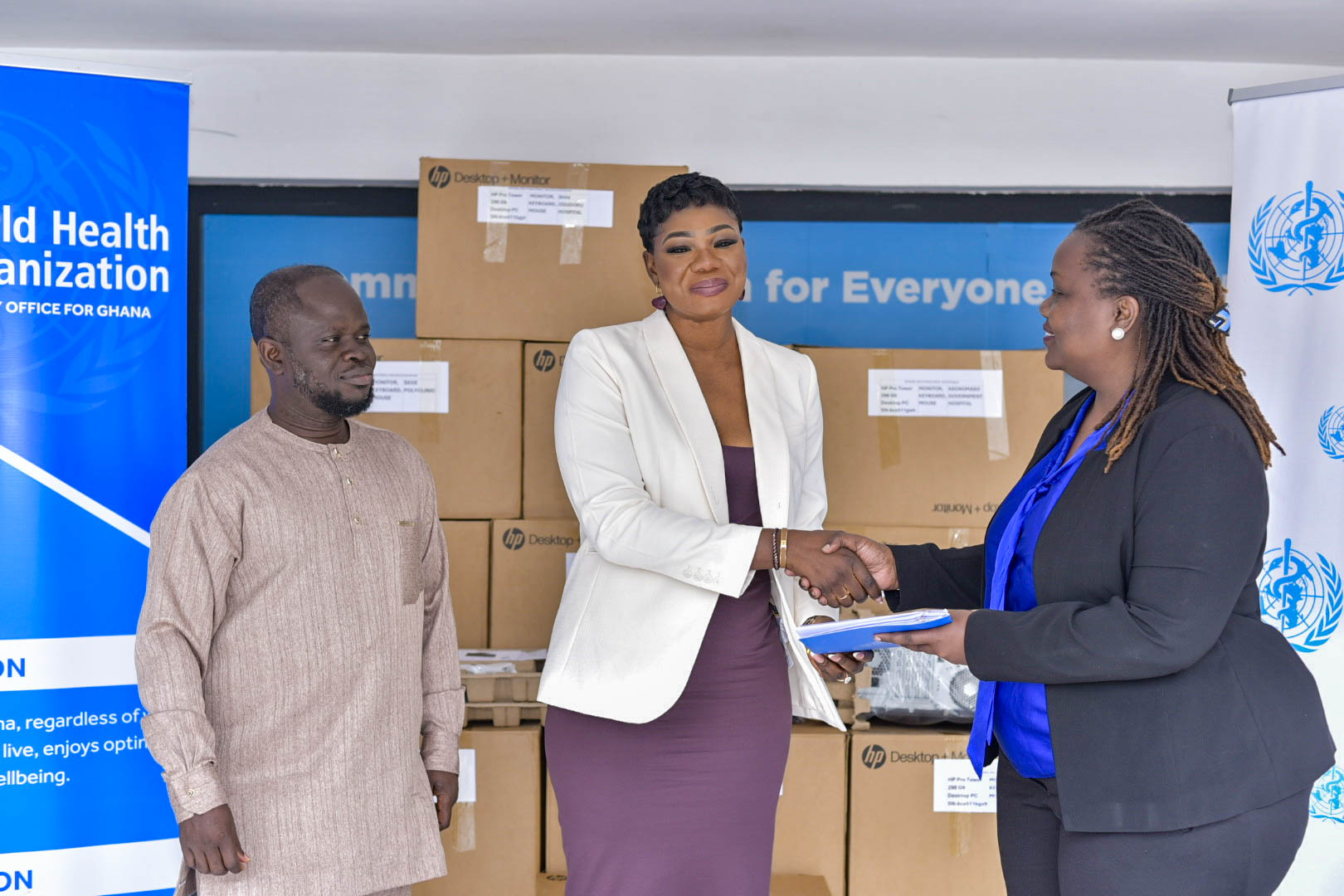
Photo @Abdul-Lahie Abdul-Rahim Naa/WHOGhana
Dr Naomi Apea, Deputy Program Manager for NCDs at the GHS expressed appreciation to WHO for the support over the years in improving the quality of people living in Ghana.
“We are very grateful to WHO for this timely support. These computers and the eTracker system will greatly enhance our ability to generate quality data, which is essential for planning, monitoring, and improving NCD care in Ghana”, he said.
“We are very grateful to WHO for this timely support. These computers and the eTracker system will greatly enhance our ability to generate quality data, which is essential for planning, monitoring, and improving NCD care in Ghana”, he said.
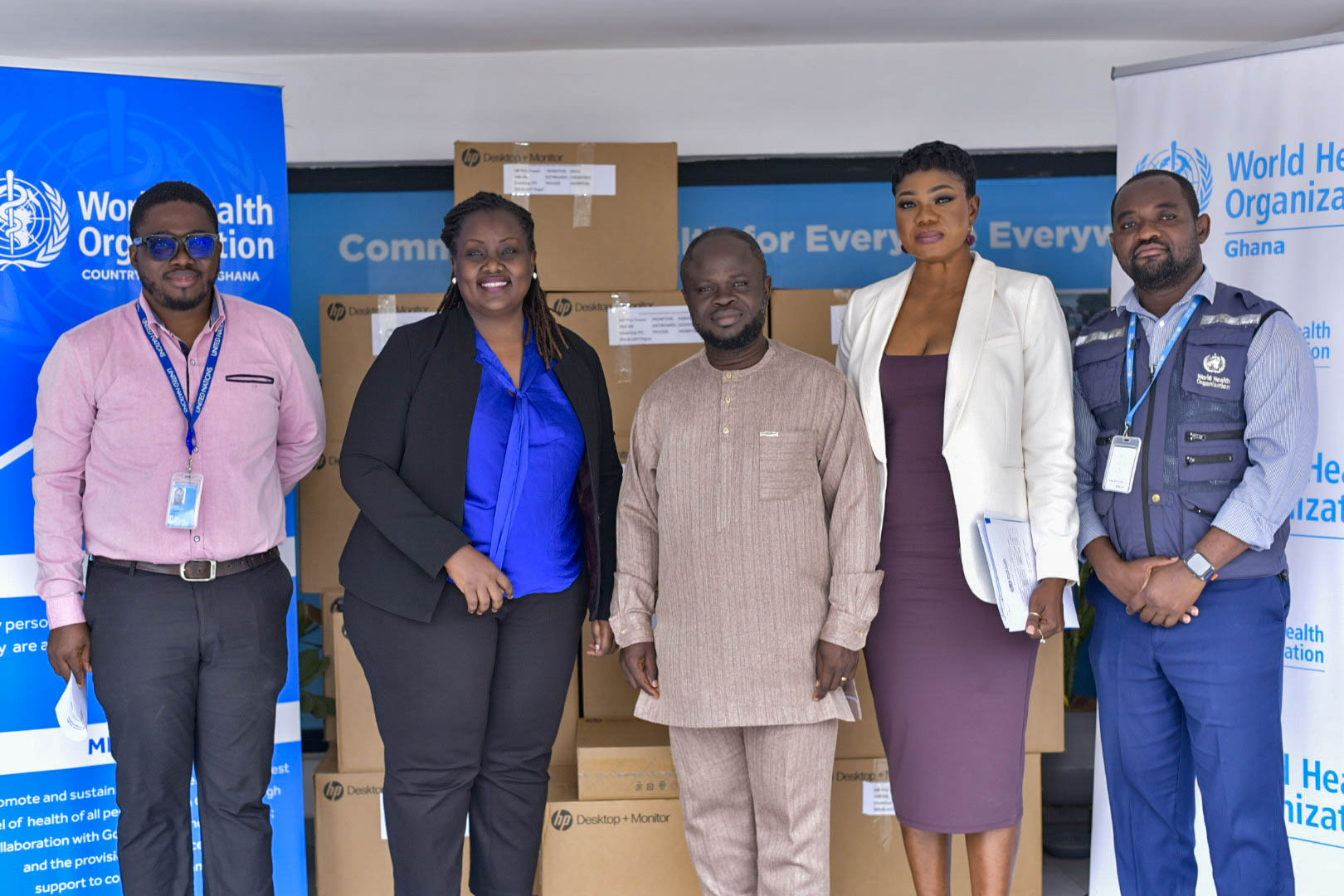
Photo @Abdul-Lahie Abdul-Rahim Naa/WHOGhana
Dr. James Duah, Deputy Executive director of CHAG also said, “This support from WHO is a game-changer. With the new computers and the eTracker, we can follow up with our patients more effectively and ensure they receive the care they need consistently”.
As Ghana takes this bold digital step, the expectation is that stronger data systems will improve decision-making and service delivery, ultimately translating into better health outcomes for thousands of people living with NCDs.
For Additional Information or to Request Interviews, Please contact:
Abdul-Lahie Abdul-Rahim Naa
Communications Officer
WHO Ghana Country Office
Email: abdullahiea@who.int
Tel: +233 20 196 2393
As Ghana takes this bold digital step, the expectation is that stronger data systems will improve decision-making and service delivery, ultimately translating into better health outcomes for thousands of people living with NCDs.
For Additional Information or to Request Interviews, Please contact:
Abdul-Lahie Abdul-Rahim Naa
Communications Officer
WHO Ghana Country Office
Email: abdullahiea@who.int
Tel: +233 20 196 2393