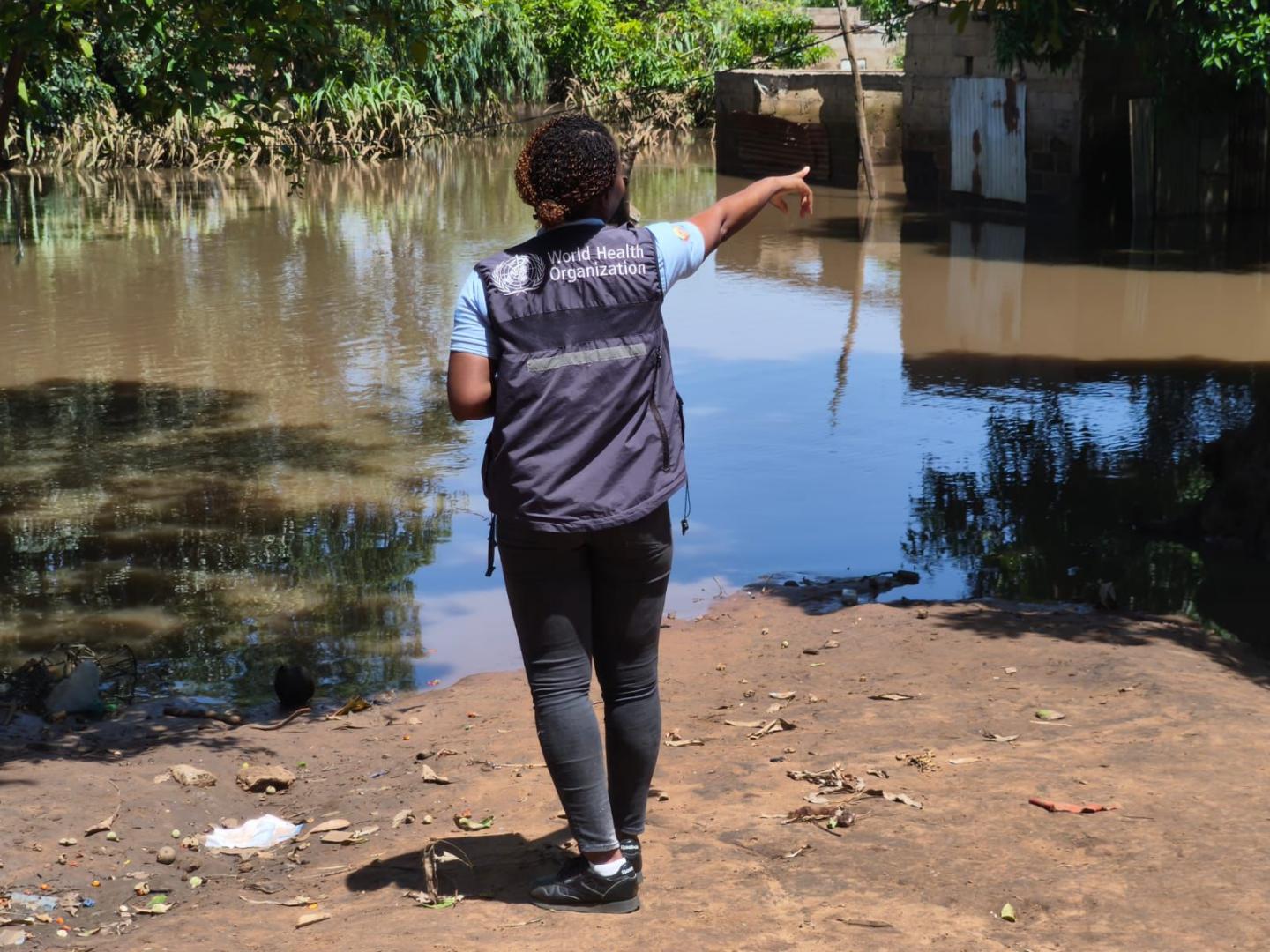
Intensifying emergency response to Mozambique flooding disaster
Maputo—Health authorities in Mozambique have intensified emergency response to assist hundreds of thousands of people devastated by severe flooding in the southern and central regions since mid-December 2025.
The flooding has affected more than 720 000 people, with 75% residing in Gaza Province. Around 100 000 people are being housed in 113 temporary accommodation centres in Gaza, Maputo, Sofala, Manica, Tete and Zambezia provinces, and Maputo City.
The response includes prepositioning essential supplies, with a focus on cholera and other health priorities, coordinating the response at national, provincial and district levels and strengthening active surveillance, prevention and disease control.
As part of preparedness for health emergencies such as these, World Health Organization (WHO) has helped strengthen early warning and risk monitoring systems in Gaza, Tete and Maputo provinces since August 2024. This includes training surveillance officers and distributing 266 tablets—almost two-thirds of these in Gaza Province—for real-time data collection and transmission.
On 23 January 2026, a team of experts from WHO and the health sector of Maputo Province visited three accommodation centres, one in Maputo Province and two in Gaza Province, to conduct a health needs assessment. During the mission, the team interacted with the heads of the centres, managed by the municipality and the National Institute for Disaster Risk Management and Reduction. The findings of the needs assessment will help to fill gaps in the provision of health services at the centres.
“Health services are present in all the accommodation centres visited, which is encouraging. The government and health authorities responded in a timely manner to support the affected population,” says Dr Sheila Nhoni, health emergency officer at WHO Mozambique. Dr Nhoni also stresses the importance of continuous monitoring to ensure the availability of essential medical equipment, uninterrupted primary healthcare services and effective referral systems to reduce preventable illness during the rainy season.
Given the severity of the situation in Gaza, WHO has deployed two rapid responders to strengthen coordination with partners, support health care provision in accommodation centres and monitor epidemiological trends on potential waterborne or vector-borne disease outbreaks.
"Floods do not only displace families, they disrupt access to basic health services. In Boane and other districts Ministry of Health is working side by side with local health teams to ensure that pregnant women, children and the most vulnerable continue to receive care, even in temporary accommodation centres. Health care must continue, even when entire communities are under water,” says Dr Anabela Langa, from Maputo Province Health Sector.
A WHO medical coordinator has also been deployed and integrated into an interagency emergency medical team to strengthen response capacity on the ground, support clinical coordination and ensure the quality and continuity of health care provided to affected populations. Cases that require specialized care are referred to the nearest health unit or referral hospital.
WHO also participates in daily coordination meetings, contributes to the Ministry of Health’s Daily Emergency Response Bulletin and provides ongoing technical guidance to ensure an effective, coherent, and aligned response at all levels.
External Relations Officer
Rua Beijo da Mulata, 73, Sommerschield, Maputo
P.O. Box 377, Maputo, Mozambique
Telephone: (+258) 21 491 990
Email: erbf [at] who.int (erbf[at]who[dot]int)
Communications and Media Relations Officer
WHO Regional Office for Africa
Email: saida.swaleh [at] who.int (saida[dot]swaleh[at]who[dot]int)