WHO and Ministry of Health conduct mass drug administration against river blindness in South Sudan
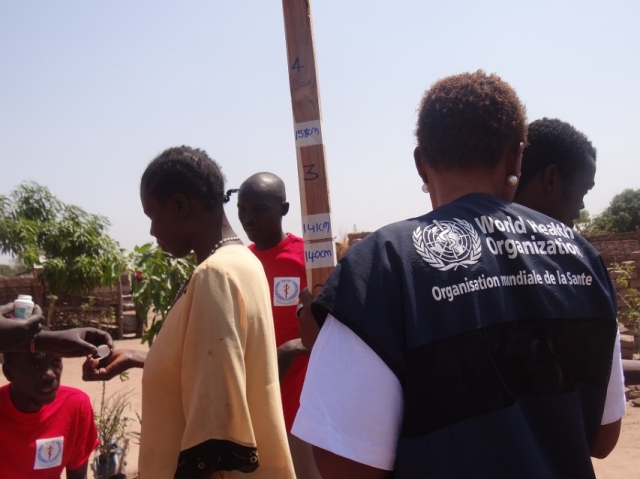
Juba, 10 February 2016 -- To accelerate the elimination of onchocerciasis (river blindness) in South Sudan, WHO and the Ministry of Health (MoH) are conducting community-based mass drug administration (MDA) with ivermectin, to targeted population in endemic counties of South Sudan.
River blindness is the world's second leading infectious cause of blindness. It is a parasitic disease caused by Onchocerciasis volvulus (OV) and transmitted by blackfly, an insect that breeds along fast flowing rivers.
WHO Representative gears up to tackle Cholera in the Lake zone Regions
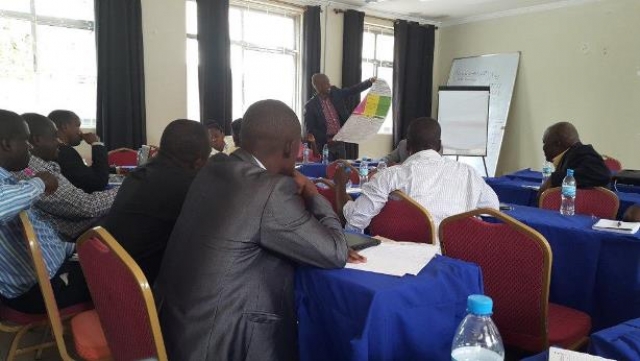
Mwanza, 10 February 2016 —The on-going cholera outbreak in Tanzania has affected more than 15,000 people and claimed over 230 lives from 23 Regions. Seven out of the 23 affected Regions from the Lake Zone namely: Mwanza, Mara, Kagera, Kigoma, Geita, Tabora and Shinyanga, have contributed 51% of the reported cases and 62% of the reported deaths.
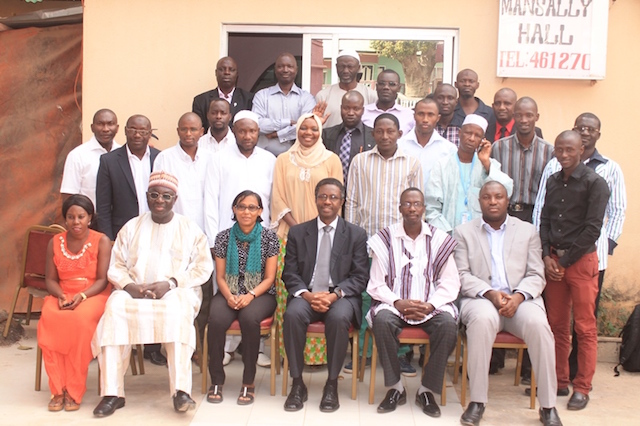
Rwanda WHO Country Office staff urged to embrace change and become an even more effective team
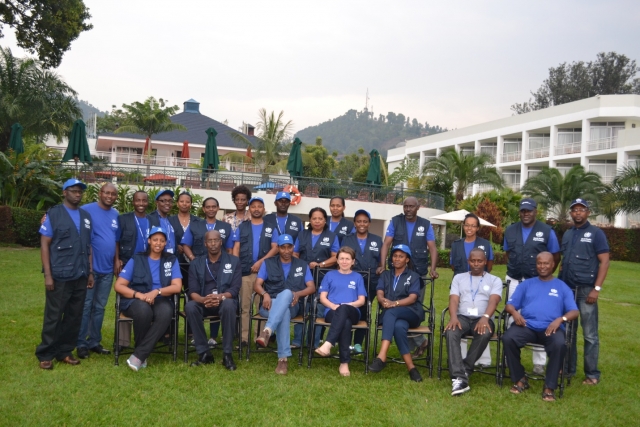
The World Health Organization (WHO) Country Office in Rwanda committed to embracing change for even more effective delivery of results at the just ended staff retreat which was held in Rubavu, Rwanda from 3 to 6 February 2016.
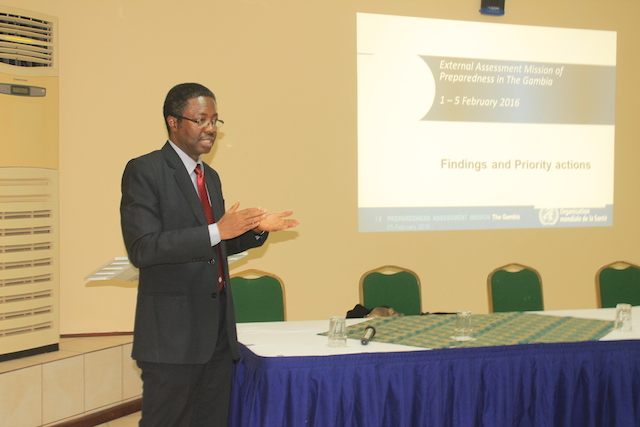
Dr Moeti urges vigilance amid spread of Zika virus
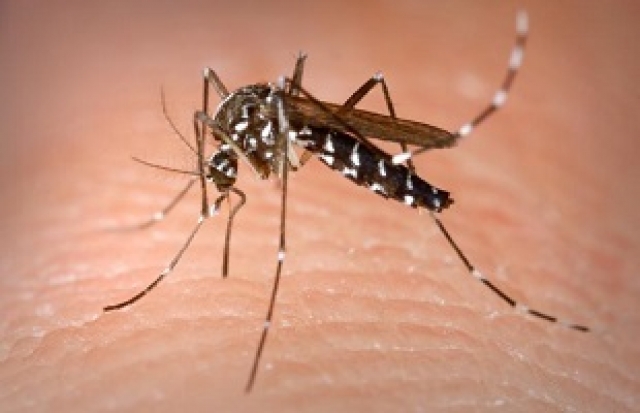
Brazzaville, 4 February 2016 - Countries from the WHO African Region have been urged to be watchful and prepare to tackle any signs of the Zika virus disease. The call was made by Dr Matshidiso Moeti, the WHO Regional Director for Africa.
Delegates adopted recommendations on Exchange of Best Practices to Reaching Every District/Community, equity and integration of child survival interventions in ESA
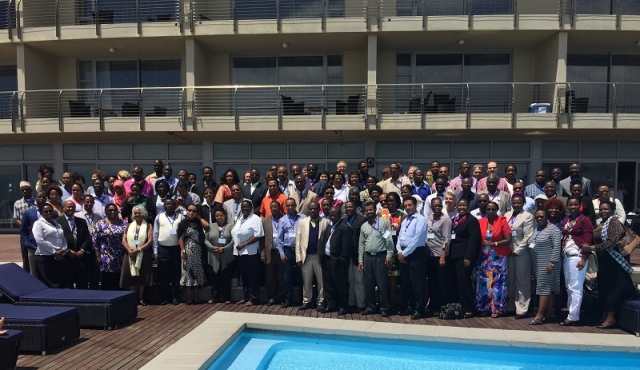 Cape Town, 29 January 2016 - The first ever workshop on Exchange of Best Practices to Reaching Every District/Community (RED/REC), equity and integration of child survival interventions in East and Southern African (ESA) jointly organized by WHO, UNICEF and JSI, MCSP/USAID, ended with delegates agreeing on recommendations to address inequities in cove
Former President Jimmy Carter to address British parliament on dracunculiasis eradication
23 September 2016 | Geneva | New Delhi | Beijing − The World Health Organization (WHO) is piloting new approaches to overturn the “slow decline” of new leprosy cases almost 16 years after the disease was “eliminated as a global public health problem”. These new approaches, part of WHO’s Global Leprosy Strategy 2016–2020, aim to reinvigorate control efforts and avert disabilities, especially among children affected by the disease in endemic countries.
Statement by WHO Sierra Leone to the media on the discharge of contacts from monitoring and follow up delivered by the WHO Representative, Dr Anders Nordström.
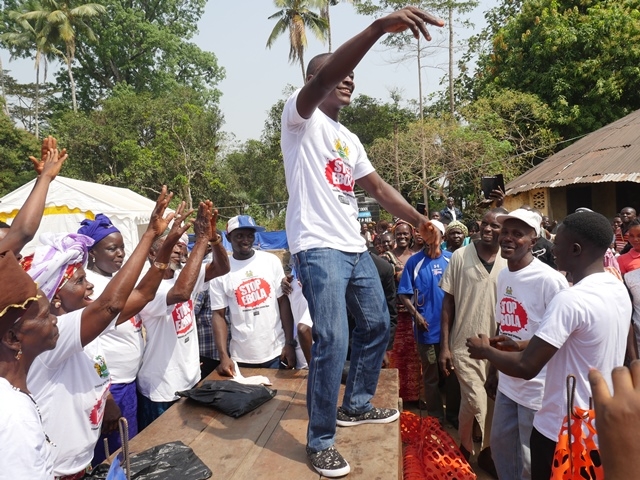
On 3 February 33 contacts were discharge from quarantine following the Ebola event that began on 14 January of this year. Their discharge after only three weeks from the confirmation of the index case on 14 January proves that this response did exactly what it was supposed to do – the rapid containment of infection to prevent further spread. The rapid identification and monitoring of contacts in quarantine was key. Four people remain in quarantine in Tonkolili until 11 February.
WHO supports the Ministry of Health Ghana in response to meningitis outbreak
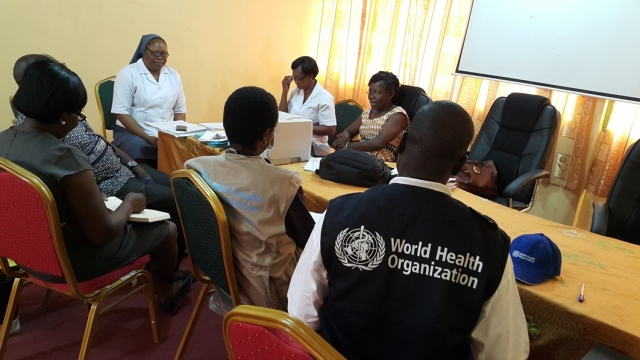
Accra, 04 February2016 – In response to the ongoing meningitis outbreak in Ghana, WHO has supported the Ministry of Health with rapid diagnostic testing kits (Pastorex), other laboratory reagents and technical support community and facility surveillance, sensitization and case management.