Mpox (monkeypox)
Mpox (monkeypox) is an infectious disease caused by the monkeypox virus. It can cause a painful rash, enlarged lymph nodes and fever. Most people fully recover, but some get very sick.
Anyone can get mpox. It spreads from contact with infected:
- persons, through touch, kissing, or sex
- animals, when hunting, skinning, or cooking them
- materials, such as contaminated sheets, clothes or needles
- pregnant persons, who may pass the virus on to their unborn baby.
If you have mpox:
- Tell anyone you have been close to recently
- Stay at home until all scabs fall off and a new layer of skin forms
- Cover lesions and wear a well-fitting mask when around other people
- Avoid physical contact.
The disease mpox (formerly monkeypox) is caused by the monkeypox virus (commonly abbreviated as MPXV), an enveloped double-stranded DNA virus of the Orthopoxvirus genus in the Poxviridae family, which includes variola, cowpox, vaccinia and other viruses. The two genetic clades of the virus are clades I and II.
The monkeypox virus was discovered in Denmark (1958) in monkeys kept for research and the first reported human case of mpox was a nine-month-old boy in the Democratic Republic of the Congo (DRC, 1970). Mpox can spread from person to person or occasionally from animals to people. Following eradication of smallpox in 1980 and the end of smallpox vaccination worldwide, mpox steadily emerged in central, east and west Africa. A global outbreak occurred in 2022–2023. The natural reservoir of the virus is unknown – various small mammals such as squirrels and monkeys are susceptible.
Mpox causes signs and symptoms which usually begin within a week but can start 1–21 days after exposure. Symptoms typically last 2–4 weeks but may last longer in someone with a weakened immune system.
Common symptoms of mpox are:
-
rash
-
fever
-
sore throat
-
headache
-
muscle aches
-
back pain
-
low energy
-
swollen lymph nodes.
For some people, the first symptom of mpox is a rash, while others may have different symptoms first.
The rash begins as a flat sore which develops into a blister filled with liquid and may be itchy or painful. As the rash heals, the lesions dry up, crust over and fall off.
Some people may have one or a few skin lesions and others have hundreds or more. These can appear anywhere on the body such as the:
-
palms of hands and soles of feet
-
face, mouth and throat
-
groin and genital areas
-
anus.
Some people also have painful swelling of their rectum or pain and difficulty when peeing.
People with mpox are infectious and can pass the disease on to others until all sores have healed and a new layer of skin has formed.
Children, pregnant people and people with weak immune systems are at risk for complications from mpox.
Typically for mpox, fever, muscle aches and sore throat appear first. The mpox rash begins on the face and spreads over the body, extending to the palms of the hands and soles of the feet and evolves over 2-4 weeks in stages – macules, papules, vesicles, pustules. Lesions dip in the centre before crusting over. Scabs then fall off. Lymphadenopathy (swollen lymph nodes) is a classic feature of mpox. Some people can be infected without developing any symptoms.
In the context of the global outbreak of mpox which began in 2022 (caused mostly by Clade IIb virus), the illness begins differently in some people. In just over a half of cases, a rash may appear before or at the same time as other symptoms and does not always progress over the body. The first lesion can be in the groin, anus, or in or around the mouth.
People with mpox can become very sick. For example, the skin can become infected with bacteria leading to abscesses or serious skin damage. Other complications include pneumonia, corneal infection with loss of vision; pain or difficulty swallowing, vomiting and diarrhoea causing severe dehydration or malnutrition; sepsis (infection of the blood with a widespread inflammatory response in the body), inflammation of the brain (encephalitis), heart (myocarditis), rectum (proctitis), genital organs (balanitis) or urinary passages (urethritis), or death. Persons with immune suppression due to medication or medical conditions are at higher risk of serious illness and death due to mpox. People living with HIV that is not well-controlled or treated more often develop severe disease.
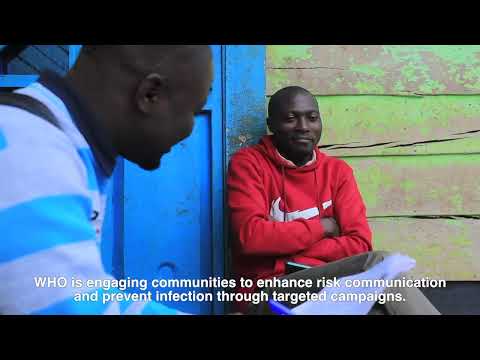
The global outbreak of mpox was declared a public health emergency of international concern (PHEIC) on 23 of July 2022. WHO published a strategic preparedness and response plan for mpox and a suite of technical guidance documents. Surveillance, diagnostics, risk communication and community engagement remain central to stopping the outbreak and eliminating human-to-human transmission of mpox in all contexts.
More information can be found here. Questions and answers are here and public health advice is here.
Publications
See all
Mpox Continental Preparedness and Response Plan for Africa
On August 13, 2024, the Africa CDC declared the mpox outbreak a Public Health Emergency of Continental Security (PHECS). The following day, the WHO declared it a Public Health Emergency of International Concern (PHEIC). A coordinated, continent-wide response is essential, co-led by the African Union (AU) through the Africa CDC and the World Health Organization (WHO), in close collaboration with global partners working under a unified plan, budget, and monitoring framework.