We must unite to fight malaria - Dr Sambo
Brazzaville, 25 April 2005 -- The World Health Organization (WHO) Regional Director for Africa, Dr Luis Gomes Sambo, has made an impassioned plea to African governments, communities, development partners and other stakeholders to “unite against malaria” and “beat” the disease which kills more than 800, 000 Africans every year.
Africa Malaria Day 2005
20 April 2005
What ? Africa malaria Day (AMD) 2005
The theme for Africa Malaria Day 2005 is Unite Against Malaria while the accompanying slogan is Together We Can Beat Malaria.
When ? 25 April 2005
Why ? AMD commemorates the day in 2000, when African Heads of State or their representatives from 44 endemic countries met in Abuja, Nigeria, for the first ever African malaria Summit. At this summit, they signed the historic Abuja Declaration and Plan of Action which commits governments to reduce by 50% the malaria burden in Africa by the year 2010.
Stakes remain high to wipe out polio in Africa
23 countries race to halt the spread of the virus before the high-transmission season starts
DAKAR/NAIROBI, 8 April 2005 -- With the polio virus' high-transmission season just months away, African countries are redoubling their efforts this week to reach 100 million children in the second of a series of three immunization drives scheduled for 2005. This second round, from 9-12 April, aims to contain the epidemic before the virus begins to spread most rapidly in the July to September high season.
"Reach every country, district, woman with proven health interventions"
"Reach every country, district, woman with proven health interventions" - WHO Regional Director for Africa
Silent emergency of motherhood in africa: Dr Sambo urges paradigm shift in the way care is provided
Brazzaville, 6 April 2005 -- Health is a fundamental human right. Yet, to a large number of women, newborns and children in Africa, this right is denied. Every 60 minutes, 130 newborns die in the African Region. In the same lapse of time, 60 women die of causes relating to pregnancy and childbirth.
Two of a kind - Rotarians united against polio
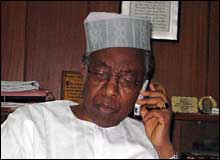
6 April 2005 -- They are both over 70 years of age, but for Adedehin Ebunolu Adefeso, past District Governor (PDG) of District 9110 (1995-1996), and Jonathan Majiyagbe, former President of Rotary International(2003-2004), polio eradication is such a strong unifying force for the club and they have devoted their lives to promoting its ideals.
WHO Regional Director kicks off second round of polio campaigns in Zamfara state
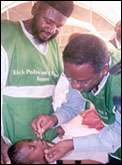
6 April 2005 -- Enthusiasm and commitment for polio eradication was high at the flag-off of the second round of National Immunization Days at Talata Marafa local government area in Zamfara State. World Health Organization (WHO) Regional Director for Africa, Dr. Luis Gomes Sambo, joined Professor E. Lambo, Federal Minister of Health and His Excellency the Executive Governor of Zamfara State Alhaji Ahmed Sani Yariman Bakura to launch the final push to stop polio for good in Zamfara state.
Sambo appeals for more funding for health
Abuja, 5 April 2005-- The developed countries of the world and Member States of the World Health Organization (WHO) have been called upon to provide more resources for health, especially to African countries, so as to enable Africa achieve the health Millennium Development Goals (MDGs). The WHO Regional Director for Africa, Dr. Luis Gomes Sambo made the appeal in Abuja, Nigeria, at a joint Ministerial media briefing to mark this year's World Health Day in the country.
WHO to pursue decentralization of operations in Africa
Brazzaville, 10 March 2005 -- Operations of the World Health Organization (WHO) in the African Region are being rapidly decentralized “so that focus will be on country level activities” WHO Regional Director for Africa, Dr Luis Sambo, has said.
WHO, UNICEF, discuss collaboration in Africa
Brazzaville, 7 march 2005 -- The Directors of the WHO Regional Office for Africa and the UNICEF Office for West and Central Africa open discussions Tuesday in Brazzaville, Republic of Congo, on ways to collaborate in achieving a common goal - improving the health status of people in the African region.