High Level Dialogue on Health in the Post 2015 Development Agenda concludes.
The consultation which was co-convened by the Governments of Botswana and Sweden with WHO and UNICEF, brought together 50 high level participants including Ministers of Health, members of the high-level Panel of Eminent Persons, Leaders of International health institutions, representatives of civil society and the private sector, academia, public health experts and youth. The purpose of the meeting was to discuss the place of health in the post 2015 development agenda.
The meeting agreed on three broad conclusions;
WHO convenes the first ever Multi-Stakeholder Dialogue to Address Risk Factors for NCDs in the WHO African Region
Brazzaville, 5 March 2013 -- About 200 participants will meet from 18 to 20 March in Johannesburg, South Africa, for the first ever stakeholders’ dialogue to address risk factors for noncommunicable diseases (NCDs) in the World Health Organization (WHO) African Region. The theme of the meeting is: “Today’s risk factors are tomorrow's diseases.”
President Khama opens the Dialogue on Health in the Post-2015 Development Agenda
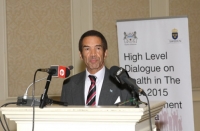
Gaborone, Botswana, 5 March 2013 -- His Excellency the President Lt. General Seretse Khama Ian Khama officially opened the High Level Dialogue on the MDG Post-2015 Health Agenda on 5th September 2013 at the Gaborone International Conference and Convention Centre.
Predicting, Preventing and Managing Public Health Effects of Climate Variability and Change in Africa
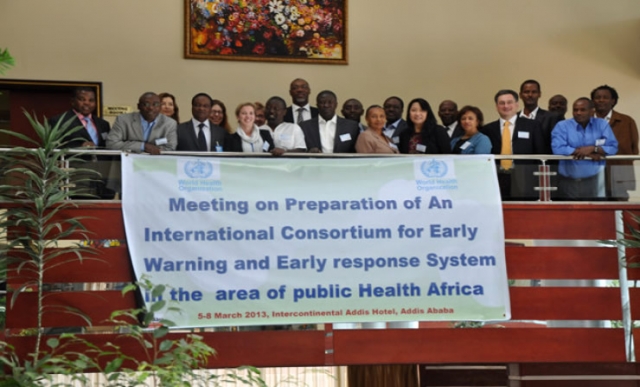
Addis Ababa, 05 March 2013 -- The meeting on preparation for an International Consortium for Early Warning and Early Response Systems in the area of Public Health in Africa, that is organized by WHO, kicked off at Intercontinental Addis Hotel, in Addis Ababa, Ethiopia. The meeting which aims to strengthen the resilience of African countries to climate change in the area of public health brings together participants from more than 20 countries in the world and institutions.
Beyond World Cancer Day: Raising Awareness, Dispelling Myths About Cancer
Brazzaville, 4 March 2013 -- An anonymous cancer patient in Brazzaville, Congo, once declared during a treatment session: “Given the fact that people know so little about cancer, we should be talking about this disease all the time, all year round, and not just in February”. He was referring to the urgent need to continually raise awareness of cancer and how to prevent, detect or treat the disease.
Accelerating achievement of MDGs 4 AND 5: PARMaCM launched in Namibia
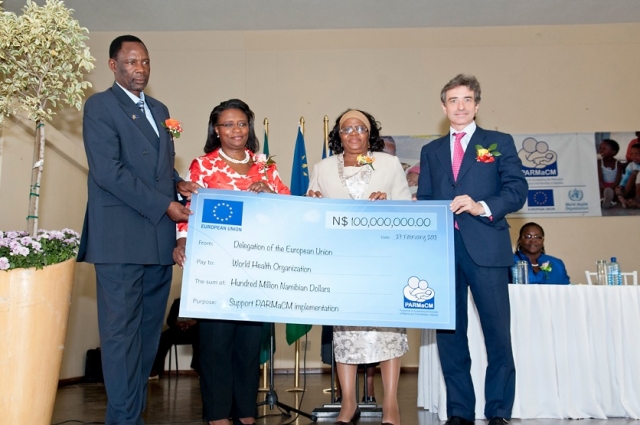
Windhoek, 27 February 2013 -- A four-year Programme to accelerate the achievement of Millennium Development Goals 4 (Reduce Child Mortality) and 5 (Improve Maternal Health), funded by the European Union to the tune of €10 million (approximately NAD100 million) was launched in Windhoek today.
Meeting on WHO-EU Policy Dialogue Programme ends in Brazzaville
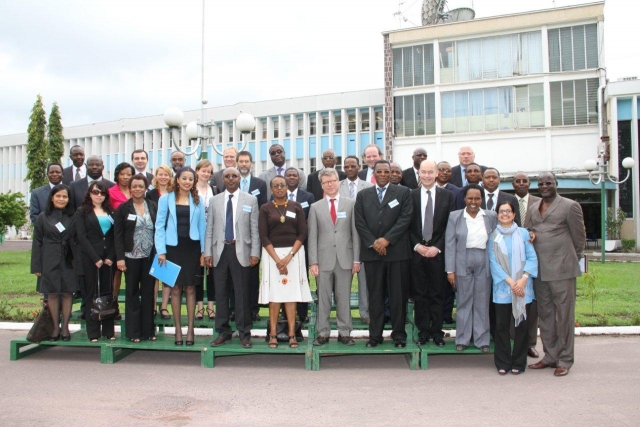 Monday 27 February 2013 -- A three-day meeting on the implementation of the WHO-European Union Health Policy Dialogue Programme, ended today in Brazzaville, Congo. The programme supports selected countries in policy dialogue on national health policies, strategies and plans and universal coverage.
WHO Regional Director for Africa Concludes Official Visit to Nigeria
Abuja/Brazzaville, 22 February 2013 – The World Health Organization (WHO) Regional Director for Africa, Dr Luis Sambo, has concluded a 3-day official visit to the Federal Republic of Nigeria.
Sierra Leone Newsletter: November-December 2012
In this Issue
- Development of Sierra Leone 2013 Health Sector Annual Operational Plan
- Sierra Leone develops Human Resource for Health Policy and Strategic Plan
Sierra Leone Newsletter: November-December 2012
Ministry of Health Adapts WHO Disease Outbreak Communication Handbook
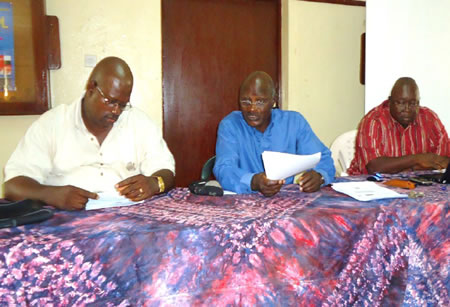
The Ministry of Health and Sanitation (MoHS) has started adaptation of the generic WHO Disease Outbreak Communication Training Handbook to strengthen outbreak communication in the country. The process com-menced with review of the document to decide on the changes that need to be introduced to customize it to the Sierra Leonean context. The purpose of the handbook is to guide users to design and carry out communication and social mobilisation activities to create awareness, promote behaviour change to prevent and control disease outbreaks.