Active outbreak — ongoing

Bundibugyo virus disease outbreak Democratic Republic of the Congo

17th Ebola outbreak in DRC since the virus was first identified in 1976
Ituri Province North-eastern DRC, with cross-border spread to Uganda
PHEIC International coordination activated — declared 17 May 2026

The Democratic Republic of the Congo is responding to an outbreak of Ebola disease caused by Bundibugyo virus in the north-eastern Ituri Province — the country's 17th Ebola outbreak since the virus was first identified in 1976. The WHO Director-General has determined that the outbreak, which was declared on 15 May 2026, constitutes a Public Health Emergency of International Concern (PHEIC), requiring international coordination and cooperation for the response.

The outbreak is unfolding against a complex epidemiological, humanitarian and security backdrop characterized by insecurity, highly mobile populations including cross-border and trade flows such as mining, as well as the presence of large refugee communities.

No approved countermeasures: Unlike Ebola virus disease, no licensed vaccine or specific treatment exists for Bundibugyo virus disease. Research and development initiatives are being mobilized to identify and advance potential medical countermeasures. Response strategies will rely heavily on comprehensive public health measures, including supportive care, early case detection, stringent infection prevention and control protocols, rigorous contact tracing, safe burial practices, and deep community engagement.

Response

Health authorities in the Democratic Republic of the Congo and Uganda have activated national emergency coordination mechanisms and established response operations to strengthen surveillance, laboratory testing, infection prevention and control (IPC), contact tracing and case management. WHO and international partners are supporting both countries through deployment of technical experts, provision of medical supplies and laboratory support, and reinforcement of emergency coordination systems.
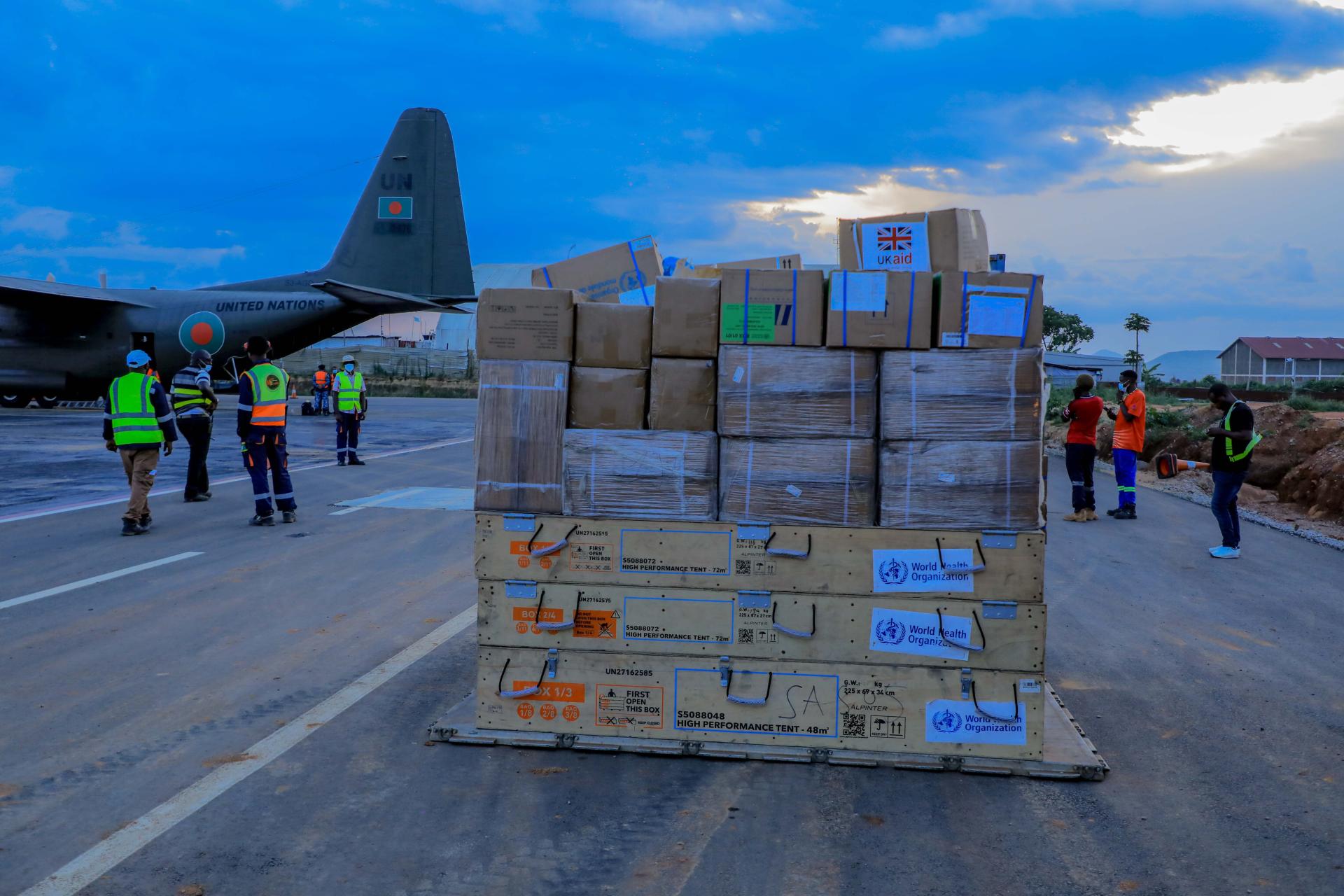
WHO emergency supplies on pallets in front of a UN cargo aircraft
Deployment of supplies · WHO emergency stocks delivered by UN airlift · © WHO/AFRO

Dedicated surveillance and response cells are being established in affected and at-risk health zones to improve early detection and rapid investigation of suspected cases. Enhanced disease surveillance is being prioritized, particularly for unexplained community deaths and clusters of febrile illness. Authorities are also intensifying contact tracing and monitoring activities in affected districts and border areas to limit further spread of the virus.

IPC measures are being reinforced in healthcare facilities following reports of suspected healthcare-associated transmission and deaths among healthcare workers. Efforts include systematic mapping of health facilities, triage systems, training for health workers on IPC, improved supervision, and distribution of personal protective equipment.
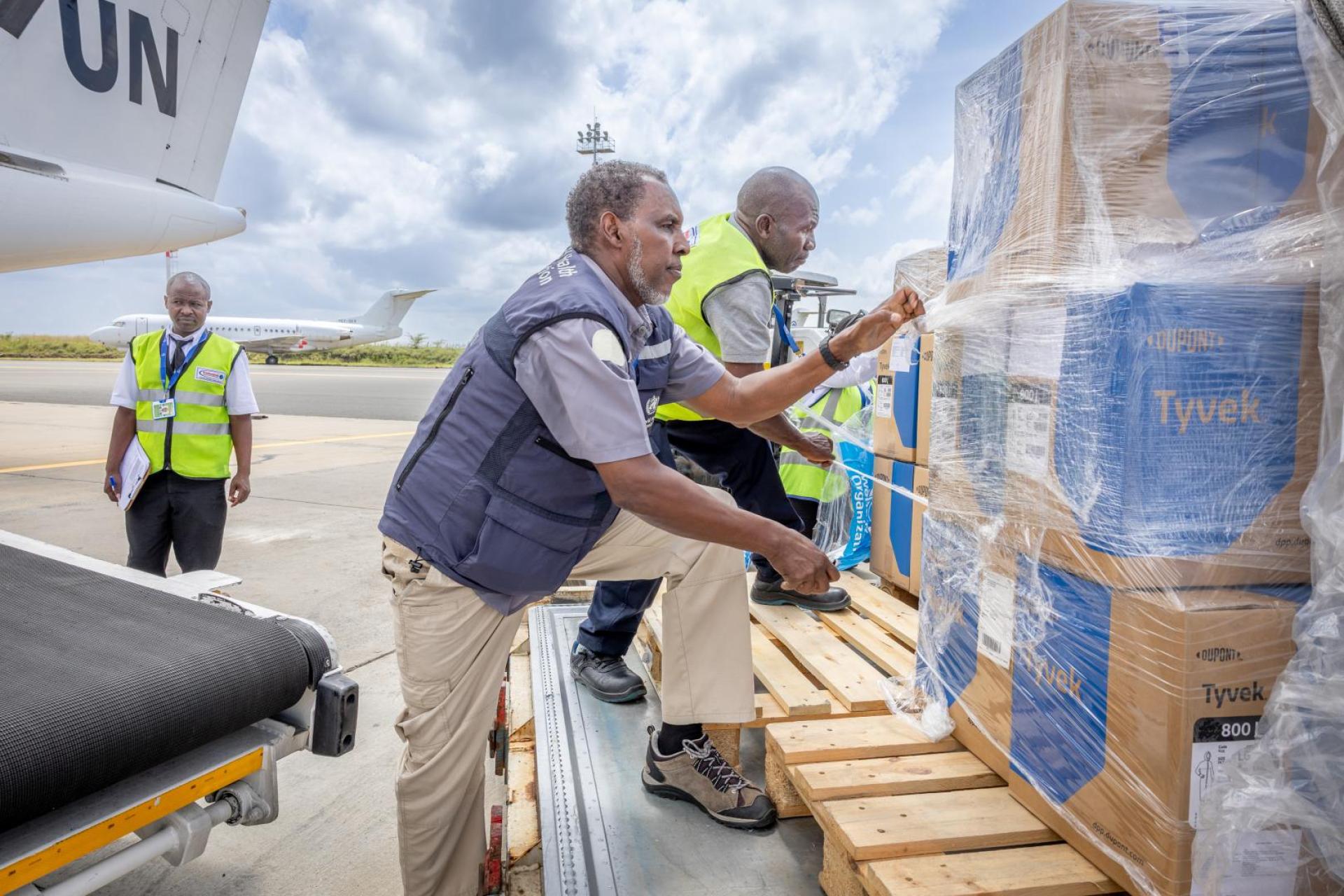
WHO and WFP field staff handling Tyvek personal protective equipment shipment
Distribution of PPE · WHO and WFP field staff handling Tyvek shipment · © WHO/AFRO

Specialized treatment centres and isolation units are being established close to outbreak epicentres to provide supportive and intensive clinical care for suspected and confirmed cases. Safe referral pathways for patients are also being strengthened to reduce transmission risks during transportation and treatment.
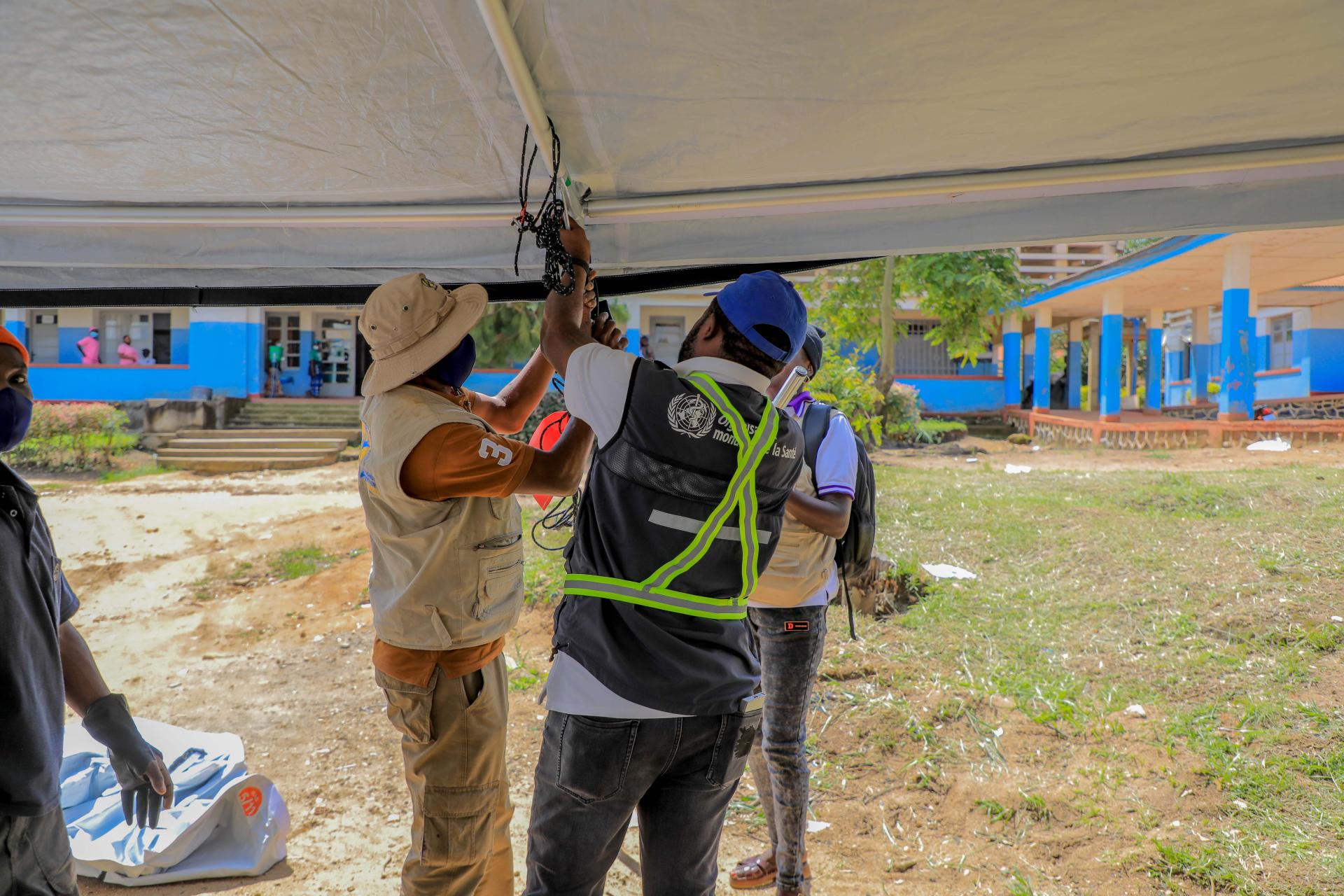
WHO field team installing a tent canopy at a health centre
Treatment infrastructure · WHO field team setting up a treatment unit at a health centre · © WHO/AFRO

Cross-border collaboration is being intensified with joint preparedness measures including strengthened disease surveillance at border crossings, information sharing, rapid alert notification systems, simulation exercises and coordination of emergency response teams.
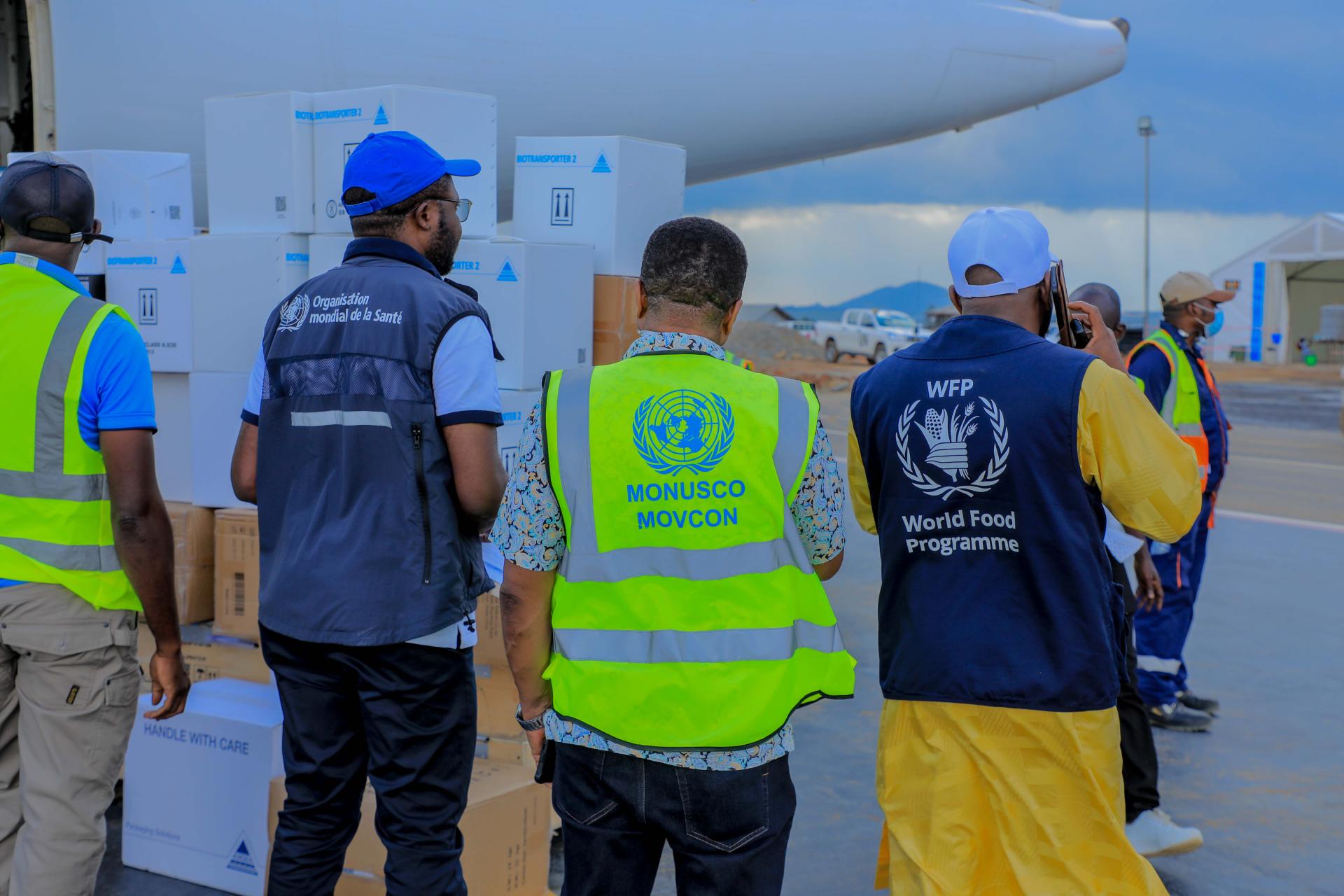
WHO, MONUSCO and WFP field staff coordinating on the tarmac
Multi-agency coordination · WHO, MONUSCO and WFP working together on the response · © WHO/AFRO
Travel & trade: WHO has advised against international travel and trade restrictions. Border closures are not supported by scientific evidence and may instead increase risks by shifting movements to informal and unmonitored crossings.

Vaccination & Therapeutics

At present, there are no licensed vaccines or approved therapeutics specifically targeting Bundibugyo virus disease. WHO and partners are supporting accelerated research and development efforts to evaluate candidate vaccines and investigational therapeutics. Authorities in affected and at-risk countries are being encouraged to establish regulatory approvals and operational readiness for clinical trials and emergency use of investigational countermeasures should they become available.

Preparedness activities include strengthening cold-chain systems, identifying clinical trial sites, training healthcare workers in good clinical practice, and enhancing laboratory diagnostic capacity to support future vaccine and therapeutic studies.

Frequently Asked Questions

Updated 24 May 2026

Ebola virus is a rare but often fatal virus. There are three strains known to have caused outbreaks: Ebola Zaire, Sudan virus and Bundibugyo virus.

It is considered serious because it can cause severe disease, spread quickly from person to person and often results in death if it is not detected early and treatment is not initiated quickly. In some outbreaks, the case fatality ratio has ranged from around 20% to as high as 90%.

Ebola is primarily spread through contact with an infected person, their bodily fluids, or the body of someone who died from Ebola.

A person with Ebola can only pass it to another person when they have symptoms. After exposure, it can take between two and 21 days for symptoms to develop.

The early symptoms are difficult to differentiate from common tropical diseases such as malaria or typhoid. They include sudden high fever, headache, joint pain, sore throat and body weakness.

Later, patients can develop diarrhoea and vomiting. This is a very serious phase because people can die quickly from dehydration. Complications can include kidney failure, failure of the heart, muscles or brain. In some cases, bleeding occurs, although it is not very common with Bundibugyo virus.

Ebola is a zoonotic disease, so it first starts from wild animals. People most at risk at the beginning of an outbreak are those whose activities bring them into contact with wild animals, such as hunters, farmers or people who eat bush meat or fruit bats.

Once a person becomes sick, caregivers at home, healthcare workers and people who participate in burials are at high risk, because the body of someone who has died from Ebola is very infectious.

The main treatment available for all Ebola strains is optimized supportive care. This means managing symptoms early, replacing fluids aggressively when patients have diarrhoea or vomiting, and preventing complications.

For Ebola Zaire, monoclonal antibodies are available and can help patients recover. These treatments are not available for the other strains. The key is early, aggressive supportive care, which increases the chances of survival.

A vaccine is available for Ebola Zaire, the strain for which approved vaccines exist.

For Sudan virus, a clinical trial of a candidate vaccine was started during the last outbreak in Uganda. For Bundibugyo virus, there is currently no approved vaccine. So the answer is yes for Ebola Zaire, but no for the other strains currently.

If you are in an area where there is an outbreak, equip yourself with the right information: what the disease is and how it spreads.

Maintain hand hygiene by washing your hands frequently with soap and water. Avoid contact with people who are sick and refer them to a health facility as soon as possible. Do not participate in burials of someone who died from Ebola. If you find an animal that died on its own in the bush, do not touch it or bring it home.

If a vaccine is available, accept it. If you are identified as a contact, follow public health advice, stay at home and do not travel. These measures help protect your family and the public.

Some practices amplify transmission. If someone is sick at home and is cared for by many people, moves from one clinic to another, visits a traditional healer, or seeks prayers, all this contact increases the spread of the virus.

Burial practices can also drive transmission. In some outbreaks, one funeral has resulted in 40 or 50 infections. Late care-seeking, close contact, and some cultural or religious practices can amplify transmission.

Hand hygiene is very important because the eyes, nose and mouth are vulnerable entry points for infection. We often touch surfaces and then unconsciously touch our face or rub our nose, transferring the virus into the body.

Washing hands regularly reduces the risk of transmission. For healthcare workers, hand hygiene must be practised before and after touching patients, around the patient environment, and before procedures such as injections or placing a cannula.

The strains of Ebola virus are distributed according to their reservoirs. The virus circulates in animals such as fruit-eating bats, which are found across different ecological zones.

The virus is not fixed in one place. It moves according to the patterns of the animals that carry it, including fruit-eating bats and other wild mammals.

Transmission studies are needed to know whether it is spreading unusually fast. The issue is that the outbreak had been going on for some time before it was detected.

When public health measures are not in place, the disease continues to spread in the community, regardless of whether it is Bundibugyo, Sudan or Zaire. Now that it has been detected, the measures being put in place will slow down transmission.

Bundibugyo can also be difficult to detect because it does not frequently present with bleeding. It can look like malaria or typhoid, and advanced PCR testing may be needed to identify it.

WHO supports countries to develop capacity for detection and response to emergencies such as Ebola.

The support focuses on five areas: emergency coordination, community protection, countermeasures, collaborative surveillance, and safe and scalable care.

This includes organizing the response, working with community leaders and influencers, supporting safe and dignified burials, providing supplies and protective equipment, identifying cases and contacts, following contacts for 21 days, and helping set up isolation and treatment centres close to the affected communities.

WHO is also supporting neighbouring countries to prepare, so that any case can be detected, confirmed and responded to quickly.

The fear around Ebola is understandable, but the public health community has learned a lot about how to control this disease.

The first ingredient is community ownership of the response. Communities need to participate, understand and collaborate. If communities do not accept public health measures, the knowledge available will not work.

Responders know what to do: identify cases quickly, follow contacts, and make sure patients are cared for early so they can survive. It is possible to get Ebola, survive and go back to your family.

There is no need for panic. What is needed is support for the response and acceptance of public health measures.

Latest News & Updates


Video reports from the field

Ebola : Deployment of supplies and WHO response teams in the Mongbwalu health area

Ebola : Deployment of supplies and WHO response teams in the Mongbwalu health area

Behind the scenes of Ebola disease outbreak response

Behind the scenes of Ebola disease outbreak response

WHO delivers lifesaving supplies to The Democratic Republic of the Congo

WHO delivers lifesaving supplies to The Democratic Republic of the Congo

Previous Emergencies in the Region

A chronological record of prior Ebola-related outbreaks. Click any entry to expand the full situation overview, response details and press coverage.