Community Perceptions of Safe and Dignified Burials in the DRC
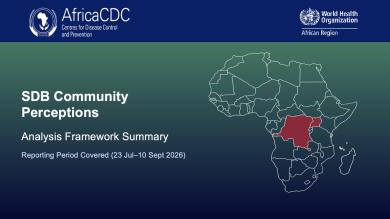
A recent Community Insights analysis of Safe and Dignified Burials (SDB) in the Democratic Republic of the Congo highlights how trust, dignity and the way burial services are delivered shape community acceptance. The Community Insights Working Group, a coordinated initiative led by the Africa Infodemic Response Alliance (AIRA) and co-chaired by IFRC, consolidated community data from multiple sources to provide a rapid overview of community experiences and priorities related to the Bundibugyo Virus Disease (BVD) outbreak.
Drawing on community feedback, perception surveys, qualitative assessments and social listening data collected between 23 July and 10 September 2026, the analysis found that resistance to SDB is not simply about the burial protocol itself. While 80–88% of respondents indicated they would accept a trained SDB team in personal protective equipment (PPE), concerns remain around operational delays, family involvement, physical contact with the deceased, financial grievances and highly securitised approaches.
The findings also show that acceptance is step-specific. Families may accept some elements of an SDB while refusing others, particularly practices involving touching, washing or placing the body in a body bag. Cultural and spiritual concerns around the integrity and treatment of the body further shape how SDB is understood and experienced.
These insights reinforce the importance of listening to communities, addressing operational barriers, and ensuring families and trusted local actors have a meaningful role in the burial process. They provide a practical evidence base for strengthening community engagement and adapting SDB approaches to the concerns being expressed across affected communities.
From insight to action
Listening isn't only about spotting rumours. It also shows us how the way services are delivered builds or erodes trust. That's why these findings don't stop at a report. AIRA has taken the recommendations directly to the relevant response pillars and advocated for them to be put into practice and will keep following up on progress to ensure the concerns communities raised are addressed. When communities raise concerns, the response should adapt, and AIRA is committed to closing that loop.


