Adré, Chad—When Zara arrived in Adré in June 2023 after fleeing the conflict in Sudan, she was 19 years old. Shortly afterwards, she was assaulted by several men while visiting her grandmother in another section of the site where she was living with her family. A few weeks later, she learned that she was pregnant.
The news triggered a family crisis. Fearing for her safety because of pressure from relatives to terminate the pregnancy, Zara sought help. She was referred to the Integrated Multisectoral Services Centre (CISM) in Adré, where survivors of gender-based violence can access medical care, psychological support and protection services.
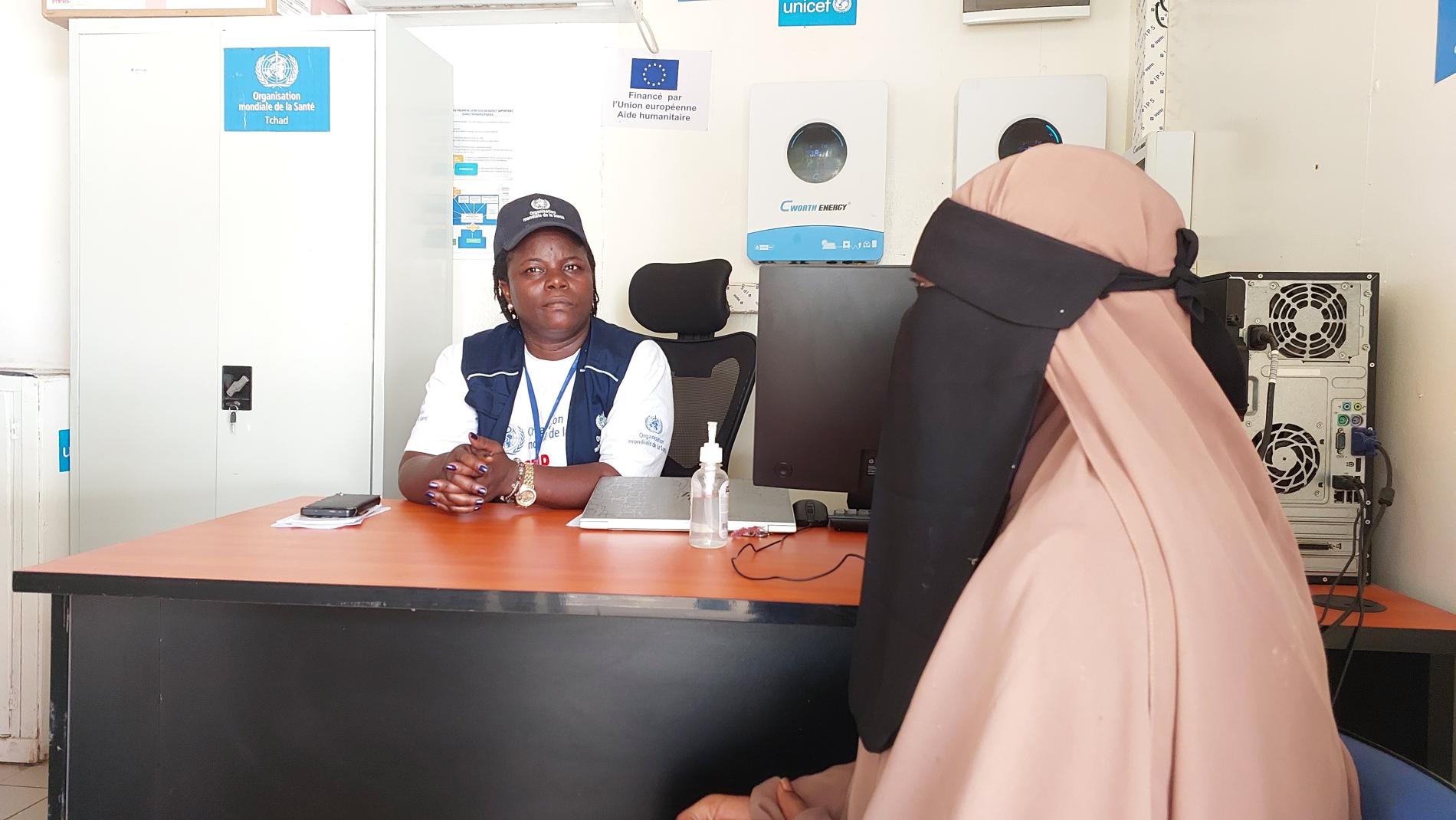
“The CISM staff welcomed me with great kindness. They listened to me and supported me throughout my pregnancy,” said Zara. “At first, I wanted to abandon my baby. Thanks to their counselling, I eventually decided to keep the child. I cannot thank the centre’s staff enough for helping me through a situation that could have cost me my life.”
Today, she continues to visit the centre. “I often come to CISM because I feel safe there. It helps me cope with my difficulties and regain hope,” she said.
Zara’s story reflects the reality faced by many women and families displaced by the conflict in Sudan. Since April 2023, more than 1 million refugees and returnees have sought refuge in eastern Chad. Around 75% of them are women and children who have fled violence, forced displacement and, in some cases, the loss of loved ones. Beyond immediate needs for food, water, shelter and medical care, mental health remains an urgent but often less visible concern.
In eastern Chad, World Health Organization (WHO) is supporting the government in providing care for people affected by the psychological consequences of conflict and forced displacement. Since the start of the crisis, more than 10 000 people have received mental health and psychosocial support services, and more than 1200 survivors of gender-based violence have received assistance through interventions supported by WHO and its partners. Health care providers and community actors have also been trained to strengthen sustainable access to these services.
For Dr Raoul Djinguebey, WHO Response Coordinator in eastern Chad, mental health support is an essential component of the humanitarian response. “Behind every consultation is a person seeking to regain their dignity, confidence and ability to rebuild their life. By investing in mental health today, we are helping survivors of violence overcome trauma while strengthening the resilience of communities for tomorrow,” he said.
In Adré, where nearly 71% of Sudanese refugee arrivals in eastern Chad are concentrated, the CISM provides an important point of access to care, protection and psychosocial support. Since opening in October 2024, the centre has supported 487 survivors of gender-based violence and 137 people have received specialized mental health care.
On the ground, this response relies on collaboration between national authorities, WHO and several humanitarian partners.
“The crisis has led to a significant increase in mental health and psychosocial support needs, particularly among women, children and people who have experienced traumatic events or other situations of distress. Strengthening these services is now a priority in order to meet the needs of refugees and host communities,” said Dr Adam Ahmat Mahamoud, Chief Medical Officer of the Adré health district.
Among those who supported Zara was Bebbata Pagaye, a WHO specialist in sexual and reproductive health and the prevention of gender-based violence in Adré. Like other survivors supported at the centre, Zara received assistance throughout her care pathway, from referral to psychosocial follow-up.
“Seeing a woman smile again after going through so many hardships is one of the greatest rewards of our work. We help them regain self-confidence, understand that they are not responsible for what happened to them and realize that they still have the opportunity to rebuild their lives,” she said.
This reality is also reflected in the daily work of Charlot Serferbe Daba, a clinical psychologist supported by WHO at the Adré CISM.
“Most people seeking mental health services have experienced extremely traumatic events. Many women were subjected to sexual violence during the conflict or while fleeing. We also support men, adolescents and children facing the loss of loved ones, family separation or other traumatic events,” he explained.
At the Adré CISM, services are delivered through collaboration between national authorities, the United Nations Children’s Fund (UNICEF), the United Nations Population Fund (UNFPA), the Office of the United Nations High Commissioner for Refugees (UNHCR), the Chad Red Cross and several national and international organizations. Together, these partners provide an integrated response combining medical care, mental health services, psychosocial support and protection services.
“Mental health needs have increased considerably with the large-scale arrival of refugees. Thanks to collaboration between the government, WHO and other partners, more people can now access psychological and psychosocial support that is essential to their recovery and well-being,” said Dr Abdelmahamoud Chene, Provincial Health Delegate for Ouaddaï.
For Zara, this support has represented much more than a service. Thanks to the assistance she received, she continues to move forward despite the challenges she has faced. Her story is a reminder that, at the heart of a crisis, finding hope is often the first step towards healing and a new future.