Upper Nile State – The Ministry of Health, together with WHO and partners, has officially launched the Minister’s Special Initiative on Maternal and Newborn Health in Maiwut, aimed at ensuring that mothers and newborns in hard-to-reach areas have access to basic emergency obstetric and newborn care services comparable to those available elsewhere in the country.
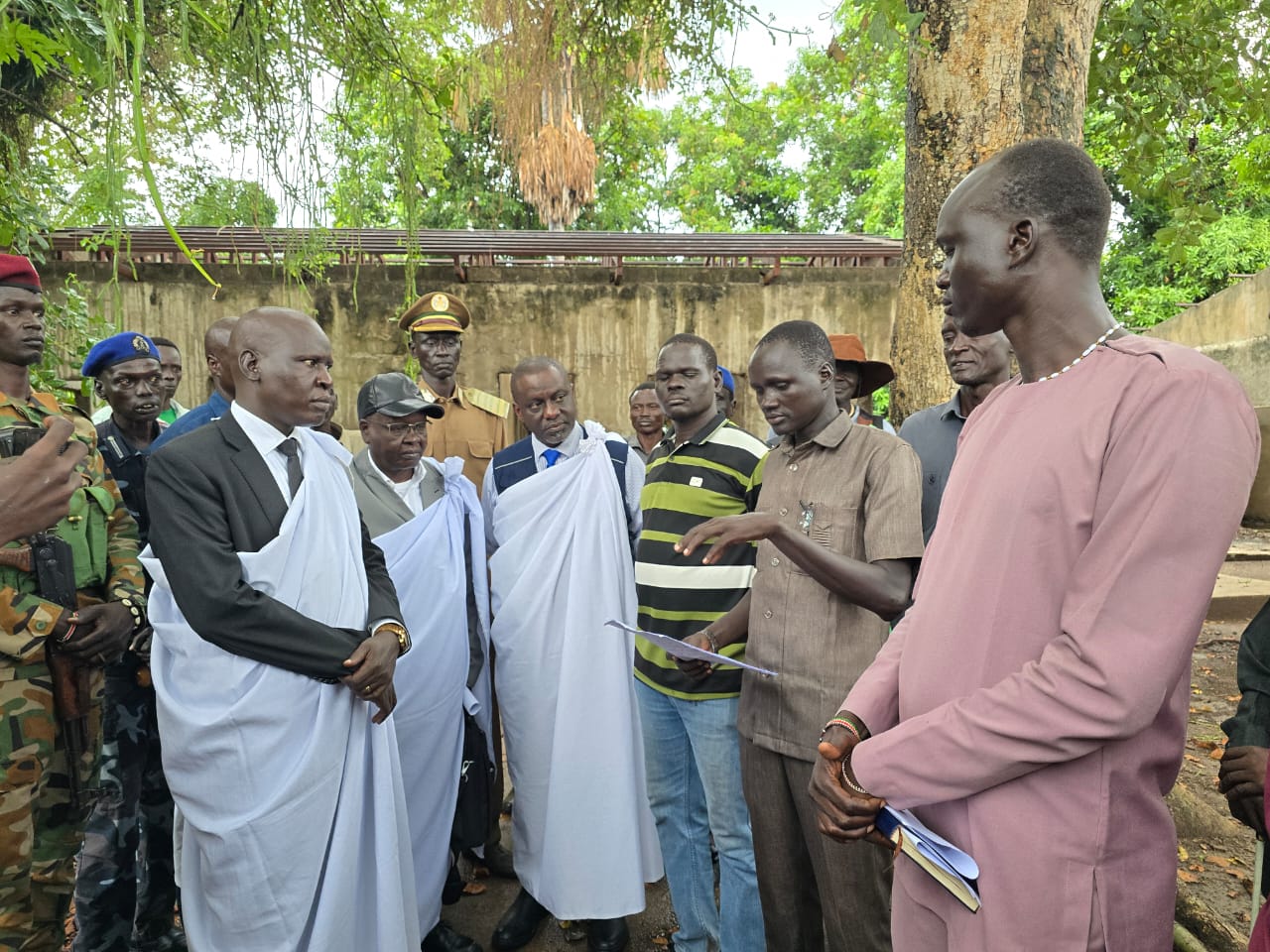
As part of the launch, the Minister of Health, Hon. Luke Thompson, together with Dr. Humphrey Karamagi, visited Maiwut Primary Health Care Centre to deliver essential medical supplies and engage with health workers and county authorities on strengthening maternal and newborn health services.
“Maiwut was brought to our attention,” said Hon. Luke Thompson. “We are here to assess the state of healthcare and understand how best we can support service delivery for mothers and newborns in these hard-to-reach areas.”
A fragile setting where access to care remains limited
Maiwut County, along South Sudan’s northeastern border with Ethiopia, is a remote and flood-prone area where seasonal rains, weak road infrastructure, and insecurity across Upper Nile State frequently disrupt access to care. In this fragile context, the Maiwut Primary Health Care Centre (PHCC) serves as a critical lifeline, providing essential maternal, newborn, and primary healthcare services despite limited resources and operational constraints.
The need for strengthened services is urgent. Nine maternal deaths have been reported in the county this year alone, highlighting persistent gaps in timely and quality care.
“We have seen the challenging conditions for health services, particularly the very high numbers of mothers and children who are sick and have died here,” said Dr. Humphrey Karamagi, WHO Representative for South Sudan. “Nine maternal deaths this year is quite high. The state therefore requested support from WHO and partners to strengthen maternal and child health services and improve service delivery.”
Delivering essential supplies and emergency care capacity
Through the initiative, WHO and partners delivered a package of essential supplies to strengthen maternal and newborn care. This included reproductive health kits with medicines to prevent postpartum haemorrhage for 250 mothers, HIV test kits for 400 antenatal clients, and Manual Vacuum Aspiration (MVA) sets for managing complications of miscarriage for up to 5,000 people.
An Interagency Emergency Health Kit was also provided to support primary and emergency care for approximately 1,000 people, including medicines for malaria, pneumonia, diarrhea, and worm infestations, as well as supplies for minor surgical procedures.
Introducing digital tools and improving quality of care
Beyond commodities, the initiative is introducing innovations to strengthen service delivery in remote settings. Internet connectivity through Starlink has been established to improve communication and coordination among health facilities, while a Digital Care Companion tool is being introduced to support clinical decision-making for frontline health workers.
Infection prevention and control supplies were also provided to improve the safety and quality of care for mothers and newborns.
These investments are particularly critical for facilities like Maiwut PHCC, which remain the first, and often only, point of care for many families in the surrounding catchment area. The visit also provided an opportunity for direct engagement with health workers and local authorities on antenatal care, safe deliveries, referral systems, and emergency obstetric and newborn care.
Strengthening systems for more equitable care
WHO continues to support the Ministry of Health through technical assistance, coordination, and essential medical supplies under the initiative, working alongside partners to strengthen service delivery in underserved and fragile settings.
Early implementation is already showing progress. The combination of targeted training, supply delivery, and digital innovation is improving the capacity of facilities to manage maternal and newborn health needs closer to communities. While challenges remain—particularly in infrastructure, staffing, and sustained connectivity—the initiative is helping to establish a stronger foundation for more equitable care in remote areas.
The Minister’s Special Initiative on Maternal and Newborn Health, supported by WHO, reflects a coordinated effort to reduce inequities in access to lifesaving care. In places like Maiwut, where geography and access constraints have long shaped health outcomes, the initiative demonstrates how targeted investments and partnership-driven implementation can begin to close critical gaps in maternal and newborn health services across South Sudan.