Alcohol Based Handrub now produced and used by health workers at Bomi Hospital – Liberia
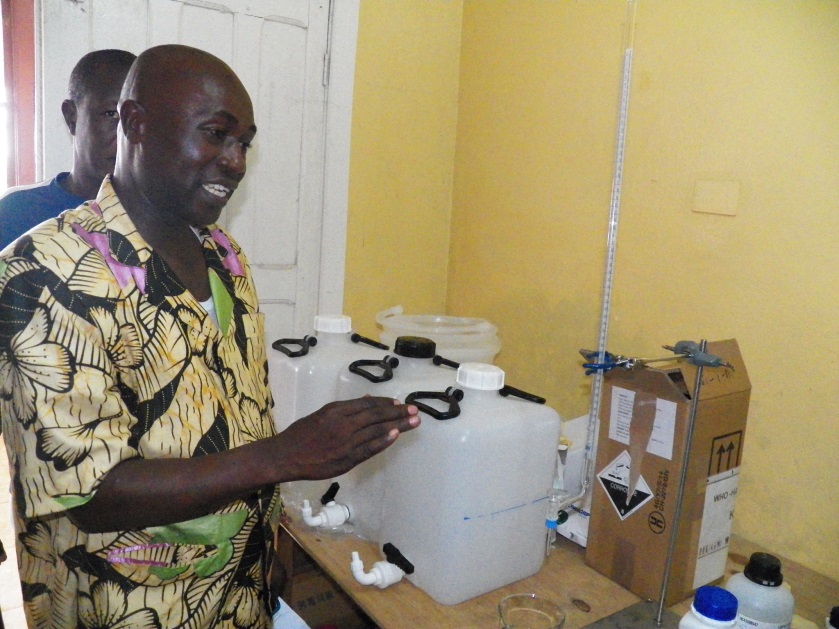
‘Nine more hospitals in Liberia ready to strengthen IPC using Alcohol Based Handrub ’
Liberia, July 2015 - The Ministry of Health in Liberia in collaboration with the Swiss Agency for Development and Corporation in January 2015 initiated a pilot project to produce Alcohol Based Handrub (ABHR) for Infection Prevention and Control measures in ten hospitals. This project was conceived as a result of a joint collaboration between WHO Collaboration Center on Patient Safety Infection Control and Improved Practices and the University of Geneva Hospital, Faculty of Medicine.
South Sudan: Family encourages early diagnosis and treatment of Hepatitis after successful recovery
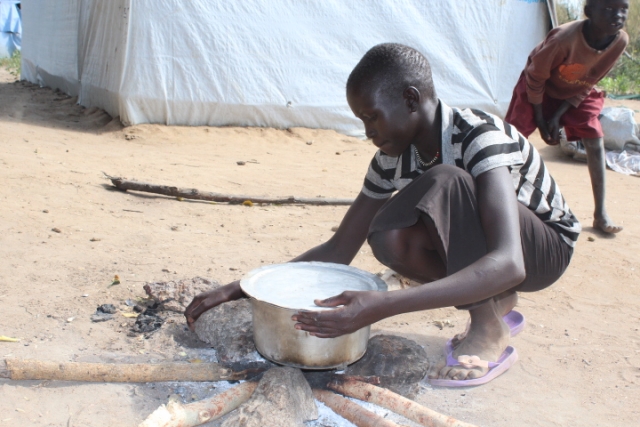
Aker Moyom Jok is all too familiar with death due to Hepatitis E Virus (HEV).
In 2014, the 29 year old mother of five lost her brother-in-law to the disease. So, when she noticed the signs and symptoms of HEV in her 13 year old daughter, Awel Wech Ayom, she immediately sought medical attention.
“I am grateful to health partners because this is a killer disease and some people have died, but my daughter is alive,” she says.
WHO and Gates Foundation agree on ways to strengthen collaboration to improve health in the African Region
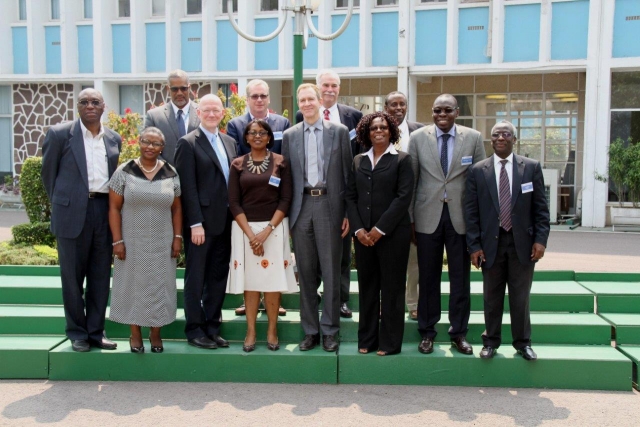
Brazzaville, 27 July 2015 – Dr Matshidiso Moeti, the World Health Organization (WHO) Regional Director for Africa, Dr Chris Elias, President of the Global Development Division of the Bill & Melinda Gates Foundation, and Dr Trevor Mundel, President of the foundation’s Global Health Division, have reaffirmed their commitment to further strengthen collaboration between the two organizations in the WHO African Region.
Gambia commemorates World Hepatitis Day 2015
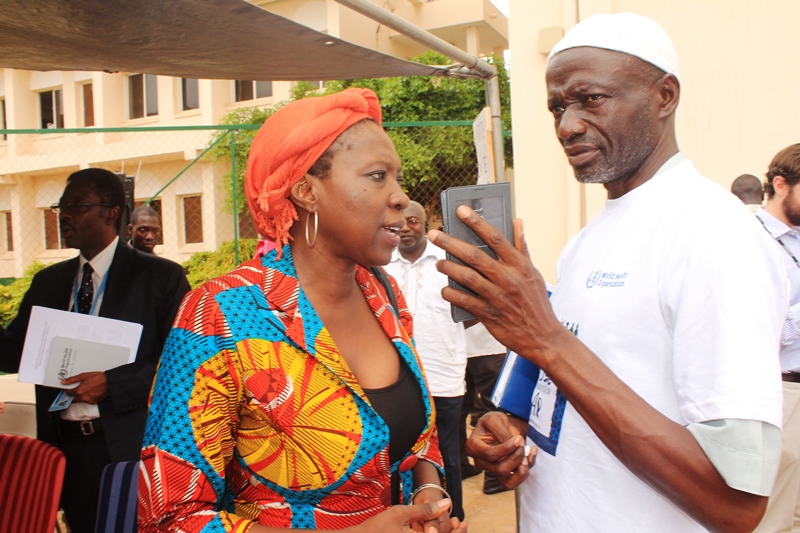
Banjul, The Gambia, 1st September 2015 - On 28 July 2015, the Ministry of Health and Social Welfare in collaboration with the World Health Organization (WHO), Medical Research Council (MRC) and other partners commemorated World Hepatitis Day under the theme: “Prevent Hepatitis – Act now”. The theme this year focuses on the prevention of hepatitis B and C that affects hundreds of millions of people worldwide, causing acute and chronic liver disease and killing close to 1.5 million people every year.
First regional forum held on mental health response to Ebola outbreak
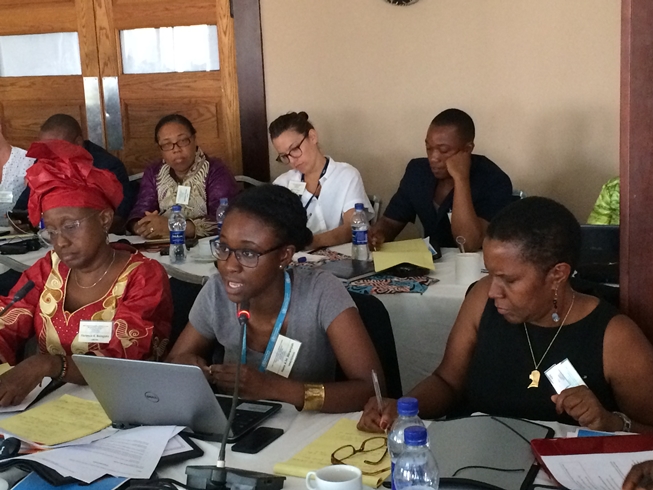
The World Health Organization convened 75 mental health experts to discuss the social and mental health impacts of the Ebola epidemic in Guinea, Liberia and Sierra Leone and ways to strengthen response plans in the event of a future Ebola outbreak.
WHO strengthening national health emergency and disaster management capacities and resilience of health systems
Yaoundé, 23 July 2015 – The World Health Organization (WHO) African Region continues to be challenged by frequent natural and man-made emergencies as well as large-scale disease outbreaks that cause injuries, deaths, population displacements, destruction of health facilities and disruption of health care services.
WHO intensifies efforts to achieve global health security
The ongoing Ebola outbreak clearly demonstrates how the inability to prevent, detect, and control a threat in one part of the world poses a threat to everyone, everywhere. It has the potential to cause enormous damage in terms of lives lost, economic impact and human development around the world.
High level delegation from the Bill & Melinda Gates Foundation visits World Health Organization Regional Office for Africa
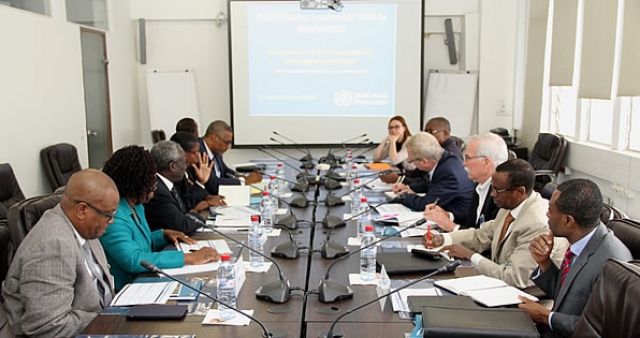 Brazzaville, 21 July 2015 - A high level delegation from the Bill & Melinda Gates Foundation (BMGF) has begun a four-day official visit to the World Health Organization Regional Office for Africa (AFRO) in Brazzaville, Congo from 21-24 July 2015.
Self-testing helps combat HIV in adolescents
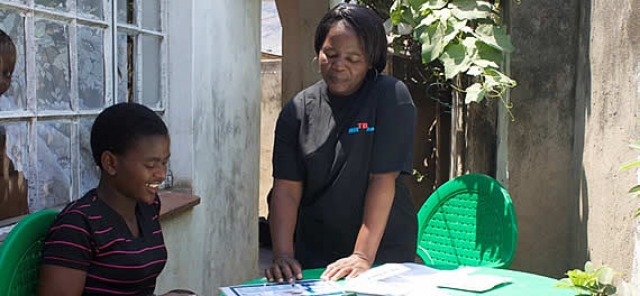
An HIV self-testing project in Malawi raises the rate of adolescents tested to over 80%. WHO encourages countries to conduct pilot programmes on HIV self-testing so information can be gathered and the role self-tests can be evaluated. Better access to self-testing helps adolescents who need further support for prevention, treatment and care of HIV. Concerns about confidentiality and privacy are one of the key barriers to HIV testing services for adolescents.
Deworming campaign improves child health, school attendance in Rwanda
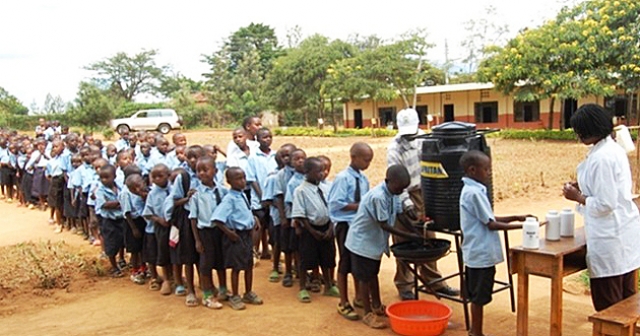
Christophe Harerimana, a school teacher for more than 20 years in Rwanda, became worried in recent years. Many of his students were coming to class ill and were having trouble concentrating.
“The children were having abdominal pain, diarrhoea and nausea. This made it difficult for them to follow the lessons,” says Harerimana, who teaches science and Kinyarwanda, the local language of his village, in the Musanze District.