
Risk communication and community engagement are essential for an effective response to any epidemic. Since the outbreak of Ebola virus disease was declared in Bulape, the Democratic Republic of the Congo, Jean de Dieu, a community volunteer, has been going door to door to raise awareness among…
Videos


In Bulape, in Kasai Province, the Democratic Republic of the Congo, more than 26,000 people have been vaccinated against Ebola in one month, thanks to strong community engagement and awareness-raising efforts. WHO, in collaboration with its partners, is helping the government to intensify…

Bulape General Hospital, located in an area affected by Ebola virus disease in the Democratic Republic of the Congo, has resumed full operations.Following the relocation of the treatment centre, a decontamination operation enabled the hospital to safely admit patients.WHO and partners are…

WHO and its partners have built a new Ebola treatment centre in Bulape, the Democratic Republic of the Congo, to provide safe and dignified care during the response. This centre also includes an innovative module for treating infectious diseases, developed in collaboration with WFP and more than 40…

Central African Republic is stepping up efforts to reduce home births, as delivering without skilled care increases the risk of preventable maternal complications and deaths.With one of the highest maternal mortality rates in the world, the country has trained and deployed 8,000 community health…

Cervical cancer is the most common cancer among women in Rwanda. With around 1230 new diagnoses and around 830 deaths each year the disease is an ongoing concern for health authorities. To lower the burden of the disease and save lives, in 2020 the country developed a national strategy aligned with…

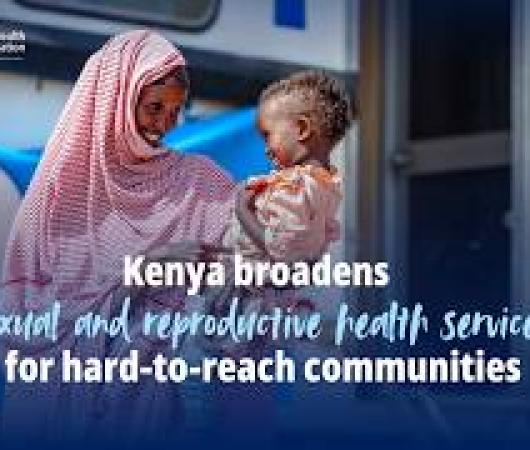
In Tana River County, Kenya, extreme weather and conflict had displaced around 140 000 people, as of June 2025. Difficult access to health services compounds adversity, especially for women and children. In response, health authorities, along with WHO and partners, are prioritizing quality,…

Tanzania, with support from WHO and partners, has adopted a multipronged approach to cervical cancer prevention, treatment and care. This is being achieved through HPV vaccination of girls aged 9— 14 years, cervical cancer screening for early detection, treatment of precancerous cervical lesions…

Over the past two years, the World Health Organization has been supporting Kenya's Ministry of Health to implement the Women's Integrated Cancer Screening (WICS) program. This initiative combines screening for breast and cervical cancers with common non-communicable diseases, including…

In 2024, Tanzania introduced @WHO's Labour Care Guide, a groundbreaking tool that standardizes labour monitoring so health workers can recognize complications and initiate lifesaving care. Health authorities, with support from WHO and partners, have trained over 40 health worker champions, who have…

From 23-25 November 2025, WHO African Region, alongside partners—including UNICEF and UNOPS—joined a Gavi support mission to the Democratic Republic of the Congo to strengthen collaboration with national authorities, evaluate ways to sustain immunization progress, and kick off priority vaccination…