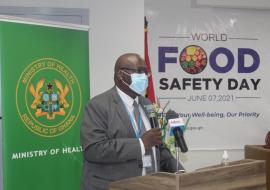
Ghanaians have been called to develop the culture of voluntary blood donation to guarantee timely access to safe blood and blood products and help save lives.
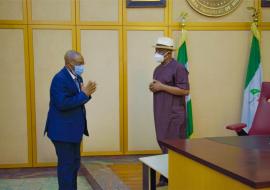
Abuja, 22nd June, 2021 - The World Health Organization Country Representative (WR) Dr Walter Kazadi Mulombo has commended His Excellency, Governor Ezenwo Nyesom
While the 2014–2016 deadly Ebola outbreak in West Africa devastated lives and wrecked health services, it also offered pivotal lessons in outbreak control by stoking swift and more effective response as well as driving progress in vaccines and therapeutics.
The Ebola outbreak that erupted in Guinea in early 2021 was declared over on 19 June, just four months after the first cases were confirmed in a rural community in the south of the country. Banking on the lessons learned from the deadly 2014–2016 outbreak as well as a growing national expertise, a prompt response was mounted, helping to curb widespread infection. Minister of Health Honourable Dr Rémy Lamah explains what it took to halt the virus and the challenges met.
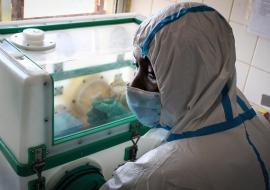
It is a quiet morning at an Ebola treatment centre in the outskirts of N’zerekore, a town in the south-east of Guinea. The centre’s triage and reception areas are all empty, and medical staff are relaxed and jovial as they tend to a small handful of patients or catch up on some administrative tasks in the office.
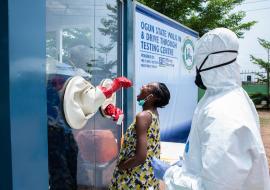
Freetown – While the 2014–2016 deadly Ebola outbreak in West Africa devastated lives and wrecked health services, it also offered pivotal lessons in outbreak control by stoking swift and more effective response as well as driving progress in vaccines and therapeutics.
The Ebola outbreak that emerged in Guinea in mid-February was declared over today. It was the first time the disease resurfaced in the country since the deadly outbreak in West Africa that ended in 2016.