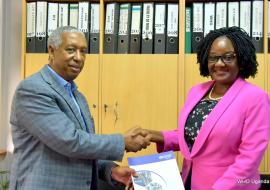
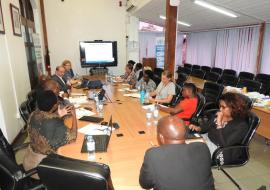
The World Health Organization (WHO) and the Makerere University School of Public Health (MUSPH) signed a memorandum of understanding (MOU) to intensify collaboration on health research, health worker capacity building and community service.
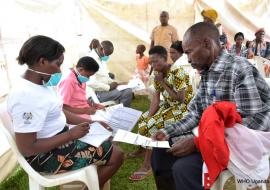
Uganda commemorated World Tuberculosis Day under the theme, "It Is Time for Uganda to End TB”, and the slogan, “It Starts With Me" at a national function at Ruhama sub-county grounds in Ntungamo District.
Nearly 630 million years of healthy life were lost in 2015 due to diseases afflicting people in the African Region, according to a new report by the WHO Regional Office for Africa. This amounts to a yearly loss of over $ 2.4 trillion of the region's gross domestic product.
The world transitioned, in 2015, from the Millennium Development Goals (MDGs) to the Sustainable Development Goals (SDGs). The transition is aimed at ensuring a more integrated and sustained approach to development. This obliges all countries and sectors in developing people and improving the lives of the most vulnerable in societies. The Health sector is reflected in Goal 3, as “Ensure healthy lives and promote well-being for all at all ages”.
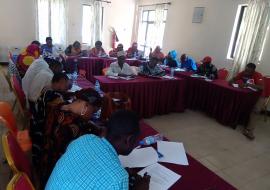
The Ministry of Health in Tanzania conducted orientation workshops on integrated screening, referral and follow up for Tuberculosis and other Chronic Lung Diseases to 20 Community Health providers in Tanga region. This initiative is supported by the World Health Organization and aims to embody the leverage of resources in addressing community needs in primary health care delivery. As most of the other Chronic Lung Diseases are not infectious in contrast to Tuberculosis, the implementation of the initiative is done jointly by the National TB and Leprosy Programme and Non-Communicable Diseases department of the Ministry of Health in the country.
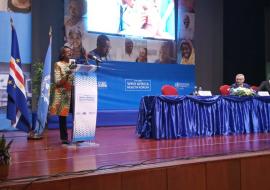
H.E. Jorge Carlos de Almeida Fonseca, President of the Republic of Cabo Verde, today demonstrated his support for the World Health Organization’s (WHO) initiatives to transform health care throughout Africa by officially launching the three-day WHO Africa Health Forum in Praia. He told participants about the significant progress that Cabo Verde has made towards delivering universal health coverage.
AMREF Health Africa and Rwanda Ministry of Health co-hosted the First-Ever Global Conference Focusing on universal health coverage in Africa, and on health for all to the elimination of gender-based violence, which is a WHO top priority. The conference brought together 1 200 participants from 35 countries, including health ministers, private sector leaders, civil society and representatives from multilateral organizations to chart a road map to achieve universal health coverage across Africa by 2030.