Screening at Uganda's points of entry and exit strengthens Ebola outbreak response

Screening at Uganda's points of entry and exit strengthens Ebola outbreak response

Nancy Asuru is a vendor at the border crossing in Arua, northern Uganda, a busy point of entry and exit to and from the Democratic Republic of the Congo. Her colourful vegetable stand is only a few metres from the tent where every traveller is screened for Ebola on entry and exit to and from Uganda. Her proximity to the screening point has made her more aware of infection and prevention control measures. “I wash my hands regularly,” she says, gesturing towards to the handwashing station near the tent. “I also would like to get hand sanitizer and masks so I can protect myself and my customers.”

Kampala—Since the declaration of an outbreak of Ebola disease caused by the Bundibugyo virus on 15 May 2026, Ugandan health authorities have implemented a range of measures to detect cases early and reduce the risk of further spread. Alongside surveillance, case management and infection prevention and control, entry and exit screening at border crossings and airports has become an important part of the outbreak response.

Uganda's Ministry of Health, supported by the World Health Organization (WHO), International Organization for Migration (IOM) and other partners, promptly began point of entry screening on 16 May 2026, a day after the outbreak was declared.  

Screening was first introduced at major designated points of entry before expanding to additional locations, including ground crossings and transport hubs. By the fifth day of the response, screening activities had been scaled up to 29 points of entry, eventually reaching 38 priority sites across the country. 

When travellers arrive at any airport, land border crossing and other designated point of entry in Uganda, their temperature is taken and recorded. They complete a QR code-based self-declaration form, which records biodata, history of travel and any signs and symptoms of Ebola disease. These tools support the collection of traveller information and facilitate follow-up where public health action is required. “It is very important to start with screening so that the outbreak can swiftly come to an end,” says Adia Biajo, a data clerk at Arua border’s screening point.

Biajo is one of seven people working at the screening point at Arua’s land border crossing. This team is part of the 265 personnel that have been deployed to conduct screening and public health activities across the country. Their work includes screening arriving and departing travellers, referring individuals with signs or symptoms for further assessment, providing health information and supporting data collection to strengthen surveillance. “We need to consider both entry and exit because someone may go back to a red alert zone and re-enter the country,” says Biajo.

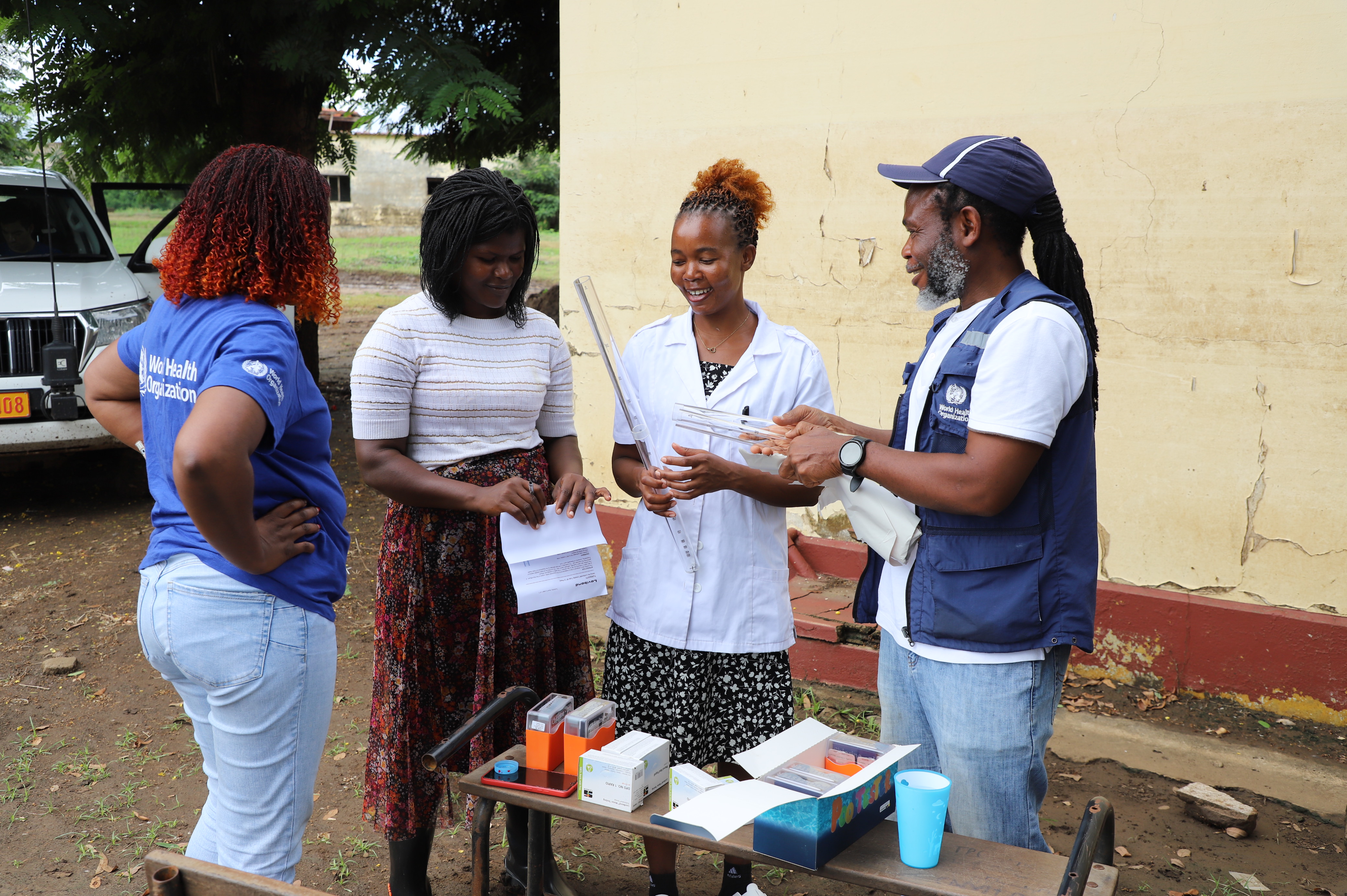
To ensure that screening systems operate effectively, teams from the Ministry of Health, WHO, IOM and partners have conducted four assessments of screening operations and readiness at points of entry in May and June 2026. “Screening assessments provide critical technical validation of point of entry procedures, identified operational gaps and guided targeted improvements, directly strengthening early detection, referral timeliness and overall outbreak readiness," says Chiho Miyake, a programme manager at IOM.

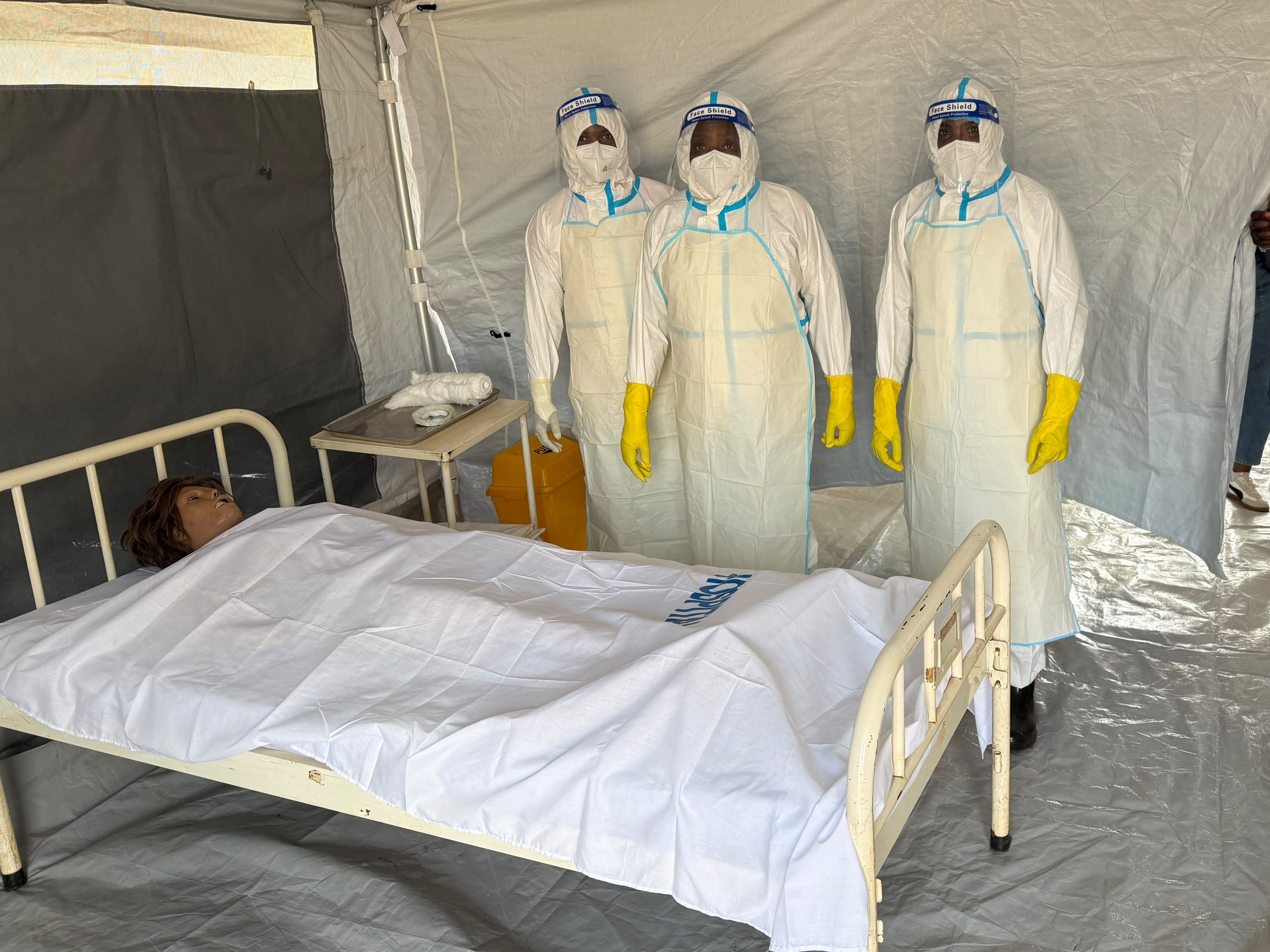
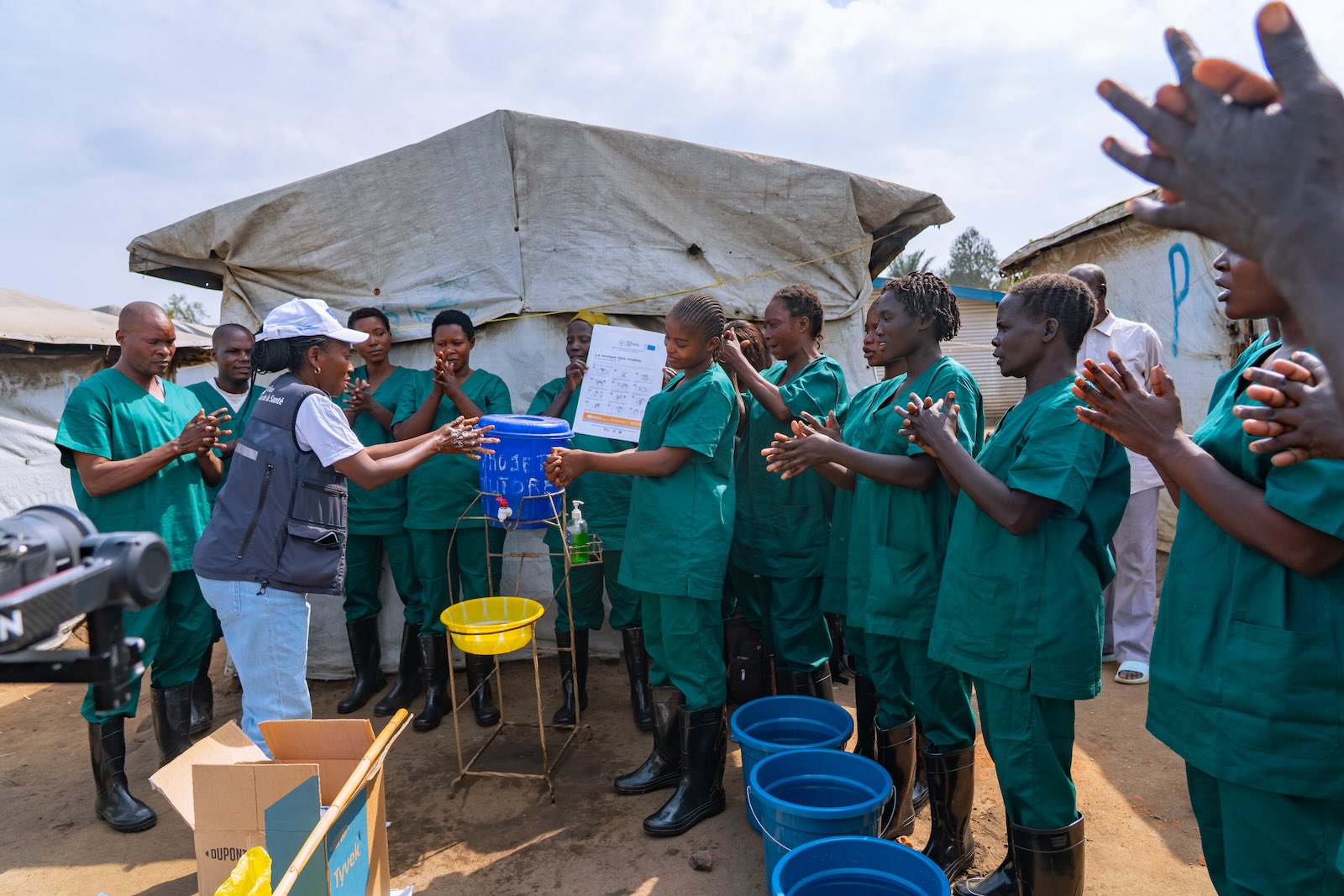
Training frontline workers has been another focus of surveillance efforts. Health authorities, with support from WHO, have trained and mentored around 560 screeners, cargo handlers, customs and immigration officials and support staff, covering entry and exit screening procedures, infection prevention and control and the prevention of sexual exploitation, abuse and harassment. The training aims to promote consistent implementation of screening protocols while ensuring that travellers are treated respectfully and that staff are equipped to work safely in high-volume settings. “While we are at risk of exposure, we must sacrifice so that the outbreak ends,” says Linda Bahat, an enumerator at the Arua screening point. “We are protecting communities so that our challenges become our success.”

Points of entry and other transport hubs are also key in efforts to engage communities and provide information. The screening process is also an opportunity to share localized information and advice to communities who move across borders. “Previous Ebola outbreaks in Uganda and elsewhere in the African Region have demonstrated the value of coordinated border health measures as part of a comprehensive response,” says Dr Kasonde Mwinga, WHO Representative in Uganda.

The decrease in foot traffic from the Democratic of Republic in recent months has affected Nancy’s small business. “I don’t have as many customers as I used to,” she says. Her hope is that Uganda’s stringent entry and exit procedures, along with other interventions, will end the outbreak after the current 42-day countdown and she will get to serve her regular customers again.