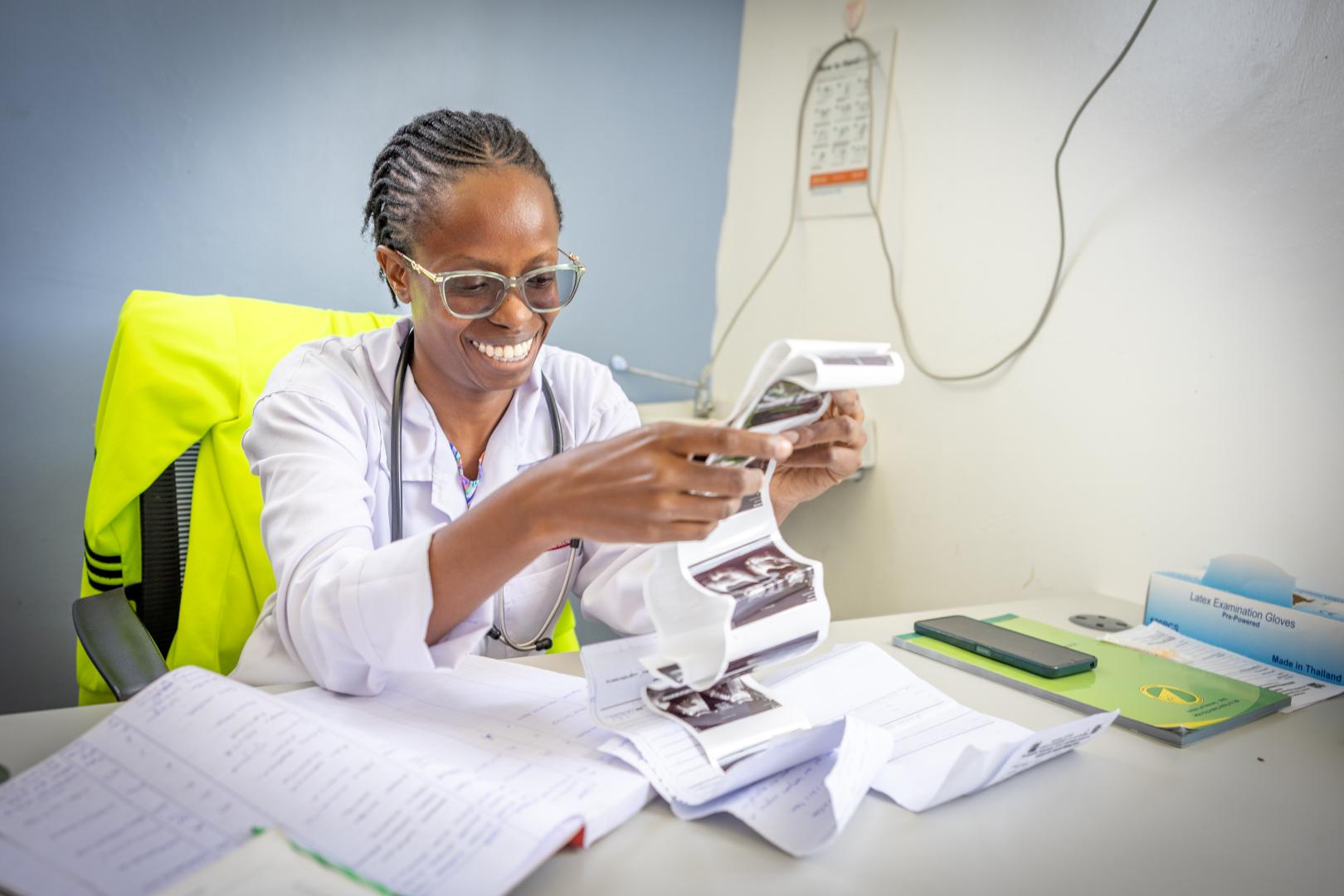
WHO and Aga Khan University partnership to strengthen women's cancer services in Africa
Nairobi - The World Health Organization (WHO) and Aga Khan University-Kenya (AKU) today launched a new partnership to accelerate the fight against breast and cervical cancer, the two leading cancers claiming women's lives in Africa.
In Kenya, an estimated 7 243 women are diagnosed with breast cancer each year, with 3 398 deaths, while cervical cancer accounts for 5 845 new cases and 3 600 deaths annually. Across the African region, between 60 and 70% of women are diagnosed at a late stage, and only one in two women with breast cancer will survive five years, compared with more than 90% in high-income countries. Too many cancers that can be prevented, found early and treated are still catching women too late.
Under a Memorandum of Understanding running through September 2028, the Aga Khan University Centre of Excellence in Women and Child Health in Nairobi will anchor technical and research support for WHO's Global Breast Cancer Initiative and the Cervical Cancer Elimination Initiative, with a focus on low- and middle-income countries. The collaboration will advance three pillars: generating evidence to inform WHO norms and national policy; building the skills of health workers, from specialists to community providers, to detect and manage these cancers earlier; and validating innovative tools, including AI-enabled breast ultrasound and AI-assisted cervical screening, for use in primary care.
"This Memorandum of Understanding reflects AKU's commitment to advancing awareness, research, innovation, and capacity building to improve access to equitable, quality cancer prevention and care. It is also aligned with WHO's 14th General Programme of Work, which prioritises improved access to quality cancer care as part of universal health coverage," said Professor Marleen Temmerman, Director of the Centre of Excellence in Women and Child Health, AKU East Africa.
"The new initiative in Africa will support countries to design and deliver integrated one-stop service models for women's cancers. It will also strengthen the health workforce through training and specialist mentorship, while generating practical solutions to persistent barriers in screening, diagnosis, referral, and follow-up," said Dr Hanan Balkhy, WHO Regional Director for the Eastern Mediterranean (EMRO). Dr Balkhy drew on parallels with WHO's collaboration with AKU in Pakistan, where joint efforts have advanced patient safety, strengthened sexual and reproductive health and rights, and supported clinical and implementation research that informs policy and improves care.
"For Kenya, this collaboration strengthens the National Cervical Cancer Elimination Action Plan 2026 to 2030 and the wider push to integrate women's cancer services into primary health care, so that every woman, in every county, can access lifesaving services close to home," said Dr Xu Hongyi, WHO Kenya.
Speaking on behalf of Kenya's Cabinet Secretary for Health, Dr Omar Albush, Director of Health Sector Coordination and International Affairs, said the collaboration will help accelerate the scale-up of HPV screening, strengthen referral networks, improve diagnostic turnaround times, and optimise treatment including access to existing radiotherapy assets. "Implementation research will help identify scalable models that reduce late-stage presentation and increase timely access to treatment and care," he added.
"The rising burden of chronic disease is placing further strain on already stretched health systems. This partnership will help drive action to improve prevention, cancer diagnosis and care," said Professor Tania Bubela, Provost and Vice President Academic, Aga Khan University.
WHO estimates that premature deaths from all noncommunicable diseases in the African Region are projected to rise to 3.8 million by 2030 if action is not accelerated. For the thousands of women in Kenya and across the region whose cancers can be prevented, found early and treated, this partnership is one step towards ensuring that a diagnosis is the start of a treatment journey, not the end of hope.

Communication officer
WHO Kenya
Tel: +254 740 466 426
Email: printg [at] who.int (printg[at]who[dot]int)