Participate to Transform
This opinion piece was first published in Jornal de Angola, a copy of which can be found here: https://www.jornaldeangola.ao/noticias/9/opini%C3%A3o/653277/participar-para-transformar
By: Olívio Gambo, WHO Communication Officer
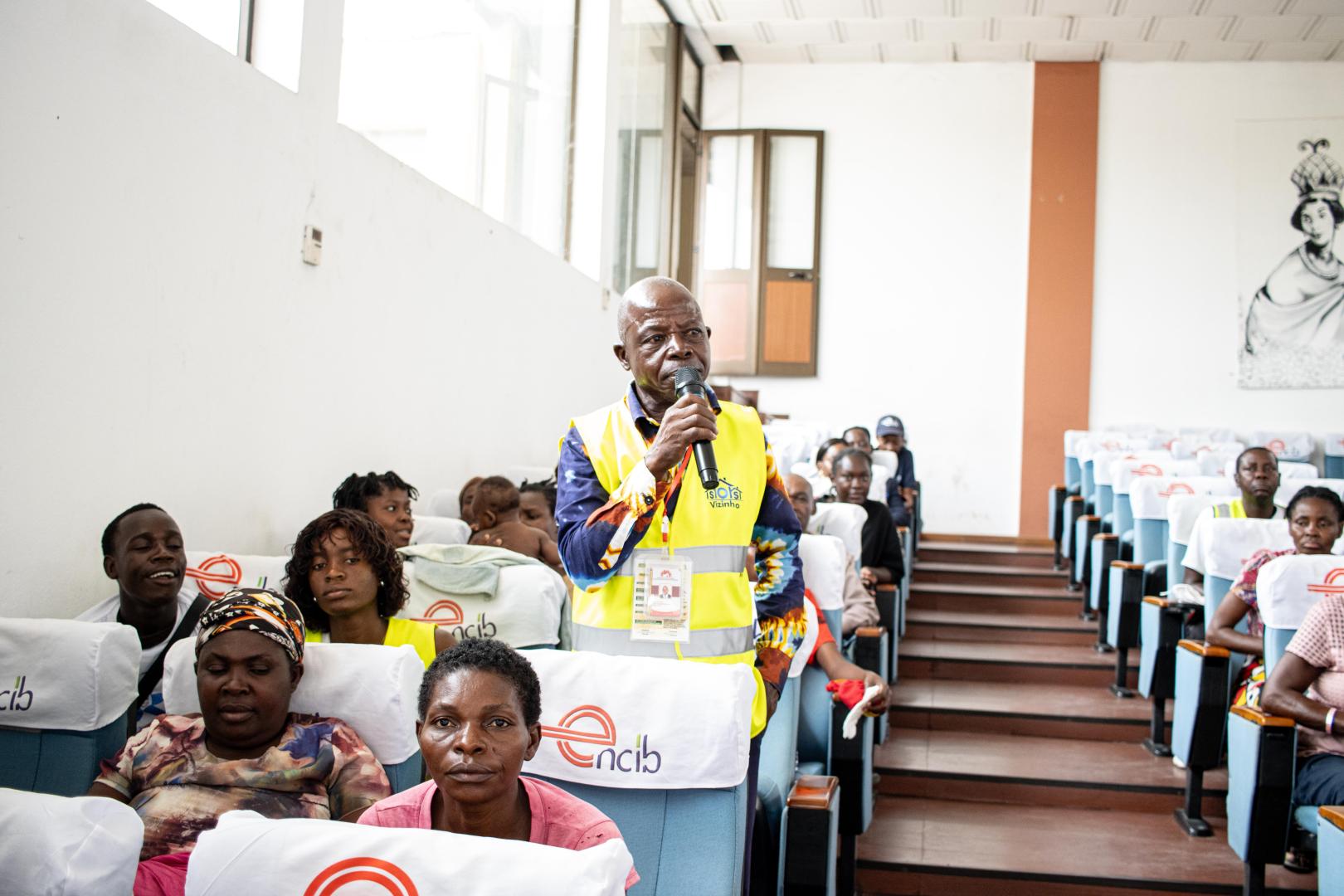
In São Pedro da Barra, in the municipality of Hoje-Ya-Henda, a roundtable discussion changed the course of many stories. Without hierarchical barriers, local authorities, health professionals, experts from international organisations, and community members shared their questions, concerns, and hopes. The topic was simple but urgent: why are there still so many children who have not been vaccinated?
Antónia, a local vendor, brought up a reality present in many parts of the country: “I know women who have never vaccinated their children because they grew up hearing that vaccines are harmful. No one ever explained otherwise to them. If we had had conversations like this before, we would have already vaccinated all our children.
This testimony, full of emotion and lucidity, reveals the power of active listening and sharing. It shows that sometimes it is not a lack of willingness that is at issue, but rather a lack of information, trust, and dialogue, often exacerbated by structural obstacles such as vaccine shortages, distance from healthcare services, and limitations in the quality and responsiveness of healthcare facilities.
In the Bantu tradition, children are the link between the past and the future, our collective treasure. Ensuring their health is ensuring the continuity of our history. According to the WHO, vaccination is one of the most effective and cost-effective public health measures to protect children’s lives and prevent preventable diseases.
The roundtable discussion promoted by the JUCARENTA Association, with the support of the World Health Organisation (WHO), UNICEF, and Rotary International, was not an isolated event. It was a living example of how citizen participation can improve childhood vaccination rates, protect our children, and transform realities. This dynamic revealed the power of active listening and co-creating solutions, demonstrating that participatory social leadership is a vital tool for aligning public policies with the real needs of the population.
Angola has successfully engaged communities in various public health initiatives, including vaccination campaigns and responses to epidemics. However, it is possible to take this approach a step further and transform it into a structured and continuous tool for social change.
Internationally, countries such as Uganda have demonstrated that community mobilisation was decisive in containing the Ebola virus by involving local leaders in disseminating information and community surveillance.
Studies by the International Federation of Red Cross and Red Crescent Societies confirm that active community involvement strengthens trust in services, improves access, and promotes lasting preventive behaviours.
Despite clear evidence of the benefits of community participation, obstacles that limit equitable access to healthcare persist in many parts of the world. Lack of information, myths, taboos, and social and structural difficulties continue to prevent many families from accessing essential services. In response, several countries have strengthened community involvement, expanded partnerships with local leaders, and adopted mobile technologies to combat myths.
What could this international reality mean for our context? In a country like Angola, where development challenges are intertwined with aspirations for social justice, citizen participation is essential. Sustainable development cannot be decreed; it is built step by step, based on four fundamental pillars: a clear definition of priorities, transparent public management, effective accountability, and inclusive participation.
Recognised by institutions such as the WHO and the World Bank, these principles are the foundations of effective, equitable, and results-oriented governance. Applied rigorously to public health and focused on people, they generate structural changes with a direct and lasting impact on the well-being of populations.
The roundtable discussion in Porto Pesqueiro culminated in a collective commitment to strengthen information in communities, create more spaces for dialogue, and find joint solutions to local challenges. However, how can we maximise and replicate this good practice and generate concrete results?
Angola needs to adopt and institutionalise community participation as a central axis of public health policies. To this end, it is urgent to: a) Create permanent spaces for community dialogue with inclusive representation; b) Train local leaders and health professionals in communication for social change; c) Combat misinformation with culturally adapted and evidence-based educational campaigns; and d) Integrate active listening and the co-creation of solutions into the planning and evaluation processes of health services.
As the adage of community development goes: ‘Nothing for us without us.’ Development begins with dialogue. And dialogue begins with listening. May the experience of São Pedro da Barra inspire a continuous, structured, and replicable process of building an Angola that grows with and for its people – where listening, including, and acting are affirmed as permanent practices in our way of thinking, governing, and caring.