Ghana Advances Health Security with development of 2nd generation National Action Plan for Health Security
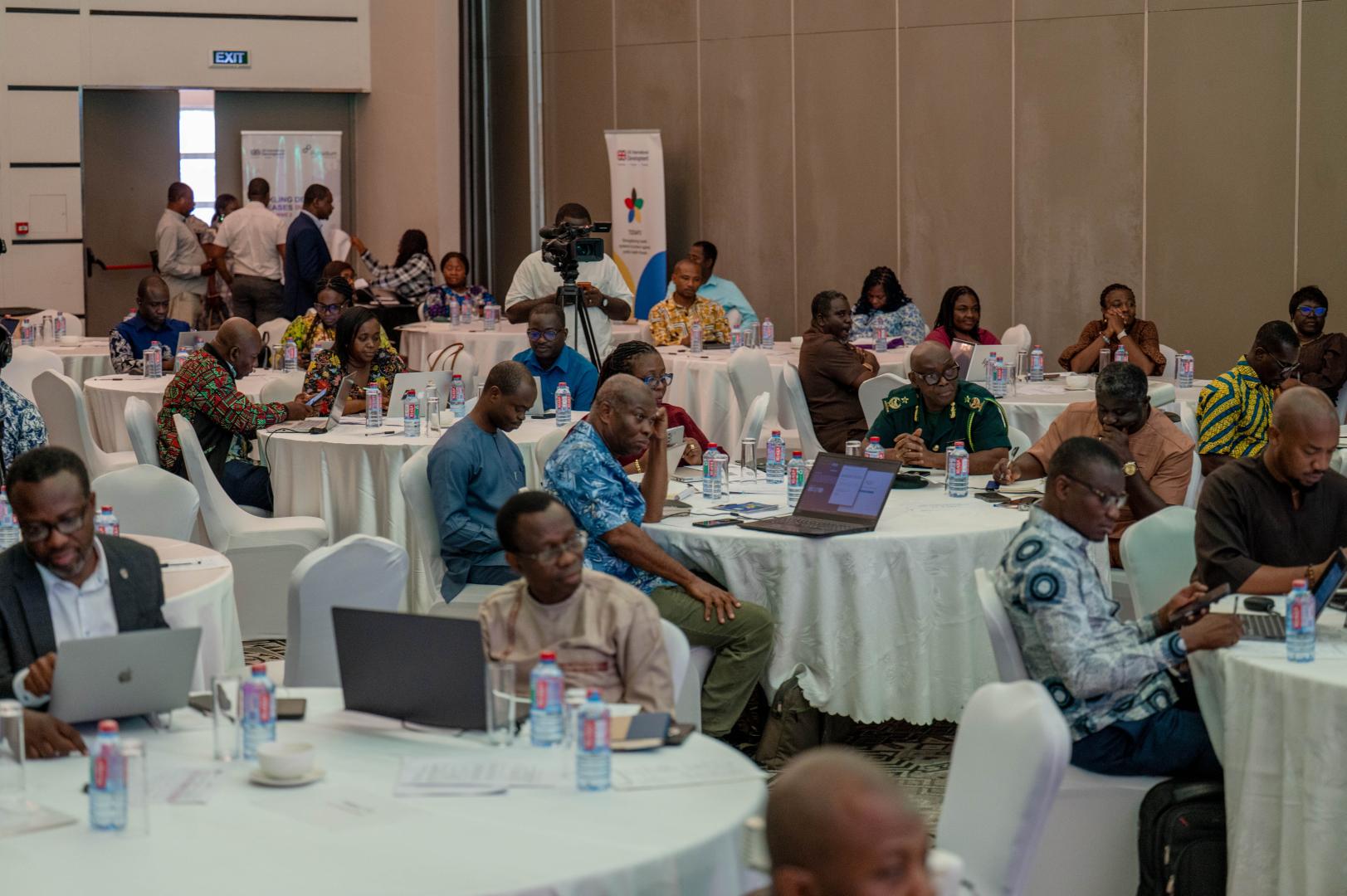
Ghana has taken a major step forward in strengthening its health security with the development of its second-generation National Action Plan for Health Security (NAPHS) to be implemented from 2026 to 2031. Additionally, a 2-year operational plan has been developed and costed to operationalize the NAPHS. The exercise, led by the Ministry of Health and the Ghana Health Service in collaboration with other Ministries, Departments, and Agencies, was supported by the UK Government, with technical assistance from WHO, CDC and the Palladium Group.
The NAPHS provides a comprehensive roadmap for improving Ghana’s capacities to prevent, detect, and respond to health threats, covering critical interventions from laboratory strengthening to border health and Points of Entry. The NAPHS, which contains prioritized strategic actions, ensures that resources are directed to areas that will have the greatest impact on public health.
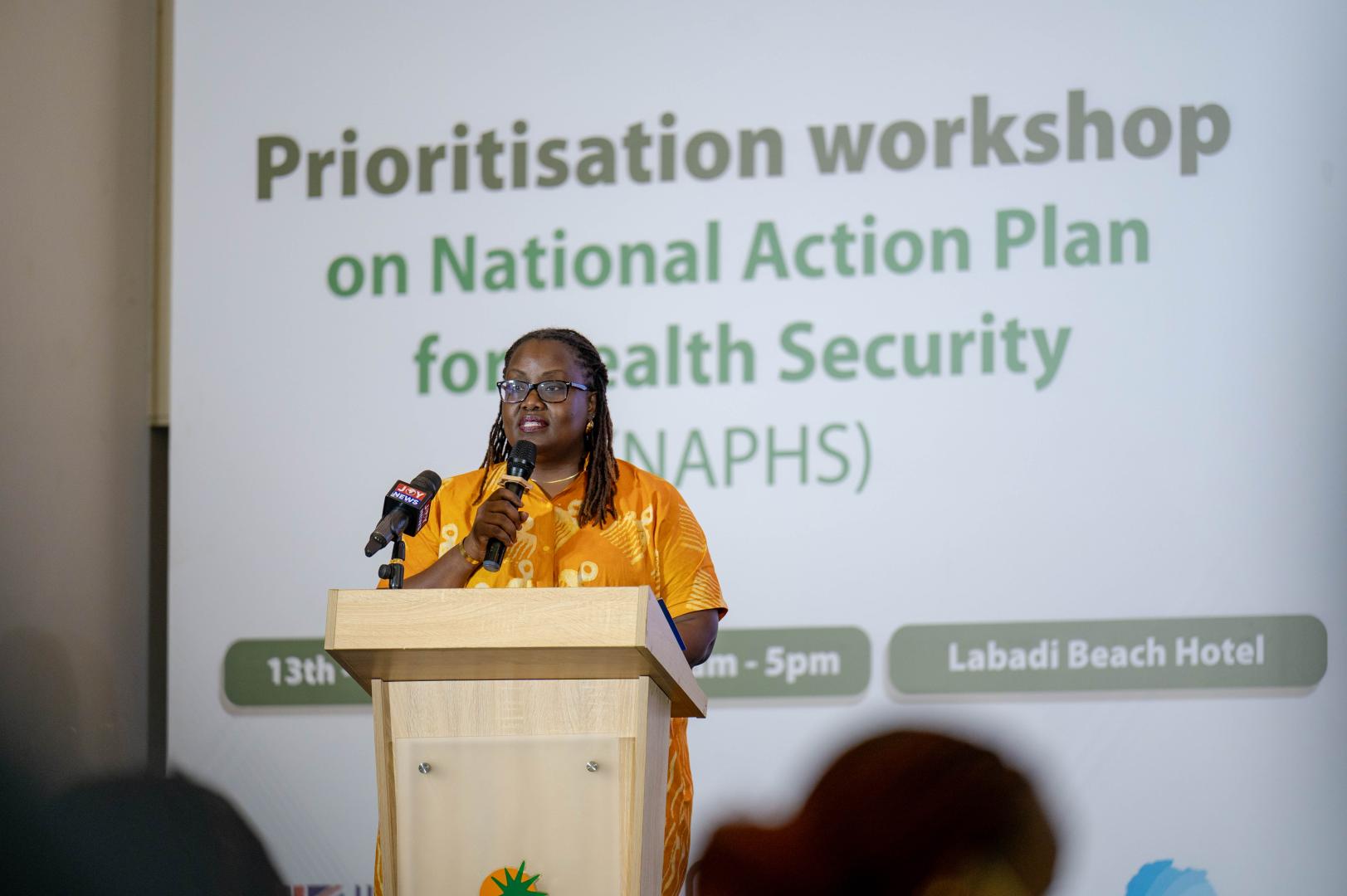
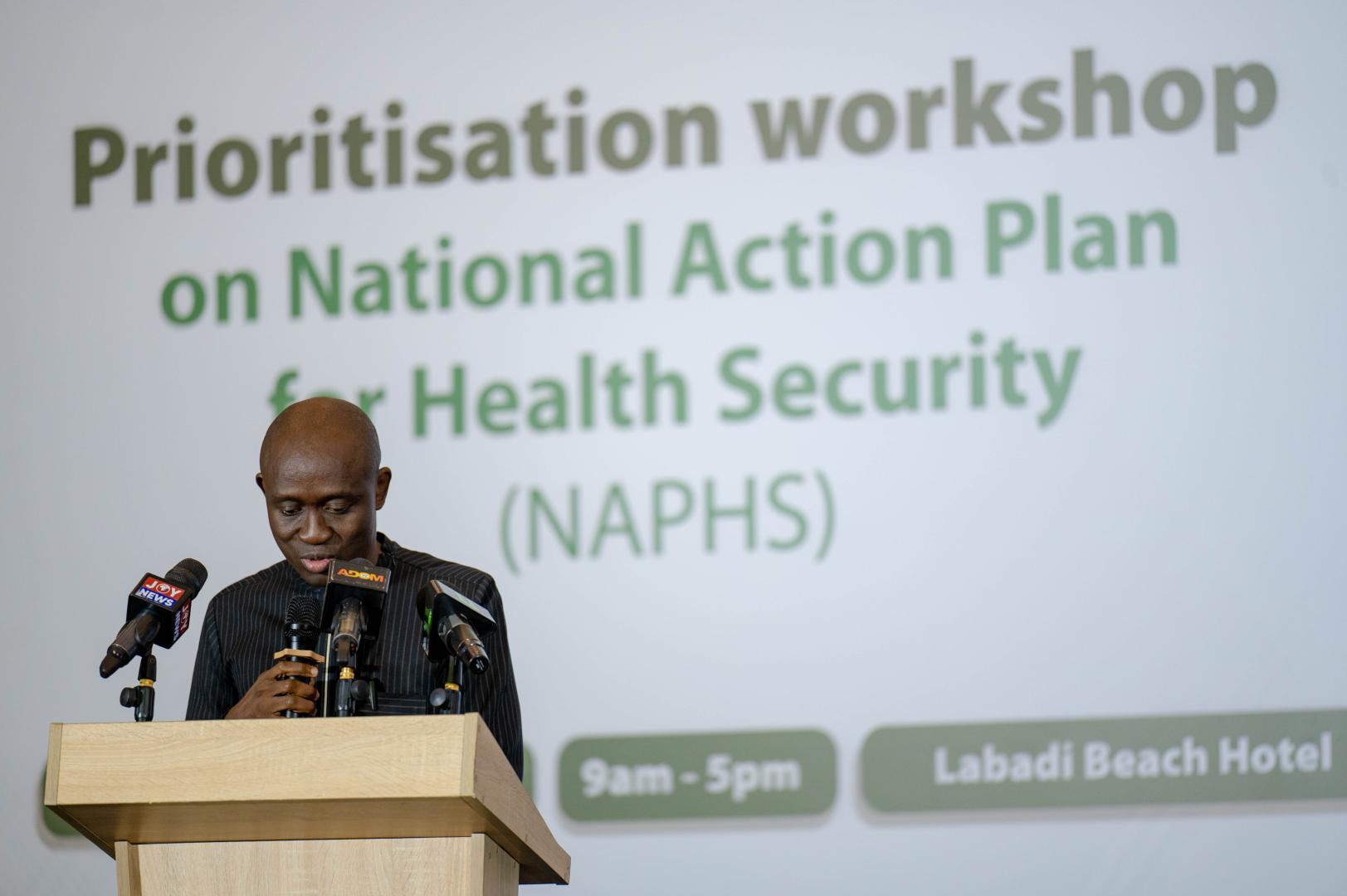
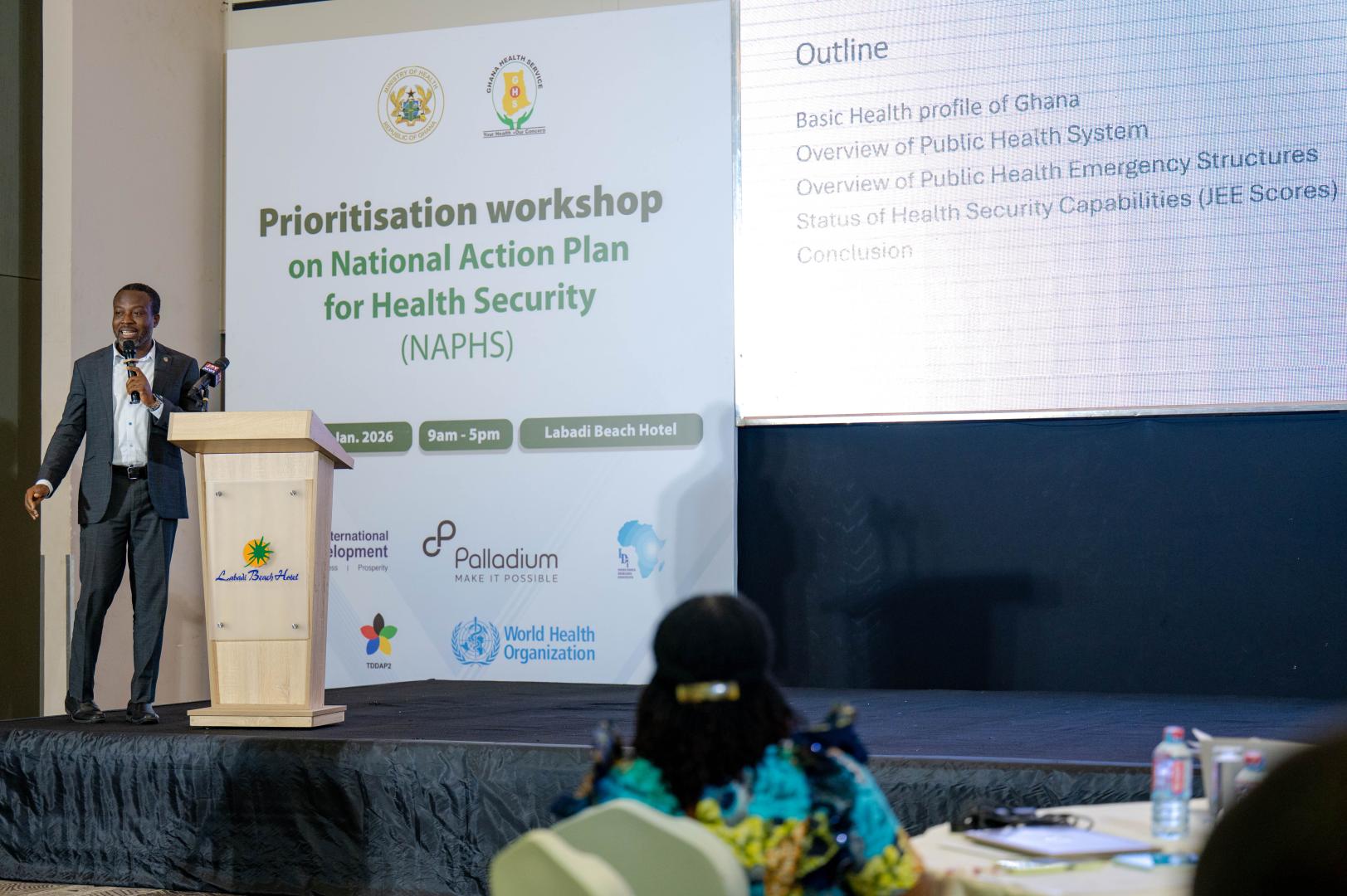
Speaking at the NAPHS development workshop Dr. Franklin Asiedu-Bekoe, Director of the Public Health Division, Ghana Health Service highlitghted the importance of the NAPHS.
“The NAPHS development is not just a process. it’s about making sure that every intervention we invest in has the maximum impact on protecting lives. This process has enabled us to identify key actions, backed by data and consensus, which will guide both national and partner investments in health security”, he said.
WHO provided technical assistance as well simple, intuitive tools on the e-NAPHS platform that helped multi-sectoral stakeholders navigate complex decisions, weighing impact against feasibility for prioritisation. WHO further provided a costing tool which simplified the NAPHS costing process, integrating all implementation assumptions in one place. Every prioritised action is now part of a guiding document that partners can use to align their programmes with national objectives.
Dr. Fiona Braka, WHO Representative to Ghana, highlighted the significance of the exercise for building resilient health systems. “Ghana’s NAPHS ensures that we are not only ready to respond to current health threats but are also building a stronger, more resilient health system that can protect communities across the country”, she said.
Dominic Farrell, UKFCDO representative added, “The UK is proud to support Ghana in strengthening health security. This NAPHS development process ensures that investments are targeted, evidence-based, and focused on saving lives”.
The next steps include high-level validation of the second generation NAPHS, 2-year operational plan and associated costs ahead of its official launch.
With the advancement of the second generation NAPHS, Ghana has achieved key milestones in setting forth a strategic roadmap for health security over the next 5 years as well as developing a resource mobilization tool for enhancing preparedness against public health threats, and ensuring that future interventions are guided by data, consensus, and a clear roadmap for impact.

Communications Officer
WHO Ghana
abdullahiea@who.int
+233 20 1962393