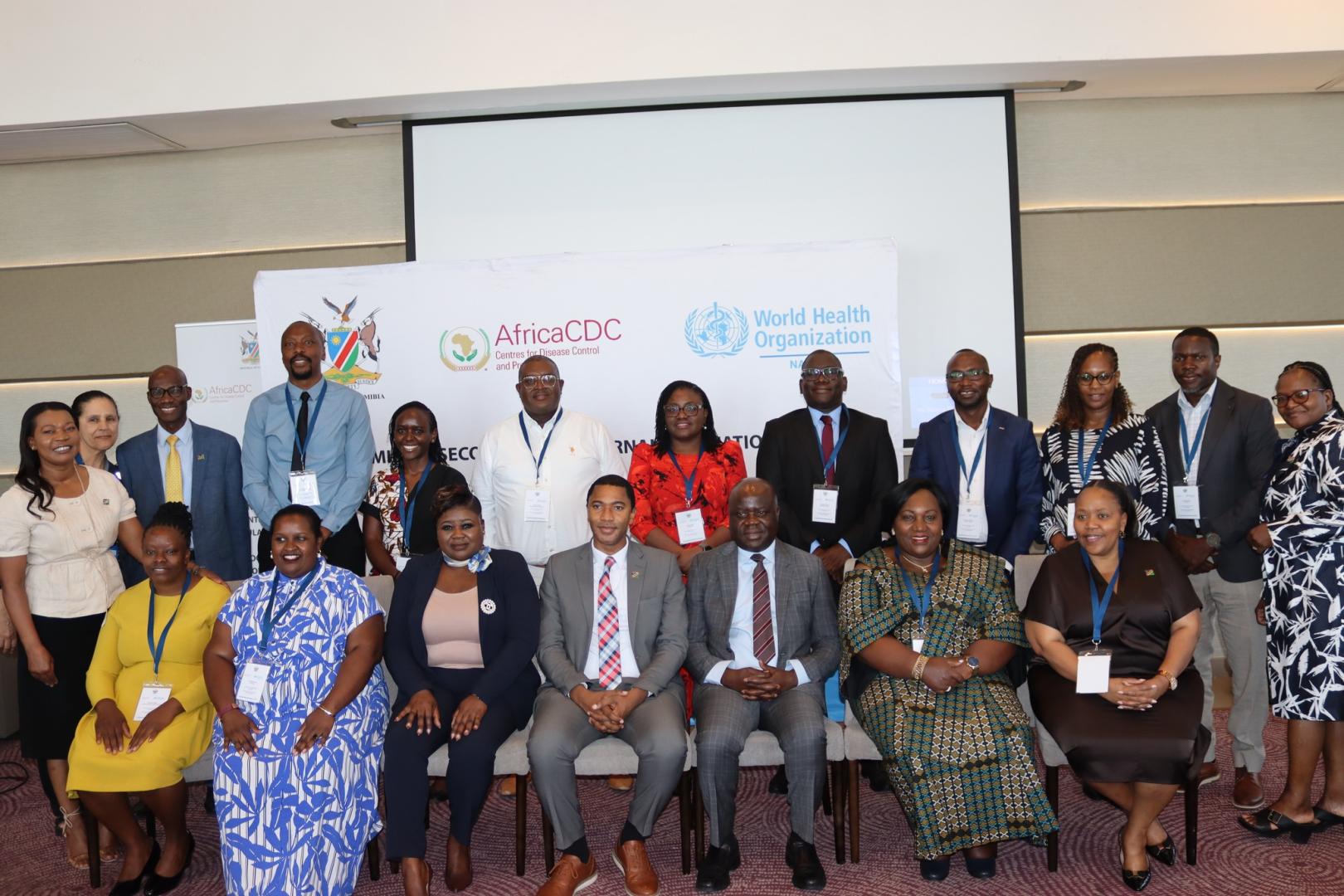
Namibia conducts second joint external evaluation to strengthen health security
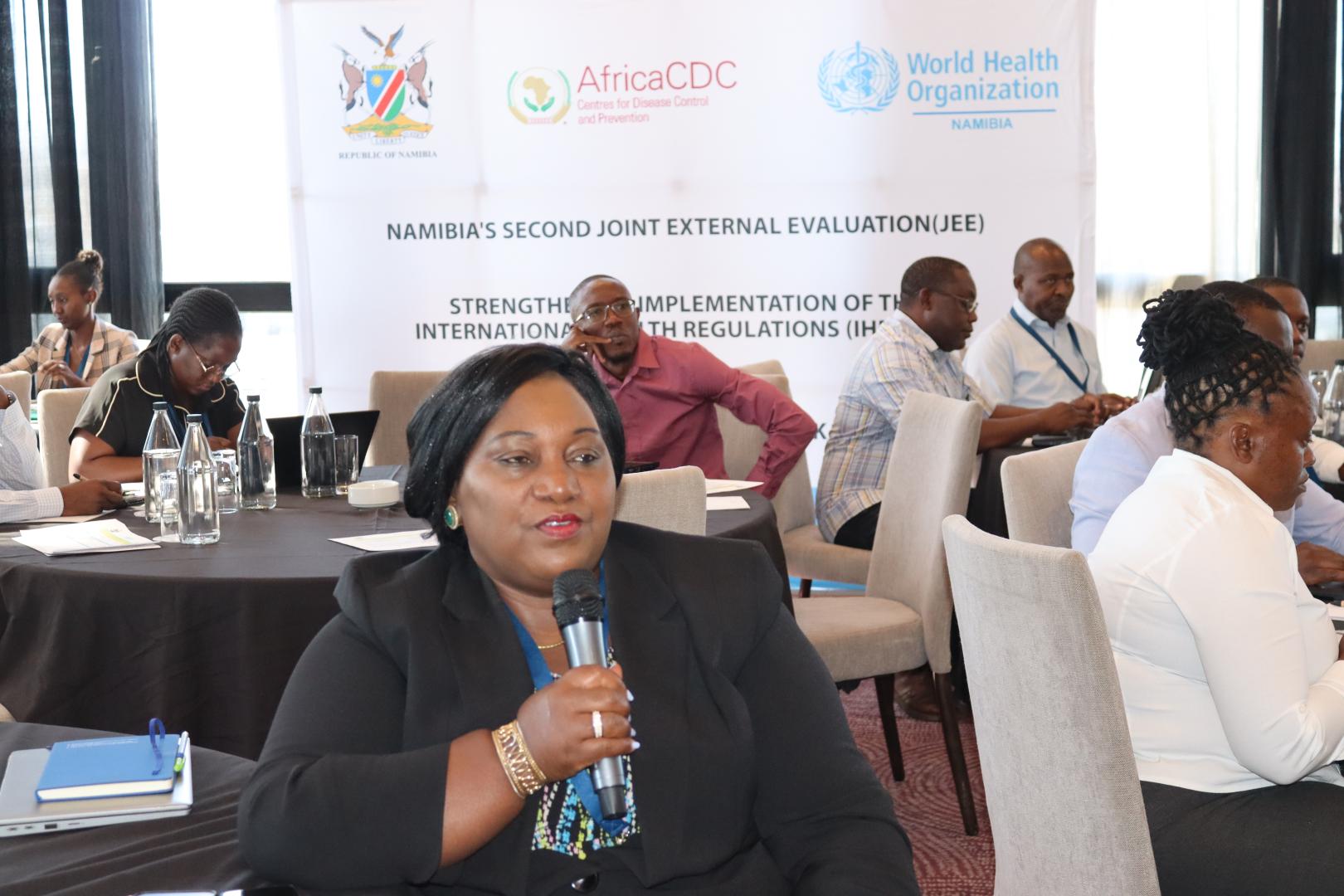
Windhoek—The Ministry of Health and Social Services (MoHSS), with support from the World Health Organization (WHO) and partners, successfully conducted Namibia’s second Joint External Evaluation (JEE) from 20–24 October 2025. The evaluation assessed the country’s national capacities to prevent, detect, report and respond to public health threats and provided an opportunity for the country to develop evidence-based priority actions to review and update the National Action Plan for Health Security (NAPHS) 2021–2025 strategy that will come to an end this year.
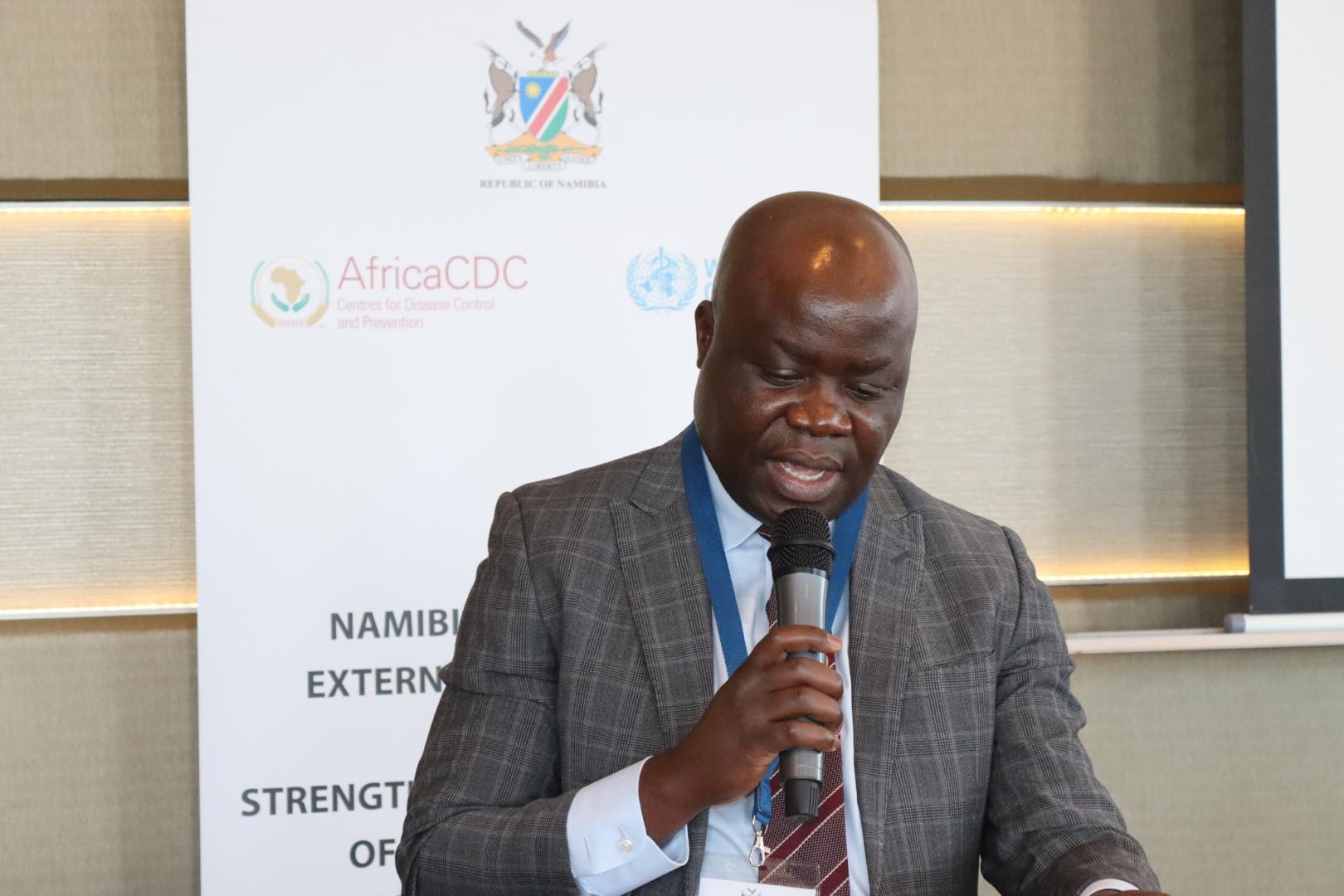
“The JEE is a critical tool for measuring our progress and identifying the areas where we need to strengthen our health systems,” said Dr. Esperance Luvindao, Minister of Health and Social Services in a speech delivered by Dr. Theo-Ben Kandetu. “It allows Namibia to ensure that we are prepared to respond rapidly and effectively to public health threats, safeguard the well-being of our people, and guide our future investments in health security” he emphasised.
The International Health Regulations (IHR 2005), adopted by the World Health Assembly in 2005, require countries to develop capacities to detect, assess, and timely report public health events, and respond promptly to the emergencies in order to prevent international spread and safeguard global public health security. WHO’ IHR Monitoring and Evaluation Framework (IHRMEF) supports countries to evaluate their progress in building these preparedness and response capacities in a standardised manner. The Joint External Evaluation (JEE) tool was used during this JEE exercise in Namibia.
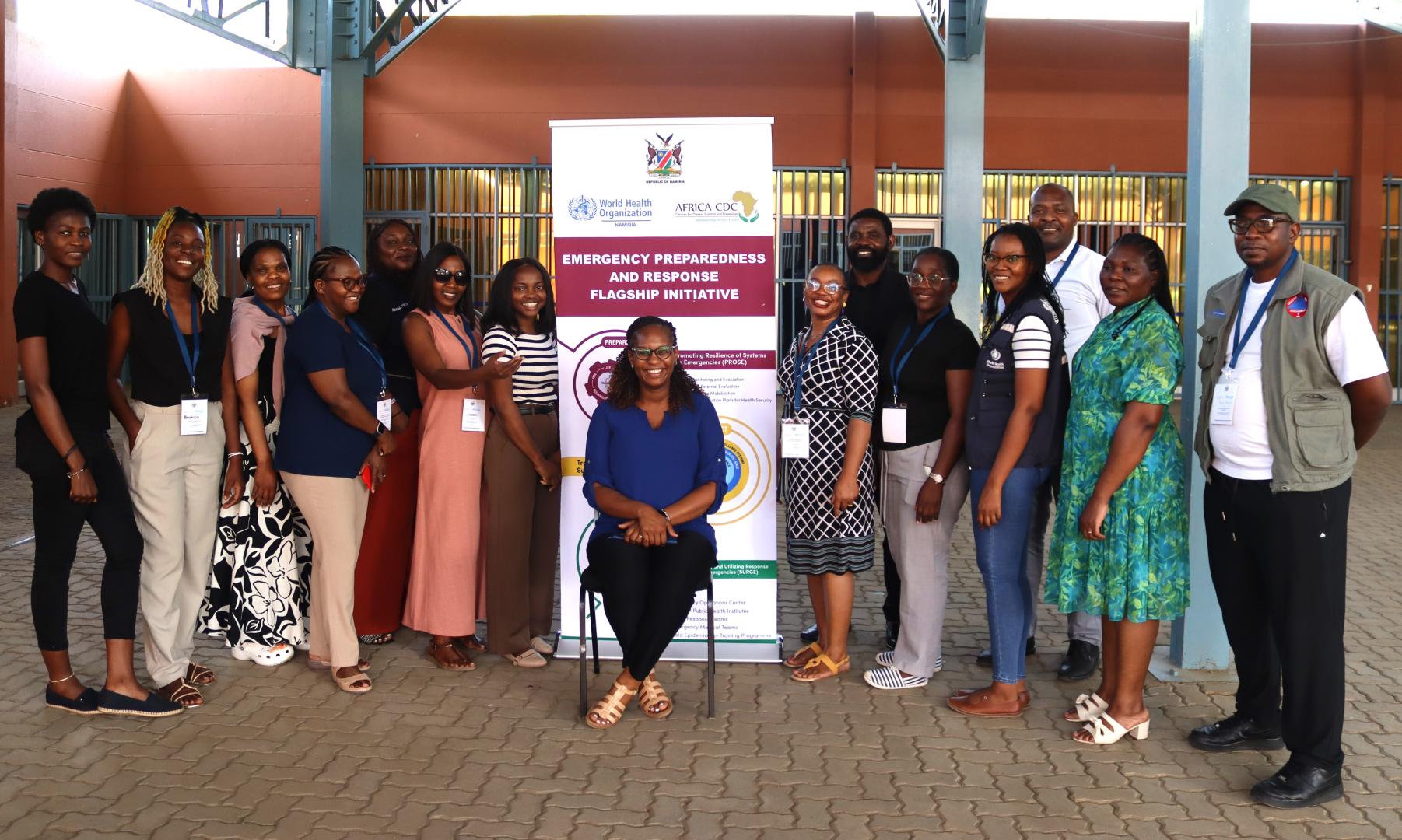
Namibia conducted its first JEE in November-December 2016, and this informed the development of the NAPHS 2021–2025. With the current NAPHS period concluding at the end of this year, the 2025 JEE was critical to assess progress made in improving health security, identify areas for improvement and develop priority actions to guide the next phase of planning for health security enhancement for the country. Prior to the JEE external mission, Namibia voluntarily requested WHO for support to conduct the JEE. The voluntary request was followed by a multi stakeholder orientation and planning workshop in April 2025, an IHR National Focal Point (IHR NFP) orientation in June 2025 and concluded with the country self-evaluation workshop in September 2025. The build up to the JEE external mission also involved the identification and designation of focal points for the 19 JEE technical areas, who were responsible for coordinating the response and documents/ evidence gathering for their technical areas to have an informed score of the progress indicators.
“The JEE is a voluntary, collaborative, multisectoral process to assess country capacities to prevent, detect, and rapidly respond to public health risks,” said Dr. Richard Banda, WHO Representative to Namibia during the opening ceremony for the JEE external mission workshop. He further clarified that the exercise “allows Namibia to identify urgent needs, engage partners effectively and prioritize actions that will improve health security for all citizens”.
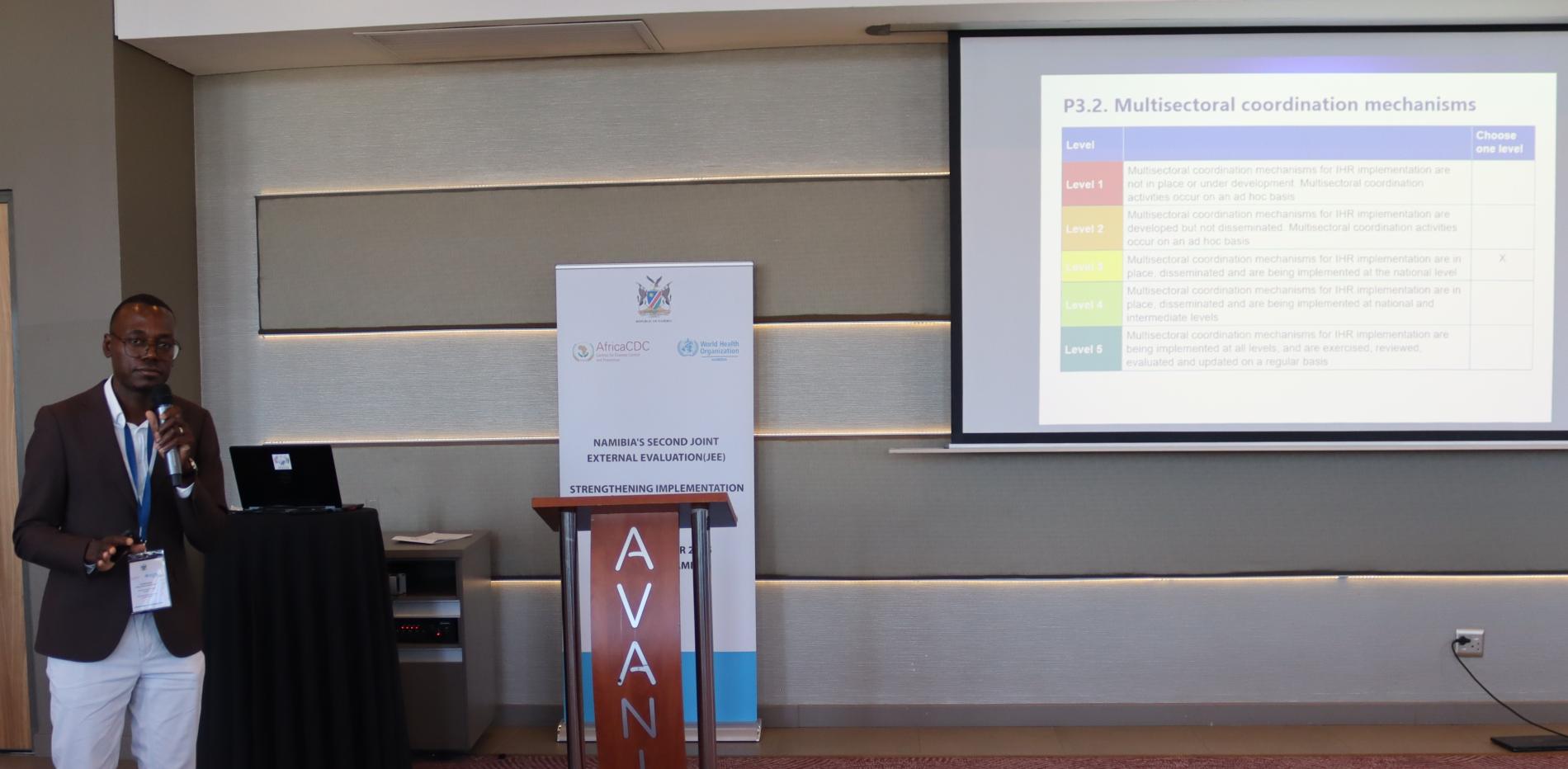
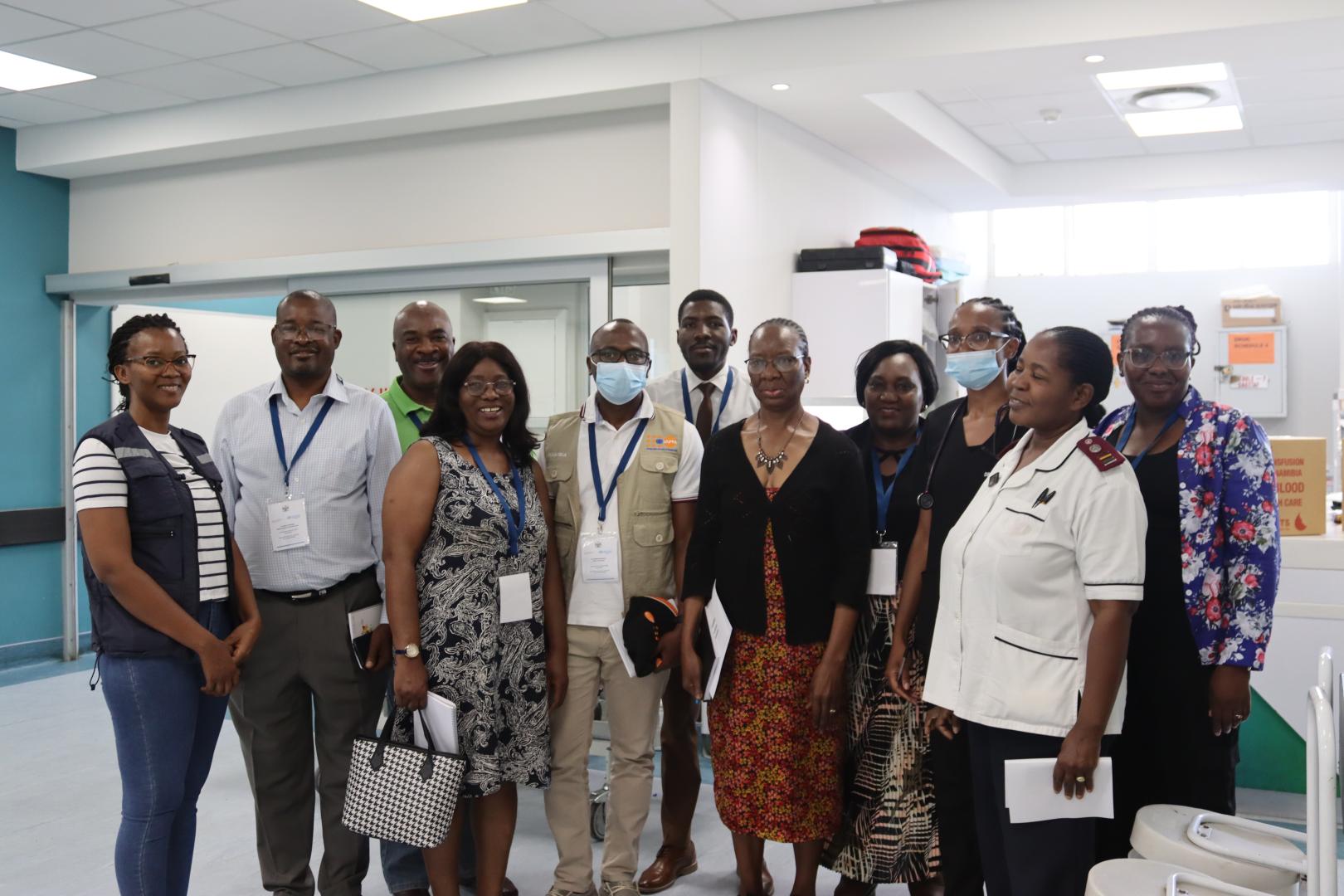
During the week, the external experts conducted in-depth reviews of the self-evaluation report and conducted field site visits to key multisectoral health security locations to verify some of the information, including Hosea Kutako International Airport, Walvis Bay International Airport, Namport, Trans-Kalahari Border Post, the National Emergency Operation Center and Meatco Abattoir. The teams also visited various health specific sites such as the National Public Health Emergency Operations Centre, Windhoek Central Hospital, Intermediate Katutura Hospital, Khomasdal Clinic, National Institute of Pathology reference laboratory, and Quality Surveillance Laboratory. During the workshop, the national focal point presented the thematic area indicator scores, the evidence and documentation informing the scores and the proposed key priority actions. The external team and participants reviewed the presentations and available evidence and provided guidance on the appropriate scoring based on the JEE tool standards; the appropriate scoring was then done in agreement with the concerned government departments.
More than 80 participants representing government ministries, agencies and development partners, including the Office of the Prime Minister, Ministry of Health and Social Services including selected Regional Health Directorates, Ministry of Agriculture, Fisheries, Water and Land Reform, Ministry of Environment, Forestry and Tourism, , Ministry of Mines and Energy, Ministry of Defence and Veterinary Affairs, Ministry of Finance, Ministry of Gender Equality and Child Welfare, MoHSS, Namibian Port Authority, Africa CDC, US-CDC, Namibia Airports Company, and the City of Windhoek. UN specialised agencies WHO, UNFPA, FAO and UNICEF were involved in the evaluation.
WHO and partners will continue to work closely with the Government of Namibia to transform the JEE priority actions into costed, implementable activities within the next National Action Plan for Health Security. The proposed priority actions from the JEE will inform the next NAPHS and guide strategic interventions to ensure the country is prepared to prevent, detect, and respond to public health threats. This activity happened at the great time when the WHO is busy finalising the development of the third Country Cooperation Framework, 2026-2030 and planning for the next biennium 2026-2027. The priority actions will inform the “Protect” outcome area for the Country Cooperation Framework. The external team will compile a comprehensive report, detailing Namibia’s capacities across 19 technical areas and highlighting gaps, challenges and opportunities for development. The report will be reviewed by the MoHSS before final publication, ensuring transparency and public accessibility, before it is published on the WHO website.
Communications Officer
Tel: +264-61-255121/191
Fax: +264-61-2046202
Email: Johanna.Nambahu [at] who.int (Johanna[dot]Nambahu[at]who[dot]int)