In 2024, the World Health Organization (WHO) in Namibia with support from the Government of Japan responded to the nutrition crisis among children and young mothers in Namibia through the "Increasing Access to Quality Nutrition and Protection Services for Vulnerable Populations" project. The project aims to reduce malnutrition, improve healthcare access, and enhance protection against violence and exploitation for women and children in the affected regions.
Two-year-old boy recovered from severe malnutrition
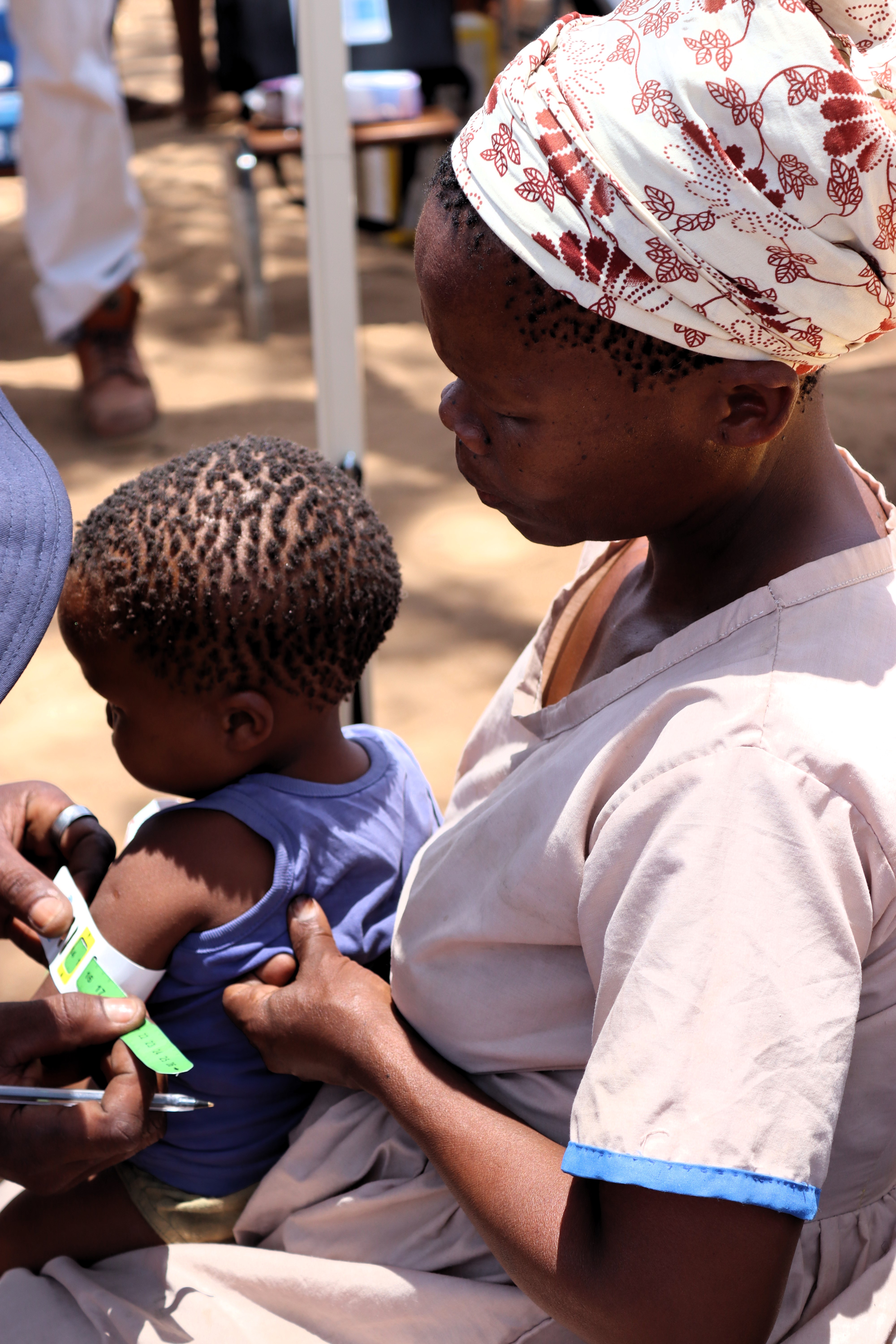
I am relieved that my son has recovered and is doing well now," said Maria Hoxobes, a 42-year-old mother from Drimiopsis. Her son, who is 2 years old, had severe malnutrition in February 2024 and has fully recovered after four months of treatment.
Hoxebes expressed her gratitude to the community health workers for identifying her son's condition and referring him to Gobabis State Hospital for treatment. "They continued supporting my son throughout the recovery process and conducted house visits to check on his progress,” she said.
Hoxebes expressed her gratitude to the community health workers for identifying her son's condition and referring him to Gobabis State Hospital for treatment. "They continued supporting my son throughout the recovery process and conducted house visits to check on his progress,” she said.
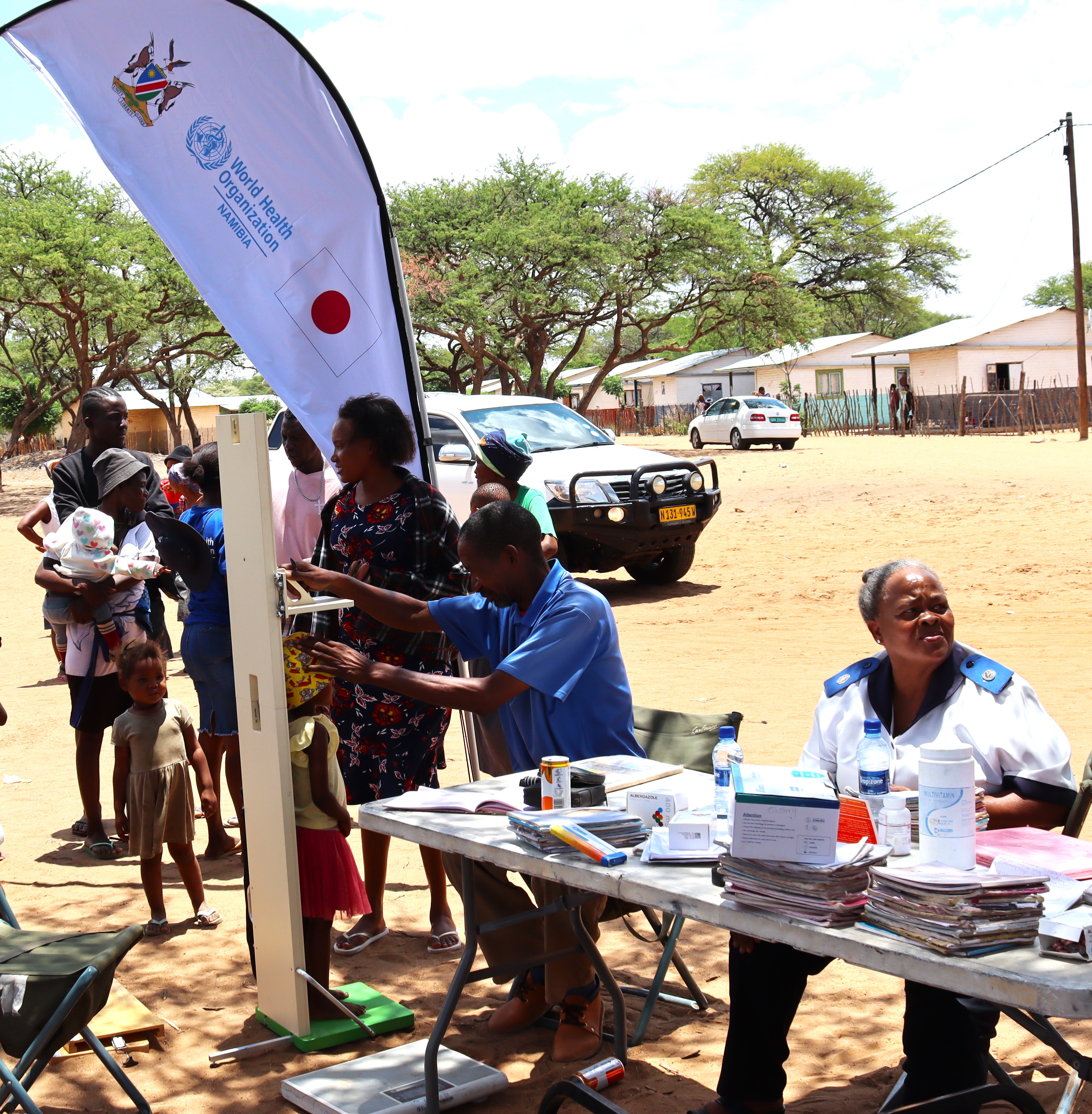
Community Health Workers conducts house to house visits to identify cases of severe and/or moderate malnutrition and refer to the nearest health facilities
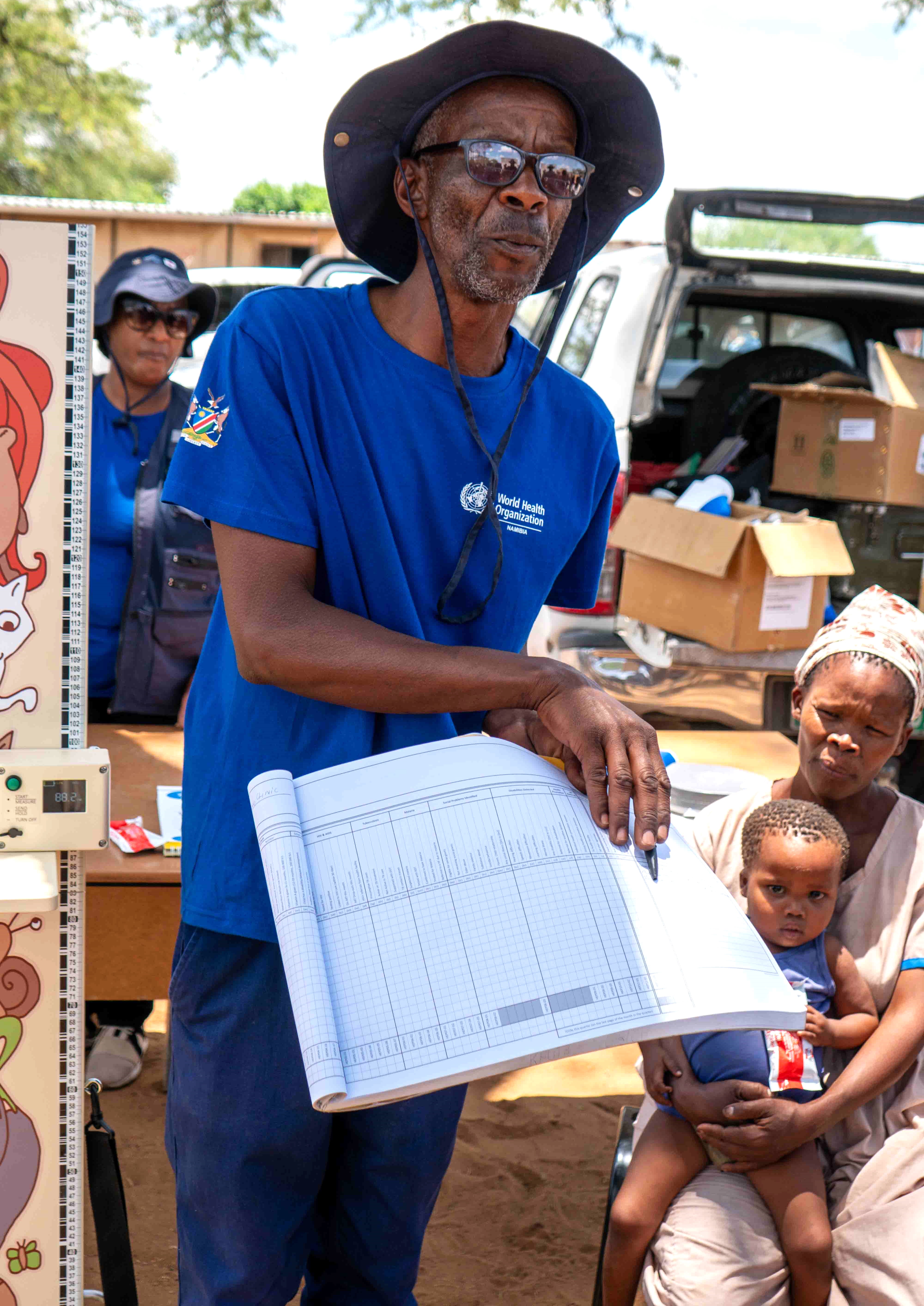
During a visit to Drimiopsis, Mr. Ulrich Kauta, a community health worker in the area, explained how they conduct house-to-house screenings to monitor the health of children under five and expecting mothers. "We visit each household to weigh the children and assess expectant mothers," he said. "This allows us to identify children with malnutrition early and ensure they receive the care and support they need through referrals to health facilities".
On 07 November 2024, WHO held a field visit in Gobabis, Omaheke, to showcase the project’s achievements.
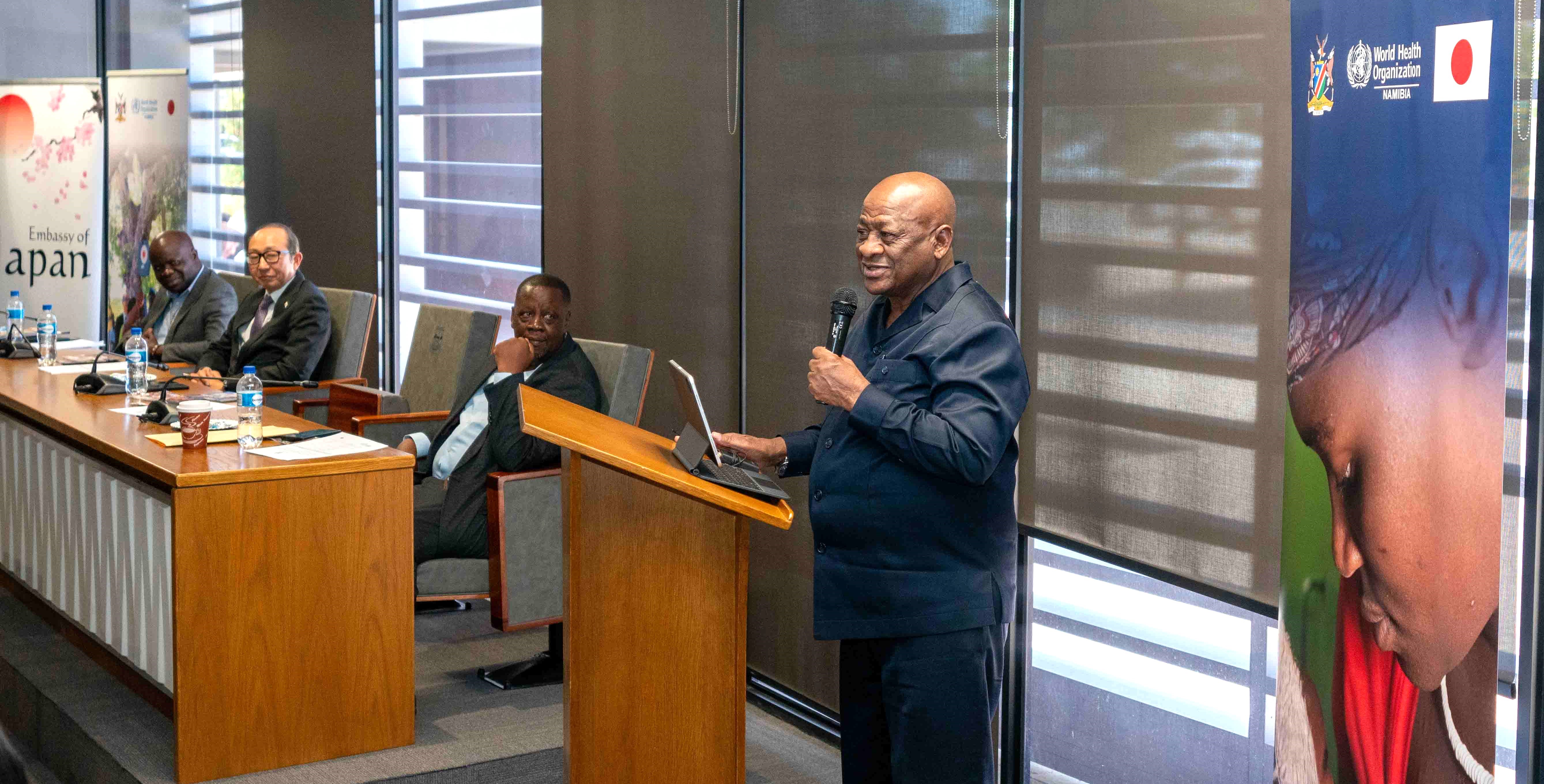
Dr. Kalumbi Shangula, Minister of Health and Social Services (MHSS), emphasized the importance of a collaborative, multisectoral approach in tackling health challenges. "Addressing malnutrition in Namibia requires more than healthcare responses, it requires tackling underlying social determinants such as poverty, education, and food security," he stated. Dr. Shangula also expressed his gratitude to the WHO for their continued support and to the Government of Japan for its generous contribution.
Visit to the Gender Based Violence Victim Protection Unit
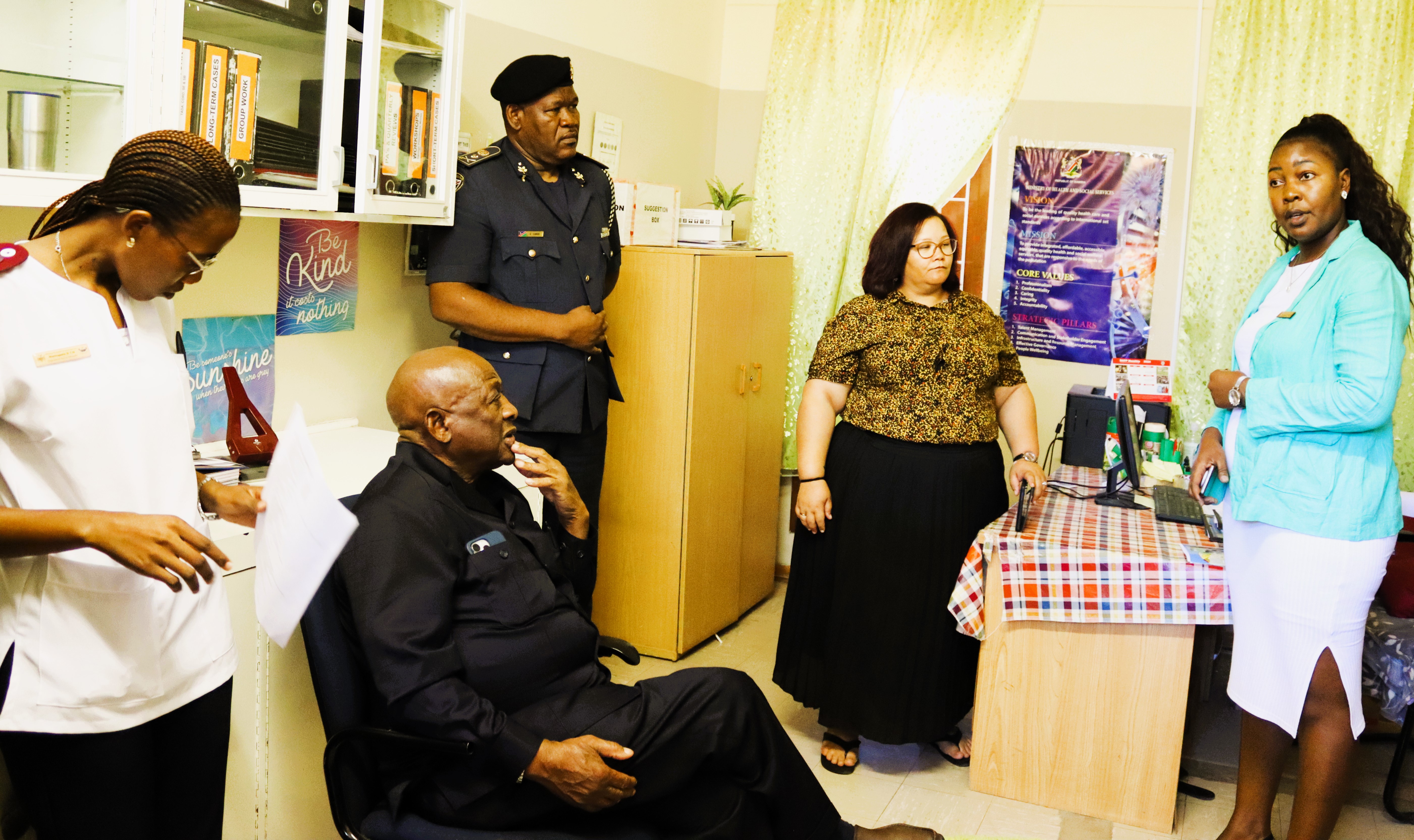
The delegation also visited the GBV-Victim Protection Unit at the Epako Clinic, where social workers highlighted the crucial role of community health workers in identifying cases of gender-based violence (GBV) and those in need of psychosocial support.
The project support for the adaptation of the WHO Clinical Handbook for Health Professionals to respond to child maltreatment
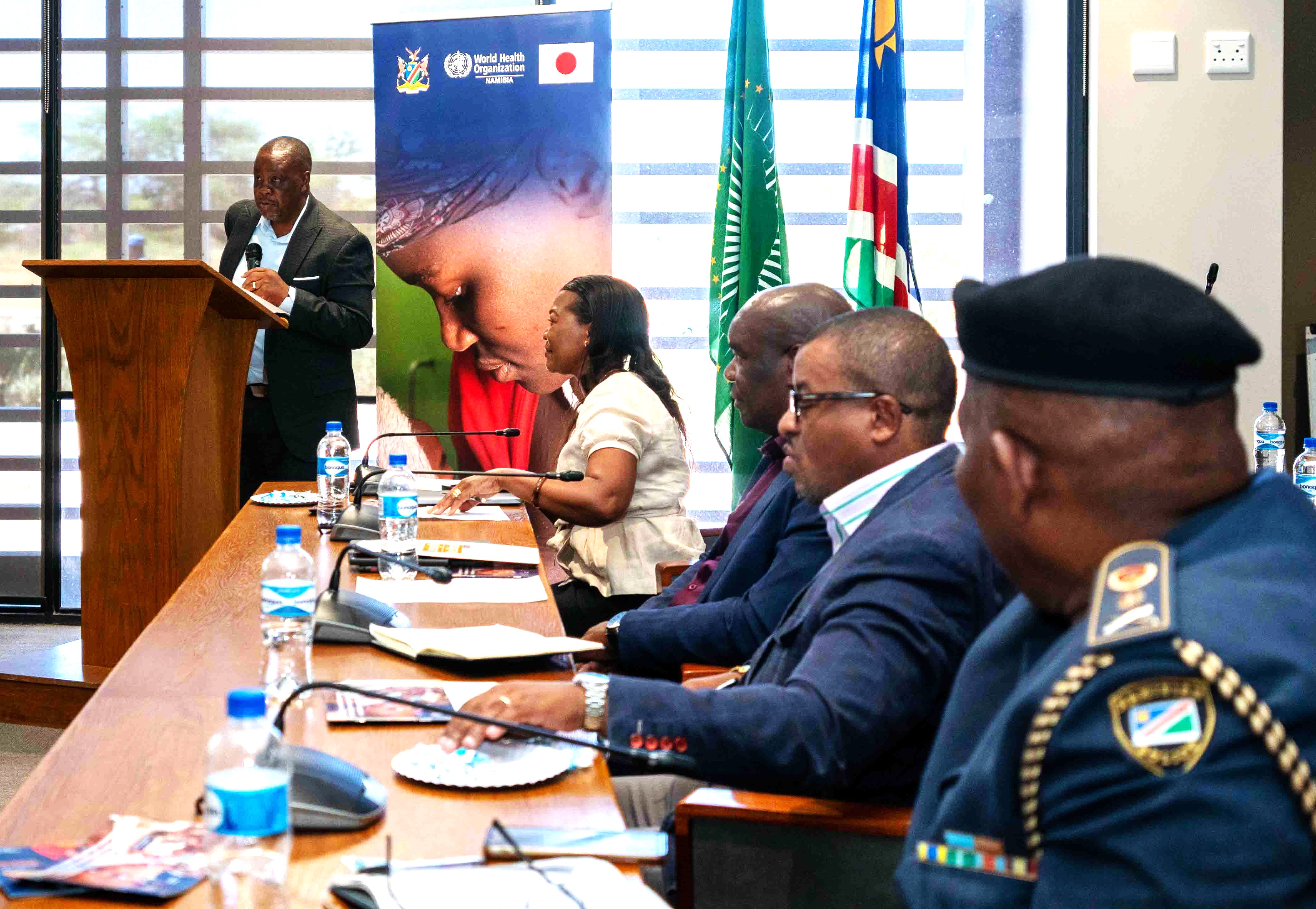
In collaboration with the Ministry of Gender Equality, Poverty Eradication, and Social Welfare (MGEPESW), the project supported the adaptation of the WHO Clinical Handbook for Health Professionals on responding to child maltreatment. The Minister of MGEPESW, Ms. Doreen Sioka in a speech read by the Governor of Omaheke, Honorable Pijoo Nganate, highlighted that the Ministry works closely with the Namibian Police through the GBV-Victim Protection Units, which are located near health facilities to ensure accessible care for women and children affected by violence, abuse, and exploitation.
'As a ministry, we appreciate this new partnership with WHO, which is supported by the government of Japan. We adopted the Clinical Handbook for Health Professionals for responding to child maltreatment and trained 37 trainers from all 14 regions in collaboration with the Ministry of Health and Social Services. These trainers will cascade the training in their respective areas and strengthen the quality of care, protection of children from violence and abuse in collaboration with the health sector. The capacity development programme on child maltreatment will enhance social workers and healthcare providers' skills and knowledge and improve the outcome of our service delivery' she highlighted.
'As a ministry, we appreciate this new partnership with WHO, which is supported by the government of Japan. We adopted the Clinical Handbook for Health Professionals for responding to child maltreatment and trained 37 trainers from all 14 regions in collaboration with the Ministry of Health and Social Services. These trainers will cascade the training in their respective areas and strengthen the quality of care, protection of children from violence and abuse in collaboration with the health sector. The capacity development programme on child maltreatment will enhance social workers and healthcare providers' skills and knowledge and improve the outcome of our service delivery' she highlighted.
The project marks the fifth tripartite agreement between the Governments of Namibia, Japan, and WHO Namibia.
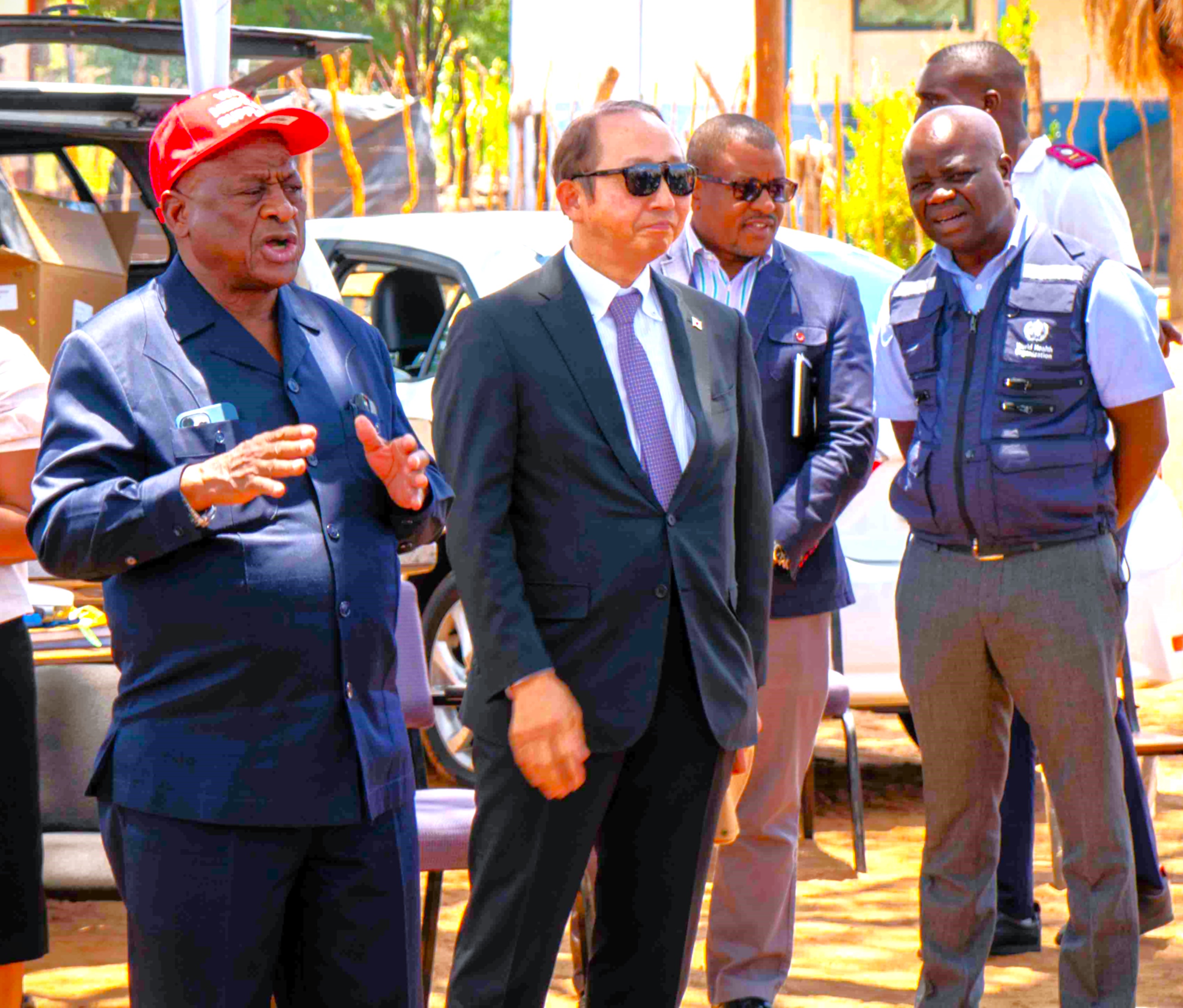
This project marks the fifth tripartite agreement between the Governments of Namibia, Japan, and WHO Namibia contributing over USD 2 million to enhancing access to health for the most vulnerable.
Through this initiative, the Japanese government has contributed approximately N$9.3 million for the period of January to December 2024. During the project, 3,813 children were reached with essential immunizations, and 2,643 children were dewormed to improve nutrient absorption and overall health. Additionally, a total of 138 health care providers received training on enhancing the protection of women and children against violence, abuse and exploitation.
Through this initiative, the Japanese government has contributed approximately N$9.3 million for the period of January to December 2024. During the project, 3,813 children were reached with essential immunizations, and 2,643 children were dewormed to improve nutrient absorption and overall health. Additionally, a total of 138 health care providers received training on enhancing the protection of women and children against violence, abuse and exploitation.
Government of Japan reaffirm its commitment to ensure access to health for the most vulnerable
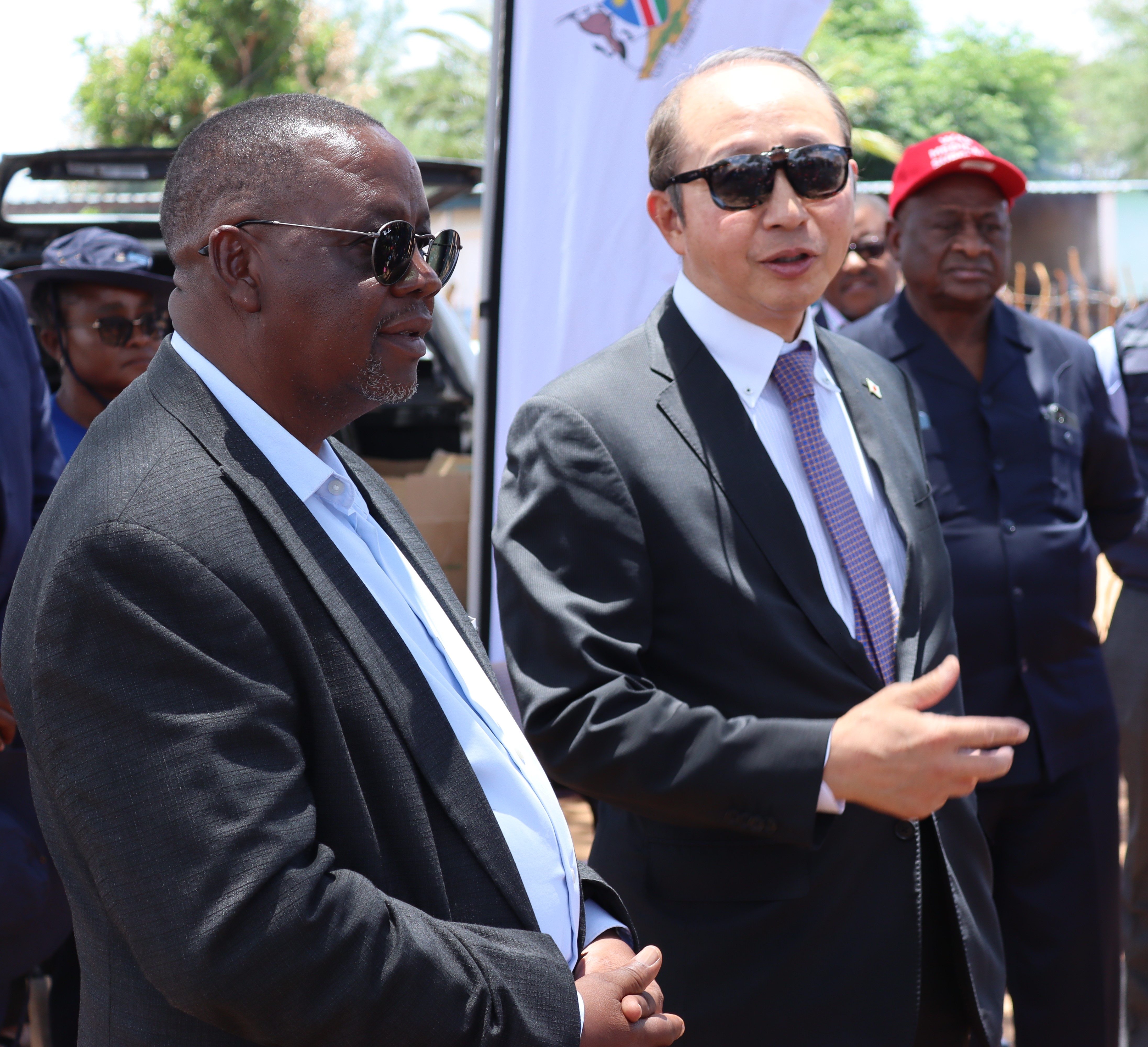
“We remain steadfast in our commitment to ensuring that the most vulnerable populations have access to comprehensive healthcare services, upholding the principle of leaving no one behind,” His Excellency Ambassador Hisao Nishimaki stated. He reaffirmed Japan’s ongoing support for Namibia in sectors such as health, agriculture, education, human resource development, and emergency response capacity.
WHO expresses appreciation to the Government of Japan for their continued partnership
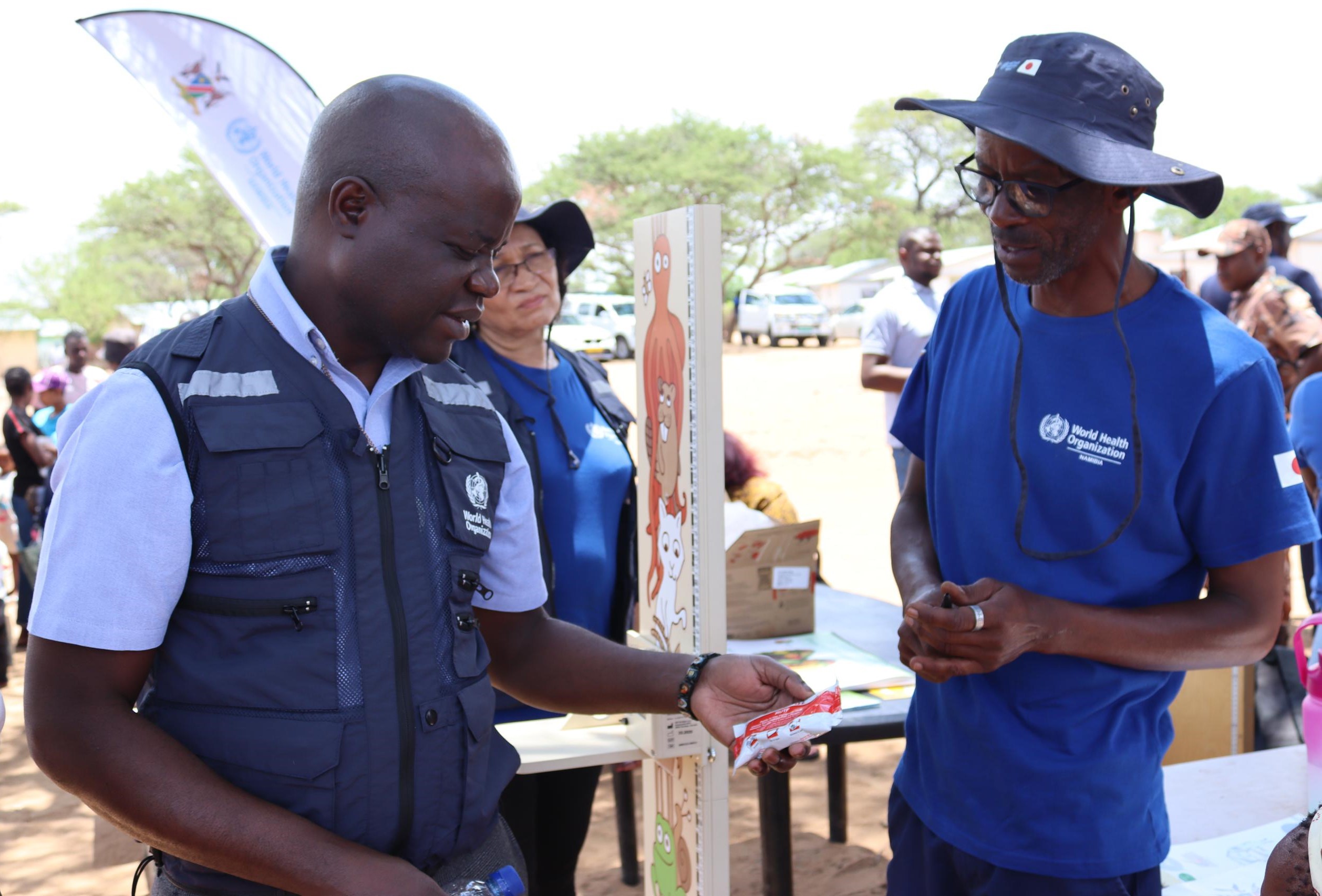
WHO expressed deep gratitude to the Government of Japan for its unwavering support of health initiatives in Namibia. Through this partnership, the project has expanded access to nutrition interventions, improved the quality of healthcare, and strengthened protections for women and children against violence. This work has been done in close collaboration with MoHSS, MGEPESW, and the Nutrition and Food Security Alliance of Namibia (NAFSAN).
“We are delighted to witness the progress made in ensuring that women and children have access to nutrition and are protected against violence,” said Dr. Richard Banda, WHO Representative to Namibia. He emphasized the importance of continued collaboration and urged partners to leverage their strengths to create a sustainable impact on the health and well-being of Namibia’s most vulnerable populations.
“We are delighted to witness the progress made in ensuring that women and children have access to nutrition and are protected against violence,” said Dr. Richard Banda, WHO Representative to Namibia. He emphasized the importance of continued collaboration and urged partners to leverage their strengths to create a sustainable impact on the health and well-being of Namibia’s most vulnerable populations.
This project is a significant step toward improving the health and protection of vulnerable women and children in Namibia, addressing both immediate needs and long-term social determinants of health.
Pour plus d'informations ou pour demander des interviews, veuillez contacter :
Mrs Celia Kaunatjike
Tel: +264 (0) 61 255 121
Email: kaunatjikec [at] who.int (kaunatjikec[at]who[dot]int)