
Botswana has strengthened multisectoral collaboration for health security through a National Bridging Workshop that brought together experts from the human, animal and environmental health sectors to develop a joint roadmap for implementing the One Health approach. The workshop was held in Gaborone from 9 to 11 June 2026 and was supported by WHO, WOAH, FAO and the Botswana Public Health Institute (BPHI).
The three-day workshop brought together 59 participants from government institutions representing human, animal, and environmental health sectors at both national and district levels. An additional 10 national observers from partner organizations, academia, and civil society also participated. Botswana became the 71st country globally and the 34th country in Sub-Saharan Africa to conduct a National Bridging Workshop.
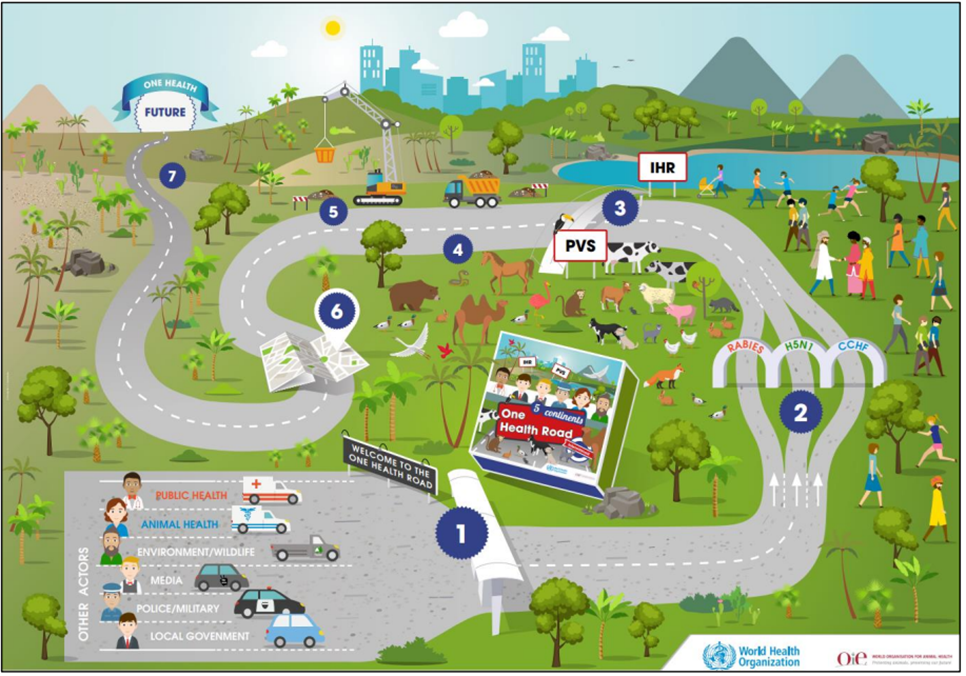
The workshop provided a platform for stakeholders from the human, animal, and environmental health sectors to evaluate the effectiveness of their collaboration under the One Health approach, which recognizes the interconnectedness of people, animals, plants, and the environment.
Key objectives of the workshop included:
• Assessing the strengths of existing collaboration among the three sectors.
• Increasing awareness and understanding of sector-specific assessment tools such as the State Party Self-Assessment Annual Reporting (SPAR), Joint External Evaluation (JEE), and the Performance of Veterinary Services (PVS) Pathway.
• Evaluating collaboration across 16 key technical areas.
• Developing strategic and operational actions to strengthen One Health implementation in Botswana.
Several speakers from the three sectors officiated the workshop. In her welcome remarks, Dr Pamela Smith-Lawrence, BPHI Executive Director, emphasized the importance of coordinated action in safeguarding Botswana from increasingly complex health threats. She noted that BPHI is leading national preparedness efforts through strengthened collaboration between environmental, wildlife, animal, and human health sectors, particularly in protecting the country against emerging and cross-border health emergencies.
Representing the One Health Quadripartite, Dr Juliet Bataringaya, Officer-in-Charge of WHO Botswana, highlighted that more than 60% of emerging infectious diseases originate from animals. She stressed that effective multisectoral collaboration is no longer optional but essential for preventing, detecting, and responding to outbreaks. She expressed that “Bridging operational gaps between sectors is critical to strengthening national and regional health security,” she noted, referencing the increasing frequency of disease outbreaks across Africa.
Officially opening the workshop, Dr Bobby Kgosiemang, speaking on behalf of Permanent Secretary, Ministry of Health, described the NBW as a pivotal opportunity to transform the One Health concept into a practical and institutionalized way of working. He emphasized that human, animal, and environmental health are inseparable and that no single ministry can effectively manage public health threats in isolation. Referring to local rabies outbreaks and regional Ebola Virus Disease events, he underscored the need for rapid, coordinated, and cross-border action to address evolving biological threats.
Dr Kgosiemang also reaffirmed Botswana’s longstanding commitment to international health frameworks, including the 2008 Libreville Declaration on Health and Environment.
Through a highly interactive and participatory process, participants identified opportunities to strengthen collaboration and produced several outcomes:
• An evaluation of the strengths and weaknesses of collaboration across 16 technical areas.
• A jointly developed One Health Operational Roadmap to guide the implementation of priority actions and strengthen multisectoral coordination.
• A comprehensive workshop report documenting discussions, findings, and agreed actions.
Delivering the closing remarks, Ms Abigail Khumoyame, Permanent Secretary in the Ministry of Environment and Tourism, highlighted the intrinsic link between environmental health and the wellbeing of both humans and animals. She emphasized that ecosystem degradation, climate-related risks, and increasing human-wildlife interactions require stronger collaboration across sectors. Ms Khumoyame called on the four stewardship ministries to move beyond dialogue towards operational action through resource sharing, data integration, and collective planning.
Also speaking at the closing ceremony, Mr Ephraim Balebetse, Deputy Permanent Secretary in the Ministry of Lands and Agriculture, stressed the need for a coordinated approach encompassing human, animal, plant, and environmental health. He called for the breaking down of institutional silos and accelerated operationalization of the One Health approach in Botswana.
The National Bridging Workshop marks an important milestone in Botswana’s journey towards a stronger, more integrated health security system. By fostering collaboration across sectors and developing a shared operational roadmap, Botswana is laying the foundation for a more resilient and proactive approach to preventing, detecting, and responding to health threats at the human-animal-environment interface.
The successful completion of the workshop demonstrates Botswana’s commitment to advancing the One Health agenda and strengthening preparedness for current and future public health challenges.


