Zambia undertakes the second round of the polio vaccination campaign to protect every child against polio
Lusaka, Zambia. Protecting children against polio requires continuous efforts to build strong immunity in communities against this life-threatening disease. This is why the Government of the Republic of Zambia, through the Ministry of Health, in collaboration with the World Health Organization (WHO), UNICEF, and Rotary International is rolling out a second round of the Sub-National Immunization Activities (SIA) polio campaign, scheduled to take place from the 2nd to the 5th of June 2026.
This new round focuses on the same six provinces covered during the first round named Lusaka, Southern, Eastern, Central, Western, and Muchinga and aims to reach more than 3.8 million children under five years of age. Delivering multiple doses through successive campaigns is essential to ensure full immunity and to interrupt any potential spread of poliovirus.
The upcoming round builds on the strong success of the first round conducted in April 2026, which reached more about 3.8 million children across the country, overcoming the national target of 3.7 million. This achievement reflects the strong cooperation between the Ministry of Health, WHO, UNICEF, and other partners from the Global Polio Eradication Initiative (GPEI), as well as the tireless efforts of frontline health care workers (HCWs) and community-based volunteers (CBVs) who worked across communities, from health facilities to households, to ensure no child was left behind.
Zambia’s Polio campaign is a response to the detection of poliovirus in environmental samples in Lusaka earlier this year, which prompted swift action to protect children and prevent further transmission. This effort did not happen in isolation, as also other countries in the region (Mozambique, Malawi, Zimbabwe, Namibia), have also conducted the campaign following detection of the virus in the region and the risk of cross-border spreading. Zambia continues to implement this campaign to close immunity gaps, promote broader immunization efforts, and safeguard every child against vaccine-preventable diseases.
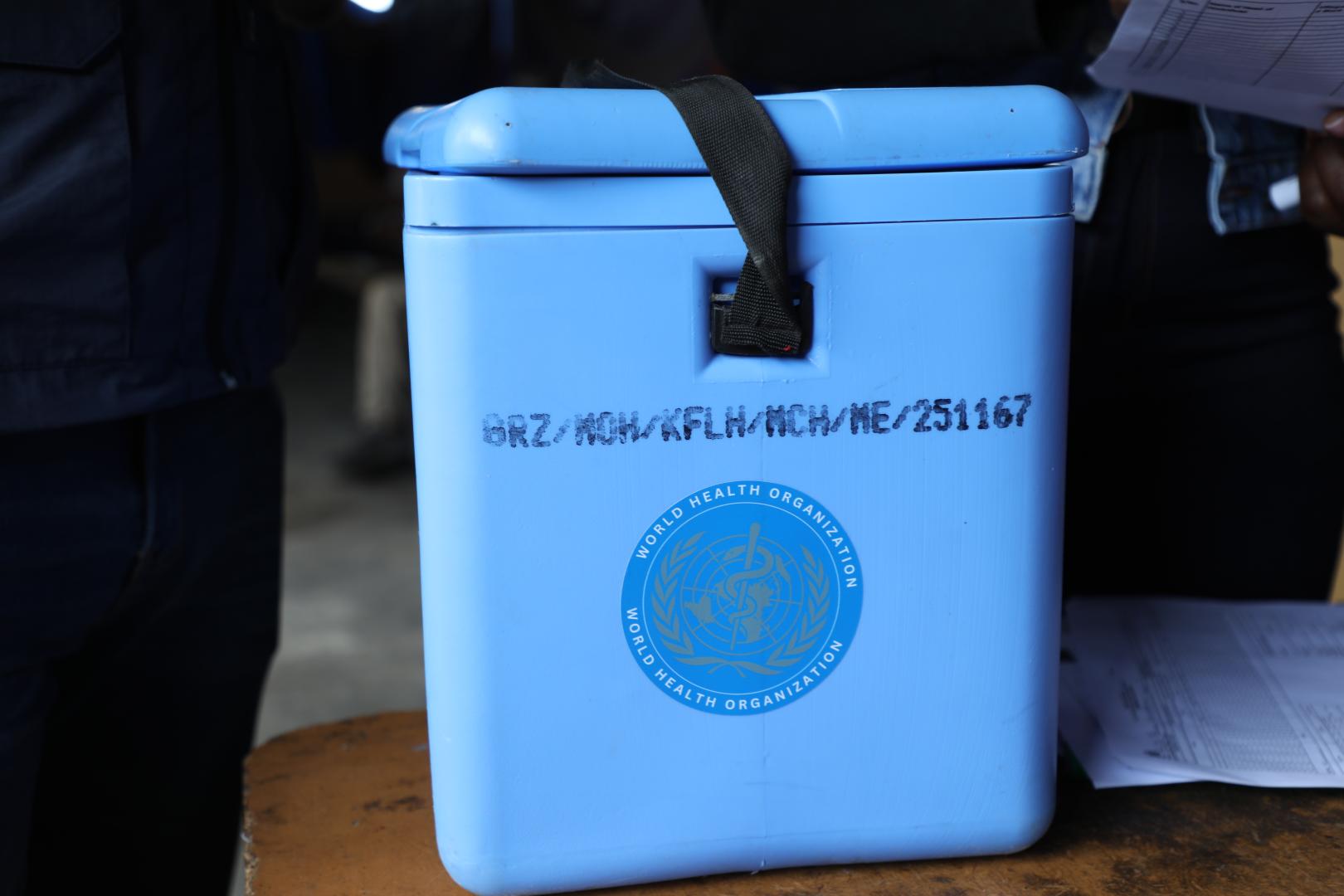
During the second round, vaccination teams will continue conducting door-to-door visits, alongside outreach activities in markets, schools, churches, and health facilities to ensure that all eligible children are reached. Every child under five years of age will be offered the oral polio vaccine, even if they received it during the first round, as each dose strengthens overall protection.
Dr. George Sinyangwe, Permanent Secretary for Donor Coordination at the Ministry of Health, emphasized the importance of participation. “The first round demonstrated the strength of our collective response. However, one dose is not enough to fully protect a child from polio. We urge all parents and caregivers to ensure their children receive the vaccine again during this second round so we can build strong and lasting immunity. If any of your children has not received a Polio vaccine in the first round, this is the opportunity.”
Dr. Clement Peter Lasuba, WHO Representative in Zambia, emphasized the importance of collective action against polio: “It is our collective responsibility to ensure that every child is vaccinated against polio. The more children we vaccinate, the greater the protection for families, communities, and the nation. High vaccination coverage is essential to stop the spread of poliovirus and to keep all children safe from this preventable disease.”
Tinkhani Msonda, UNICEF Zambia Representative OIC, highlighted the continued need for routine immunization. “The polio campaign is a vital opportunity to protect every child, but it does not replace routine immunization, which remains essential for children’s overall health and protection against other vaccine-preventable diseases,”. “We urge parents and caregivers to continue taking their children for regular vaccinations even after the campaign; and to remain vigilant and immediately report any child under 15 who develops sudden paralysis or weakness in the limbs to the nearest health facility. By working together and staying informed, we can keep every child safe and move closer to a polio-free Zambia.”
This campaign is made possible with the support of the Global Polio Eradication Initiative (GPEI), including valued contributions from Rotary, Saudi Arabia (KSRelief) and the United Arab Emirates (UAE). These joint efforts are helping Zambia and the region move closer to a polio-free future.
Note To Editors:
The Global Polio Eradication Initiative (GPEI) is a public‑private partnership led by national governments and six core partners — the World Health Organization (WHO), Rotary International, the US Centers for Disease Control and Prevention (CDC), UNICEF, the Bill & Melinda Gates Foundation, and Gavi, the Vaccine Alliance. Launched in 1988, GPEI has helped reduce global polio cases by more than 99% and continues to support countries with vaccination, surveillance, outbreak response, and the innovations needed to achieve and sustain a polio‑free world.
For more information, please contact:
Twaambo Siavwapa, Head of Communications and Public Relations, Ministry of Health. For any query contact Mr. Andrew Phiri, Communications and Public Relations, Ministry of Health, Zambia, at andrew.phiri [at] moh.gov.zm (andrew[dot]phiri[at]moh[dot]gov[dot]zm)
Kristina Seris, External Relations and Communications Officer, WHO Zambia, serisk [at] who.int (serisk[at]who[dot]int)
Maria Fernandez, Chief of Advocacy & Communications, UNICEF Zambia, mfernandez [at] unicef.org (mfernandez[at]unicef[dot]org)