Tobacco Control

Tobacco Control

    Overview

    Tobacco is the leading preventable cause of death in the world. Tobacco control actions will prevent young people from starting to use tobacco, help current tobacco users to quit and protect non-smokers from exposure to second-hand smoke.

    Tobacco use remains a growing public health threat in the African Region. While prevalence is still comparatively low, rapid population growth, aggressive tobacco industry marketing, and the emergence of new nicotine products pose significant risks. Strengthening implementation of WHO FCTC is essential to protect health and to achieve SDG Target 3.a.

    WHO Policies and Regional Strategies

    Progress in MPOWER Implementation

    Since 2007:

    • Countries that have implemented at least one MPOWER measure at the highest level increased from 6 to 28 (as of 2024).
    • Population coverage expanded from 120 million to 950 million people—representing 73% of the Region's population.

    1) Warning About the Dangers of Tobacco

    WHO FCTC Article 11 requires effective packaging and labelling policies.

    • 20 Member States have adopted graphic health warnings;
    • 3 Member States have regulations for plain packaging, with Mauritius already implementing it.

    WHO pictorial health warnings library: https://www.who.int/tools/pictorial-health-warnings-on-tobacco-products

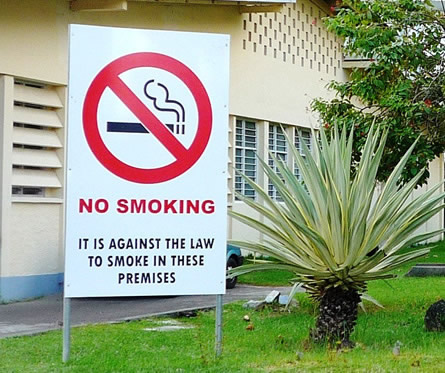
    2) Banning Smoking in Public Places

    WHO FCTC Article 8 mandates protection from tobacco smoke in all indoor public spaces.

    • 39 Member States have enacted laws to restrict smoking in public places.
    • 14 countries have 100% smoke-free policies.

    3) Comprehensive Ban on Tobacco Advertising, Promotion and Sponsorship (TAPS)

    WHO FCTC Article 13 requires a full ban on TAPS.

    • 36 countries have enacted TAPS bans:
    • 22 have total bans
    • 14 have partial bans

    4) Other MPOWER Measures

    Countries continue to strengthen:

    • Tobacco taxation
    • Cessation services
    • Surveillance systems to monitor tobacco use and implementation of policy

    Scope of WHO Technical Support to Member States

    1) Strengthening Political Commitment

    Countries increasingly embed tobacco control within:

    • National development plans
    • UHC agendas
    • NCD strategies
    • National budget processes

    2) Enhancing Legal and Regulatory Frameworks

    Over 75% of Member States have adopted or updated FCTC-aligned legislation, including on smoke-free laws, TAPS bans, labelling, taxation, and implementation of Article 5.3 (protecting policies from tobacco industry interference).

    3) Expanding National Capacity

    • Training programmes for national tobacco control focal points, law enforcement bodies, and customs officials.
    • Countries are strengthening enforcement systems, including multi-sectoral inspections.

    4) Improving Data and Surveillance

    • More countries are implementing GATS, GYTS, and national surveys.
    • Data are regularly uploaded to the Global Tobacco Surveillance System (GTSS) to support monitoring and evaluation.

    Expected Outcomes for Tobacco Control in the African Region

    1) Declining Tobacco Use Prevalence

    Significant reductions are expected among adults and young people, particularly in countries scaling up best-practice measures such as taxation and smoke-free policies.

    2) Stronger Tobacco Taxation

    More countries will adopt tax reforms that raise tobacco prices and achieve a total tax share ≥75%, with automatic annual adjustments for inflation and income growth.

    3) Effective Implementation of Comprehensive Laws

    Increased enforcement and compliance are expected as countries adopt full, nationwide tobacco control legislation.

    4) Reduced Tobacco Industry Interference

    Strengthened implementation of Article 5.3, enhanced transparency, and restrictions on tobacco industry CSR activities will help safeguard health policies.

    Contact

    For technical support, please contact:
    Dr William Maina
    Email: mainaw [at] who.int (mainaw[at]who[dot]int)
    Health Promotion, Determinants of Health and Tobacco Control Unit
    WHO Regional Office for Africa

    Policies and strategies

    Tobacco control actions aim to substantially reduce the prevalence of tobacco use and exposure to tobacco smoke. The Who Framework Convention on Tobacco Control (WHO FCTC) lays out different tobacco control measures to be implemented in order to prevent young people from starting to use tobacco, help current tobacco users to quit and protect non-smokers from exposure to second-hand smoking.

    Setting implementation goals and developing plans and strategies for the implementation of the Convention in the African Region are imperative. In addition, building the capacity of the Member States in the region for an effective enforcement of the different strategies is crucial.

    The following tobacco control strategies are in line with the requirements and guidance in the WHO FCTC:

    • Raising awareness about the WHO FCTC ratification/accession process and requirements;
    • Building capacity for the development of national action plan and comprehensive tobacco control policy and legislation reflecting the different provisions of the WHO FCTC such as protection from tobacco smoke, support for cessation programmes, warning about the dangers of tobacco, bans on tobacco advertising and promotion and raising taxes on tobacco products;
    • Establishing a full-time national coordinating mechanism with a designed national focal point and a national multisectoral steering committee;
    • Establishing a system for surveillance, monitoring and evaluation of tobacco use, tobacco control policies interventions as well as tobacco industry activities;
    • Mobilizing resources for national tobacco control programmes with the participation of nongovernmental organizations and the private sector.

    Country profiles

    Country profiles: WHO Report on the global tobacco epidemic 2019

    The country profiles were generated from data collected for the WHO report on the global tobacco epidemic, 2019. The country profiles provide information about tobacco prevalence, preventive measures, cessation and tobacco economics.


    Global Youth Tobacco Survey (GYTS)


    Global Adult Tobacco Survey (GATS)


    WHO Report on the Global Tobacco Epidemic, 2019


    WHO Report on the Global Tobacco Epidemic, 2009


    Report card on the WHO FCTC, 2010


    The Global Tobacco Surveillance System (GTSS) African Region Atlas, 2018

    The Global Tobacco Surveillance System (GTSS) African Region Atlas presents estimates of tobacco use and key tobacco control measures in a visual format from countries within the WHO African Region who have completed the Global Adult Tobacco Survey (GATS), the Global Youth Tobacco Survey (GYTS), or both.

    The Atlas describes the range of tobacco product use across various countries in the WHO African Region and provides estimates on tobacco use; second-hand smoke exposure; cessation; warnings about the dangers of tobacco; bans on advertising, promotion and sponsorship; and tobacco taxes. Progress and opportunities for further tobacco prevention and control efforts in these countries are also highlighted. This Atlas makes data visualization both simpler and friendlier, as well as ultimately actionable.

    This Atlas can serve as a resource for decision makers, public health professionals, the media, researchers, and the general public to inform tobacco prevention and control efforts to end the tobacco epidemic.

    Download the GTSS African Region Atlas
    English | French

    Prémios do dia mundial sem tabaco

    VENCEDORES DOS PRÉMIOS DO DIA MUNDIAL SEM TABACO 2019 NA REGIÃO AFRICANA

    Todos os anos, a Organização Mundial da Saúde reconhece indivíduos ou organizações das suas seis Regiões pelo seu trabalho realizado na área da luta contra o tabagismo. Na Região Africana, os vencedores do prémio do Dia Mundial sem Tabaco 2019 são:

    • Sua Excelência o Professor Kane Boubacar, Ministro da Saúde da República Islâmica da Mauritânia, para Prémio de Director-Geral;
    • Dr. Edumbadumba Egdula Pierre César, Parlamento Nacional, República Democrática do Congo;
    • Câmara dos Representantes do Povo da República Federal Democrática da Etiópia;
    • Ministério da Saúde e Qualidade de Vida, República da Maurícia;
    • Dra Ana da Conceição dos Passos Mamede Graça, Instituto Nacional de Luta Anti-Drogas, República de Angola; e
    • Sr. Peter Unekwu-Ojo Friday, Diretor Executivo, Cedar Refuge Foundation, República Federal da Nigéria.

    Os seis galardoados serão reconhecidos pelo seu excepcional contributo na área da luta contra o tabagismo nos seus respectivos países.


    Key Facts About Tobacco Use

    Global Facts

    • Tobacco kills up to 50% of its users and reduces life expectancy by about 10 years among smokers.
    • More than 7 million deaths each year are caused by tobacco, including 1.6 million deaths due to second-hand smoke exposure.
    • Nearly 80% of the world's 1+ billion smokers live in low- and middle-income countries.

    In the African Region

    • Over 250,000 people die annually from tobacco-related diseases.
    • Around 22,000 women die each year from preventable tobacco-related illnesses.
    • 13% of adolescent girls use tobacco products. Recent evidence shows increasing tobacco use among girls, with prevalence rates now similar to boys (Girls: 4.6%–36.6%; Boys: 7.8%–36.5%).
    • Between 2002 and 2030, tobacco-attributable deaths in LMICs — including African countries — are projected to double.
    • Women account for 64% of adult deaths linked to second-hand smoke, largely due to exposure in homes and workplaces.

    Status of Tobacco Control in the WHO African Region

    • 45 Member States have ratified the WHO Framework Convention on Tobacco Control (WHO FCTC).
    • 40 Member States have enacted national tobacco control laws and regulations.
    • 22 Member States have ratified the Protocol to Eliminate Illicit Trade in Tobacco Products.
    • 20 Member States require pictorial health warnings on tobacco product packaging.
    WHO policies and strategies

    _Tobacco control actions aim to substantially and continually reduce the prevalence of tobacco use and exposure to tobacco smoke.The WHO Framework Convention on Tobacco Control (WHO FCTC) lays out different tobacco control measures to be implemented in order to prevent young people from starting to use tobacco, help current tobacco users to quit and protect non-smokers from exposure to second-hand smoke.

    Setting implementation goals and developing plans and strategies for the implementation of the Convention in the African Region are imperative. In addition, building the capacity of the Member States in the region for an effective enforcement of the different strategies is crucial.

    The following tobacco control strategies are in line with the requirements and guidance in the WHO FCTC:

    Raising awareness about the WHO FCTC ratification/accession process and requirements;
    Building capacity for the development of national action plan and comprehensive tobacco control policy and legislation reflecting the different provisions of the WHO FCTC such as protection from tobacco smoke, support for cessation programmes, warning about the dangers of tobacco, bans on tobacco advertising and promotion and raising taxes on tobacco products;
    Establishing a full-time national coordinating mechanism with a designed national focal point and a national multisectoral steering committee;
    Establishing a system for surveillance, monitoring and evaluation of tobacco use, tobacco control policies interventions as well as tobacco industry activities;
    Mobilizing resources for national tobacco control programmes with the participation of nongovernmental organizations and the private sector.

    Featured news

    Mauritanie : le tabagisme en régression avec l’application d’une loi
    Mauritânia: tabagismo em declínio com a aplicação de uma lei