São Tomé and Príncipe reinforces commitment to malaria elimination during World Malaria Day celebrations
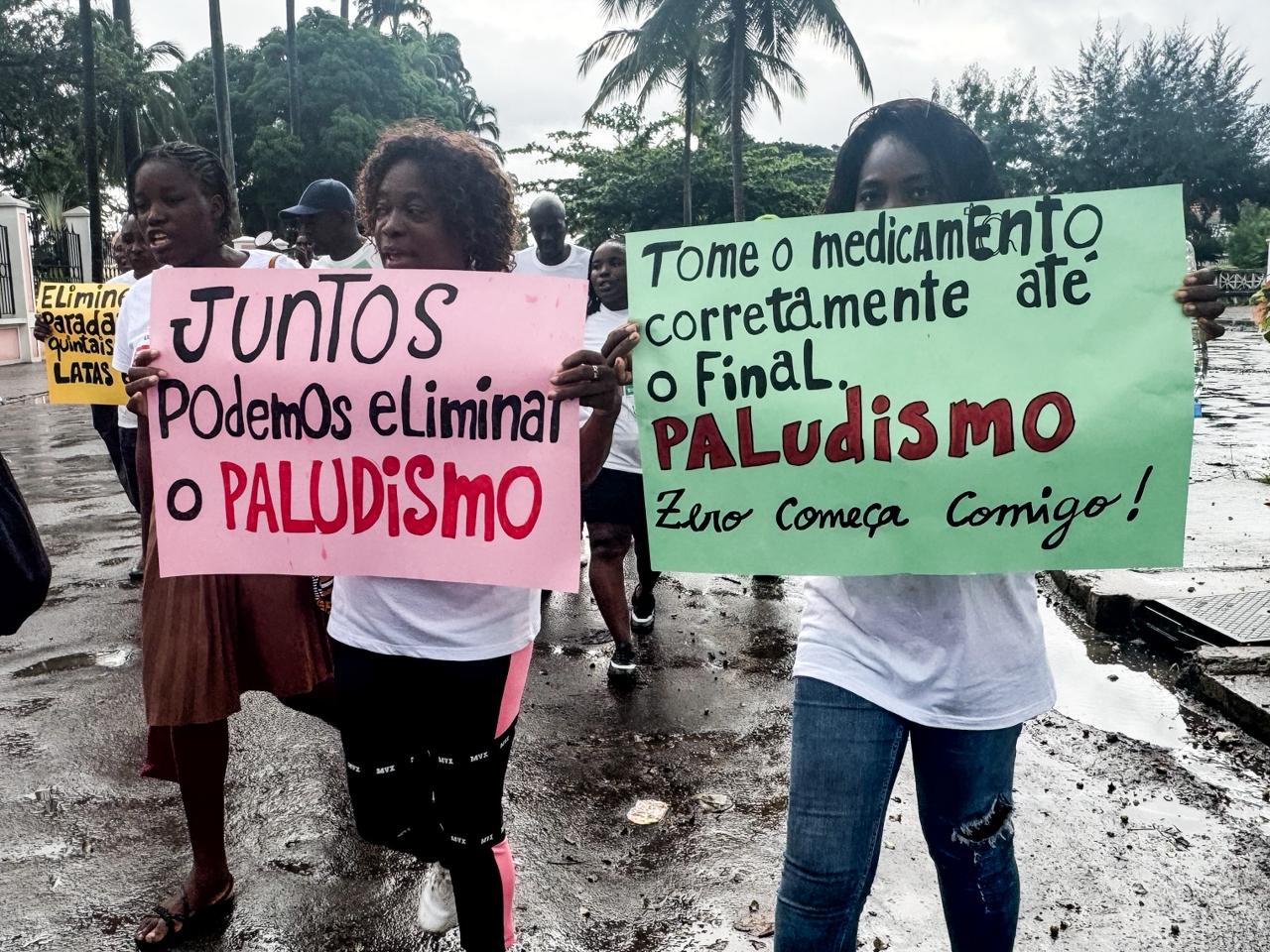
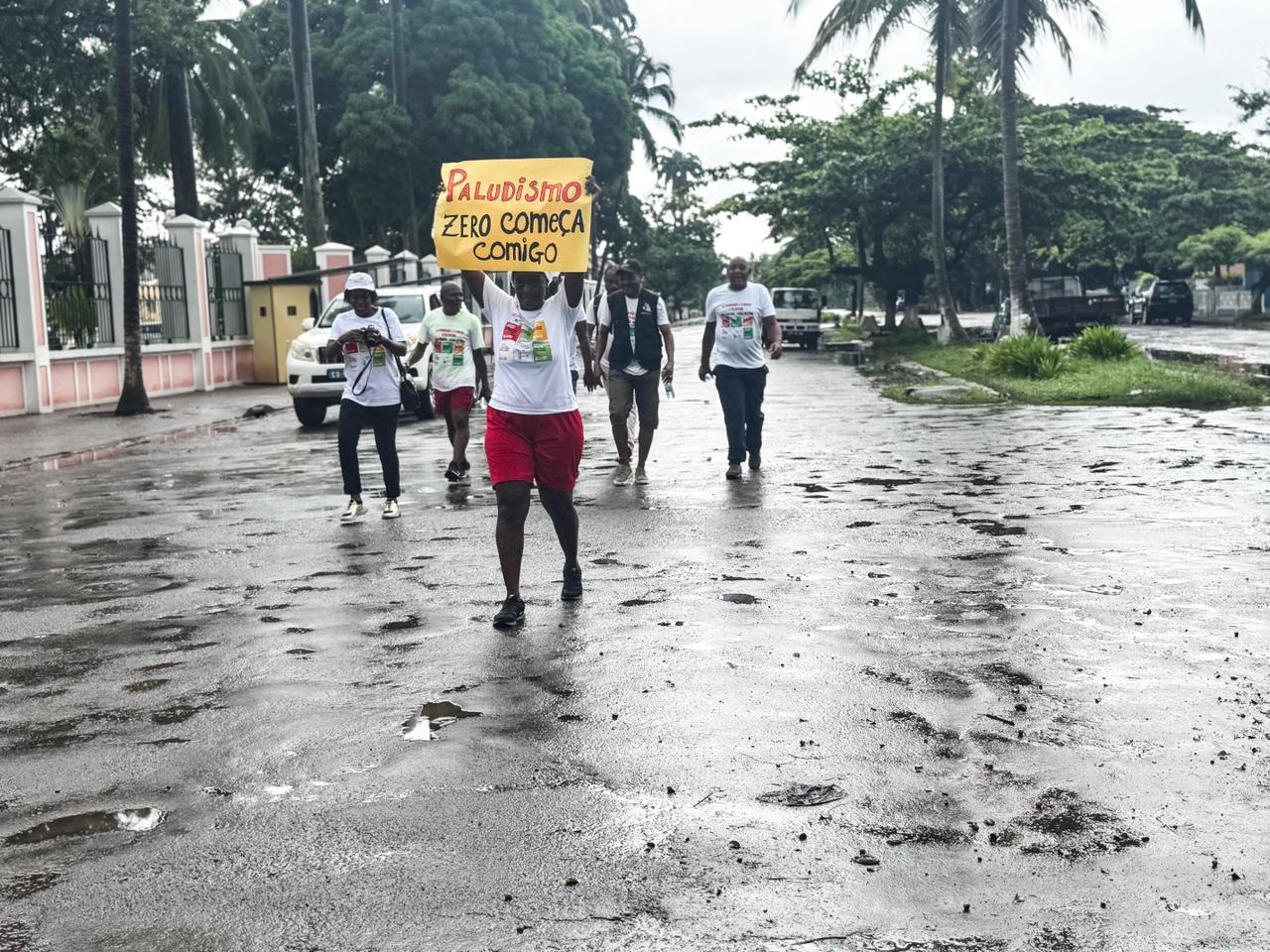
São Tomé, 25 April — São Tomé and Príncipe marked World Malaria Day with a series of activities organized by the Ministry of Health, in partnership with the World Health Organization (WHO) and other partners. Despite heavy rainfall, the mobilization was highlighted by a symbolic march that reflected the collective determination to eliminate one of the country’s major public health challenges.
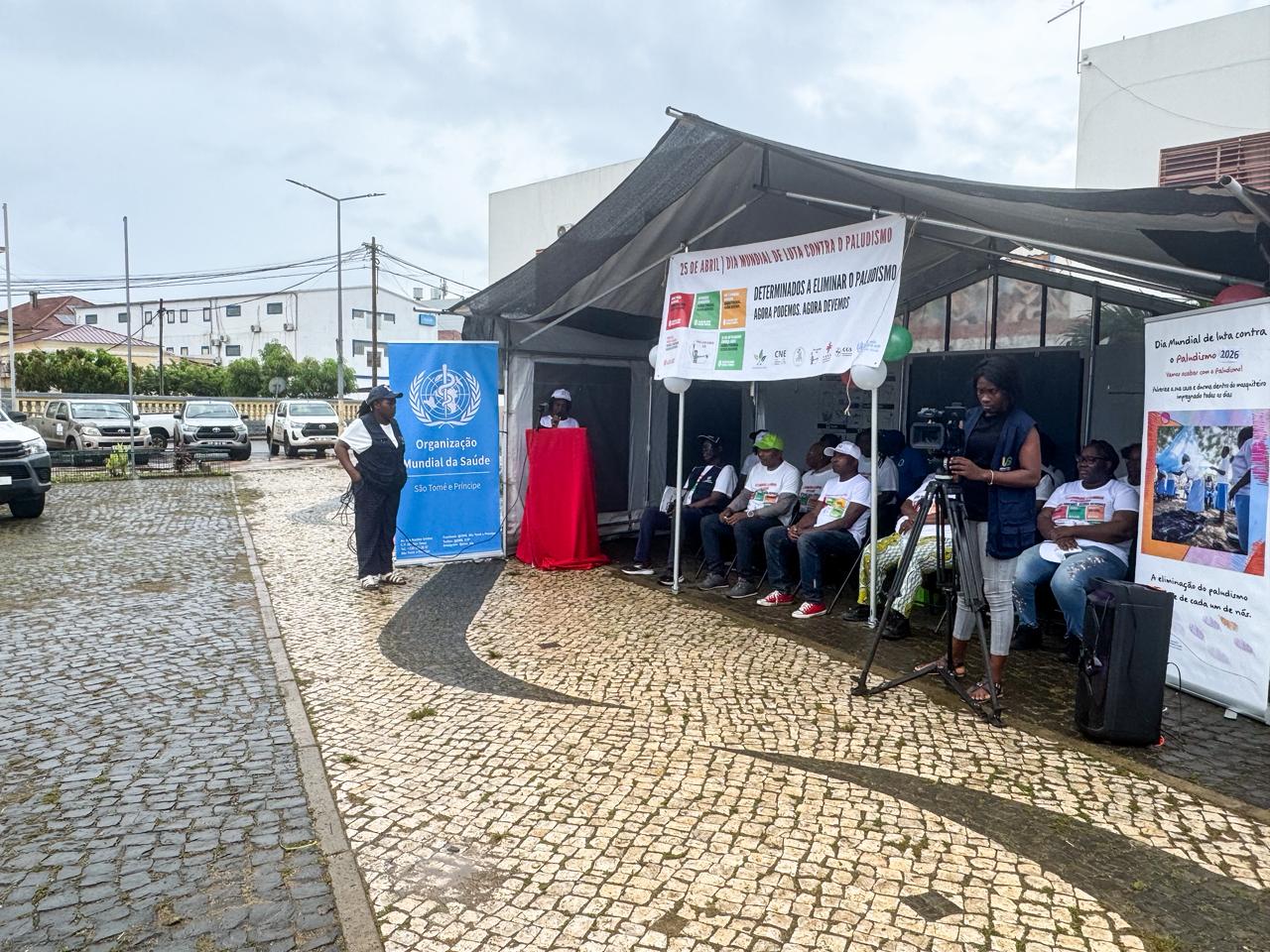
This year’s celebrations, held at Yon Gato Square, took place under the global theme “Determined to eliminate malaria. Now we can. Now we must.” The theme reflects both the progress achieved and the urgency of sustaining and strengthening efforts towards malaria elimination.
In recent years, São Tomé and Príncipe has recorded important advances in the fight against malaria, including strengthened epidemiological surveillance, improved access to diagnosis and treatment, distribution of next-generation insecticide-treated mosquito nets, and increased community engagement. Nevertheless, challenges remain that require continuous action and sustained collective commitment.
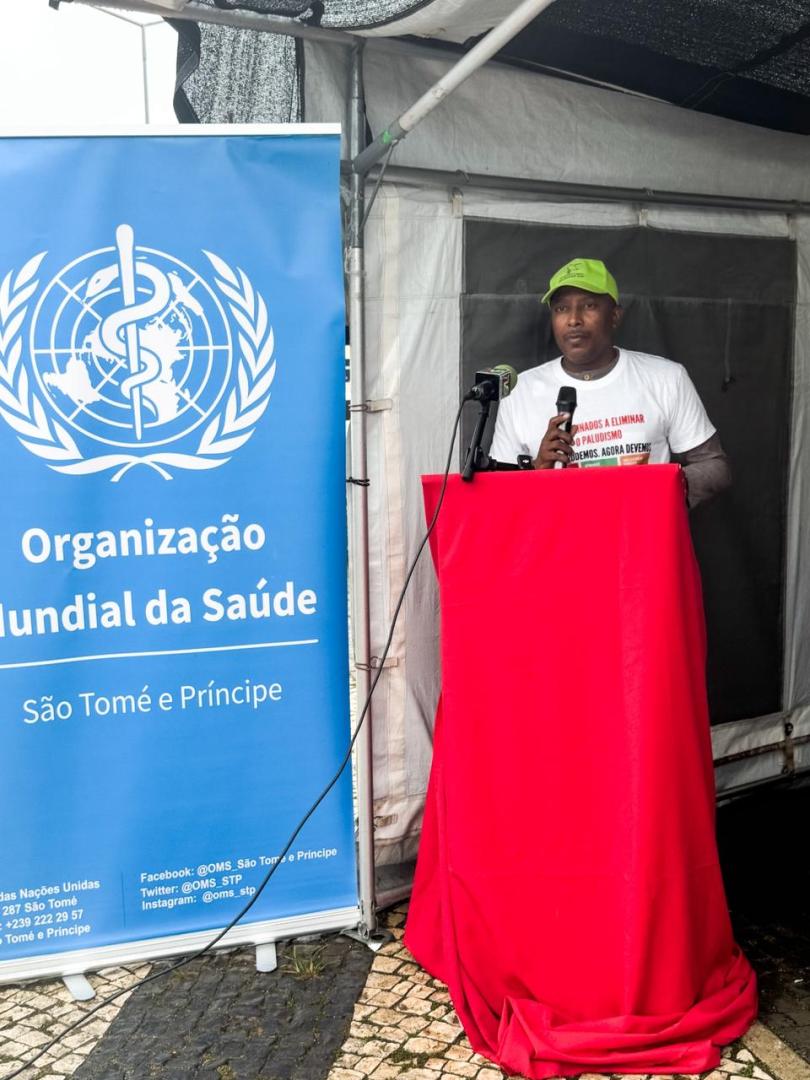
During the commemoration ceremony, the Minister of Health, Dr Celso Matos, reaffirmed the Government’s commitment to this national priority, emphasizing that
“the Government continues to consider malaria as an important public health problem, and its elimination a strategic and priority objective for the sustainable development of our country.”
The Minister also called for active community participation, highlighting the importance of adhering to prevention measures such as regular use of mosquito nets, acceptance of indoor residual spraying and improved environmental sanitation.
The WHO Representative in São Tomé and Príncipe, Dr Abdoulaye Diarra, congratulated the country on the progress achieved, noting that these results demonstrate strong national leadership, increased community commitment and more effective use of public health data and tools.
“São Tomé and Príncipe has made important progress along this path, through strengthened epidemiological surveillance, improved access to diagnosis and treatment, and the active involvement of communities,” he said.
However, the WHO Representative cautioned that these gains cannot be taken for granted if efforts are weakened.
“Now we can, because there is stronger political and community commitment, better data and more effective tools. Now we must, because when investments decline and programmes weaken, malaria returns quickly and the cost is measured in lives lost,” he stressed.
The World Malaria Day celebrations in São Tomé and Príncipe reinforced the message that malaria elimination is achievable, but only through strong leadership, sustainable financing, equitable innovation and, above all, the active participation of communities.
WHO reaffirms its commitment to continue supporting the Government and the people of São Tomé and Príncipe in turning this historic opportunity into reality: a malaria-free future.





WHO Sao Tome and Principe
Email: afonsoe [at] who.int (afonsoe[at]who[dot]int)