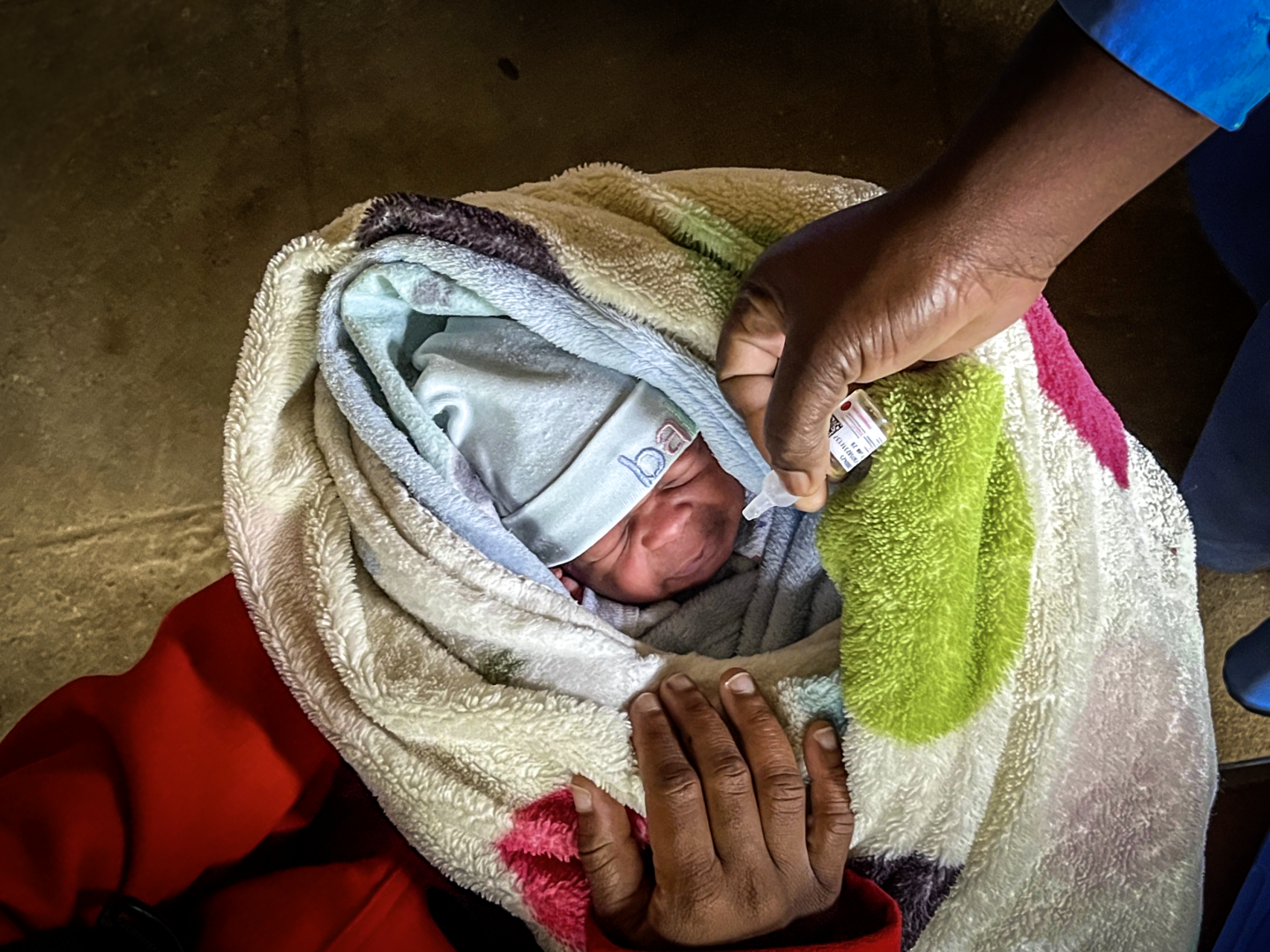
Malawi vaccinates 1.3 million children in response to polio outbreak
Blantyre—Around 1.3 million children in Malawi have been vaccinated against polio in a four-day campaign following the detection of a new circulating variant polio case in late January 2026. This variant polio case is the first reported in the country since 2022, when wild poliovirus — genetically linked to an outbreak in Pakistan — was confirmed in Malawi.
The campaign, using the novel oral poliomyelitis vaccine type 2 (nOPV2), was carried out in line with the Global Polio Eradication Initiative (GPEI)’s recommendations for supplementary immunization activities in response to any detection of poliovirus. Around 97% of the targeted children were reached in eight districts in Malawi’s Southern Region. Additional rounds are planned to vaccinate a further 42 000 children who missed the initial drive.
Blantyre District achieved the highest number of doses administered in the eight districts, with 109% coverage.
"Polio is a debilitating disease that can leave one with lifetime disability and sometimes death. But the good news is that it's preventable through vaccination, good personal hygiene and sanitation,” said Dr Charles Chilambula, Deputy Minister of Health and Sanitation during the launch of the vaccination campaign.
Malawi received 1.7 million doses of the nOPV2 vaccine from the International Coordinating Group on Vaccine Provision on 10 February 2026. The vaccines were distributed within 12 hours to points of delivery across the targeted districts for the immediate start of the campaign. This will be followed by two additional national rounds later this year.
Communities played a critical role in the campaign’s success. Social mobilizers, health workers, religious leaders and traditional authorities provided accurate information about the vaccine, addressed misinformation and reassured household members. Out of 84 households that were initially reluctant to vaccinate 45 accepted, thanks to these targeted engagement efforts. Health authorities continue to follow up with the remaining families to ensure children are protected in upcoming rounds.
“This campaign is an example of another aggressive and well-coordinated effort to interrupt polio transmission,” says Dr Charles Njuguna, Acting WHO Representative in Malawi. “WHO will continue to support Malawi in its efforts to ensure that every child is protected from this debilitating but vaccine-preventable disease.”
WHO supported the Ministry of Health to coordinate the complex operational logistics required for a rapid, region-wide vaccination drive. WHO emergency response experts organized and facilitated training sessions, empowering local vaccinators with the knowledge and skills needed to reach children efficiently and safely. The Organization supported efforts to strengthen data management systems, enabling swift and accurate reporting so progress could be tracked in real time. Monitoring and evaluation support ensured high standards were maintained. WHO is also conducting a post campaign lot quality assessment, which measures the success of the campaign by determining if specific areas met a predetermined coverage threshold.
Adhering to GPEI guidelines for thorough outbreak investigation, Malawi undertook an extensive case and social investigation. The outbreak is linked to circulating variant poliovirus type 2 identified from environmental surveillance sites and circulating variant poliovirus in an unvaccinated 7-year-old child. These strains of poliovirus emerge in communities with low immunization rates and spread through contaminated water or food. They can cause outbreaks in areas free of wild polio.
During the social investigation, health authorities interviewed 22 people from the community to understand the social and cultural barriers to immunization. Active case search was conducted to rule out further transmission and presence of acute flaccid paralysis—a neurological condition characterized by sudden onset muscle weakness or paralysis, often associated with infections like poliovirus.


bunyao [at] who.int (bunyao[at]who[dot]int)
+265 999 930 280
Communications Officer
Polio Eradication Programme
WHO Regional Office for Africa
Email: mongem [at] who.int (mongem[at]who[dot]int)
Tel: + 34 636 04 76 79
Communications and Media Relations Officer
WHO Regional Office for Africa
Email: saida.swaleh [at] who.int (saida[dot]swaleh[at]who[dot]int)