Transforming NCD Care Through the Regional PEN-Plus Strategy: Advancing integrated services for chronic and severe NCDs in Tanzania
Dodoma—The Government of Tanzania is taking bold steps to strengthen services for noncommunicable diseases (NCDs) by embracing the WHO package of essential NCD interventions (PEN) and Regional PEN-Plus Strategy. This initiative builds on the momentum created during the first Regional Conference on PEN-Plus, held in Tanzania in April 2024, which reflected the country’s commitment to improving health outcomes for its most vulnerable populations.
The World Health Organization’s Regional Office for Africa, with support from the Hemsley Charitable Trust, launched the PEN-Plus Strategy to integrate prevention and treatment of severe chronic conditions across priority countries, complementing WHO PEN. Tanzania stands out among the 20 beneficiary countries, having advanced to the national scale-up phase after completing earlier stages, including situation analysis, model design, and piloting.
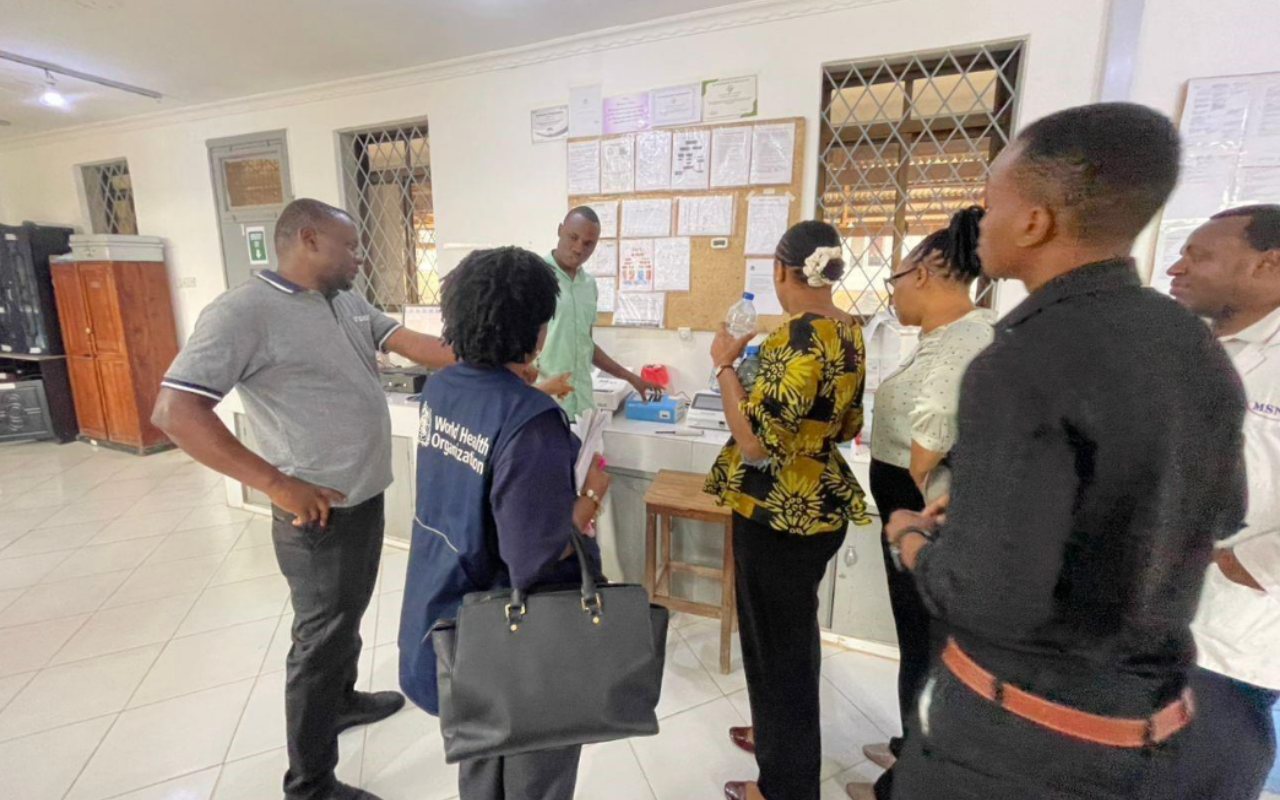
On 16–17 December 2025, a WHO-supported session in Dodoma brought together officials from the Ministry of Health (MOH), PORALG, and technical experts. The team visited a PEN-Plus pilot site in Kondoa District to gather lessons and identify best practices for national scale-up. This was followed by a joint meeting to validate assessment results on PEN and PEN-Plus service readiness conducted in 14 sampled facilities across Tanzania mainland. In sharing the findings, the results highlighted vast opportunities already invested by the Government of Tanzania that can be utilized to strengthen early detection and management of chronic and severe conditions such as sickle cell disease (SCD), rheumatic heart disease (RHD), diabetes mellitus, and cancer. In reviewing the results, it was noted that most of the assessed clinics already provided services for NCDs utilizing the WHO PEN recommendations, which is a key opportunity for utilizing the experts at the Regional and National level to mentor district officials, either physically or by digital methods. This will apply to the chronic and severe cases but also for all NCDs.
During the visit, the key findings from the Kondoa site visit demonstrated that the groundwork for service delivery is already in place. The next step is to build synergy between existing government and partner initiatives while addressing facility-level gaps. Examples include integrating advanced services into ongoing diabetic clinics supported through the Tanzania Diabetes Association, expanding SCD centers to include type 1 diabetes care, utilizing CTC units and Maternal Child Health units to identify and detect young children and other patients and clients requiring urgent care. The establishment of a one-stop centre for comprehensive health assessment and care was identified as a best practice for sustainability, as observed in Kondoa. This presents a strong opportunity to leverage existing resources and expertise to support district-level implementation through laboratory and diagnostic capacity, IT systems, human resource development, supply chain management, and peer learning across the NCD continuum.
PEN-Plus is more than a health intervention; it is a transformative approach that brings life-saving care closer to communities. By expanding the WHO PEN package with essential medicines, advanced technologies, and specialized training, the strategy ensures timely, quality care for patients with severe conditions. This model not only saves lives but also strengthens health systems, reduces costs, and promotes equity and social justice.
As Tanzania moves forward, the call to action is clear: continue raising awareness and fostering partnerships to ensure that every person living with a severe NCD receives the care they deserve—right in their community. Tanzania is setting an example of how collaborative action can address severe NCDs effectively and affordably, contributing to the achievement of Sustainable Development Goal 3.4 on reducing premature mortality from NCDs.
This progress has been supported through collaboration between the Ministry of Health, PO-RALG, and key partners, including the NCDI Poverty Network (through NIMR), the Tanzania Diabetes Association, the Sickle Cell National Programme, Muhimbili University of Health and Allied Sciences (MUHAS), WHO, UNICEF, and local associations under the Tanzania NCD Alliance. These collective efforts have laid a solid foundation for scaling up integrated NCD services nationwide, guided by a PEN-Plus National Operational Plan that is expected to be launched soon.
Communication Assistant
WHO Country Office, United Republic of Tanzania
Tel: +255 750 306676
Email: sarah.mujulizi [at] who.int (sarah[dot]mujulizi[at]who[dot]int)