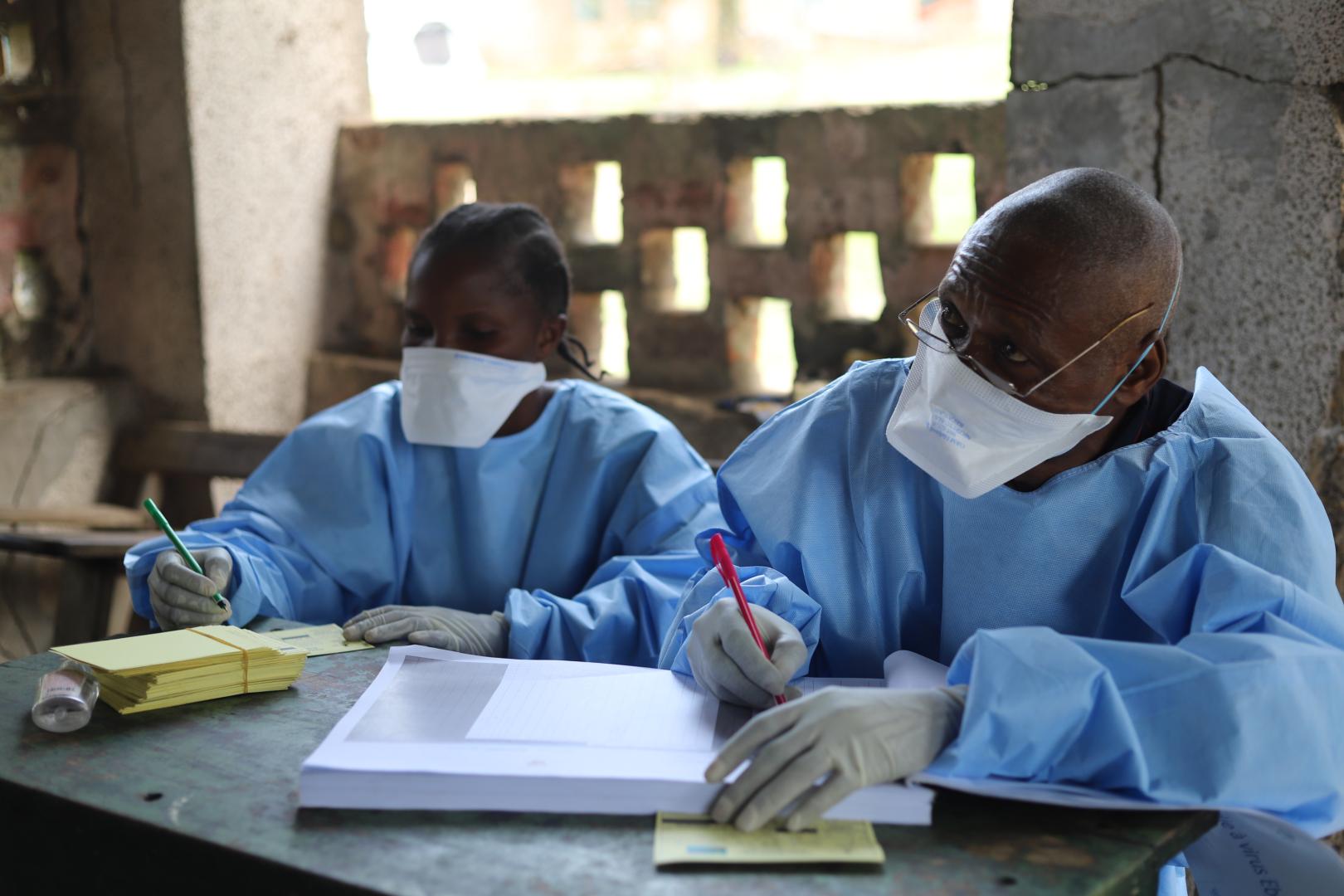
Democratic Republic of the Congo declares end of 16th Ebola outbreak
Kinshasa—The Democratic Republic of the Congo today declared the end of the Ebola virus disease outbreak in Kasai Province, after no new cases were reported in the past 42 days since the last patient was discharged from treatment centre on 19 October 2025.
“On behalf of the government— and taking into account all the scientific and operational indicators confirming that the chain of transmission of the virus has been broken—I hereby officially declare the end of the 16th Ebola outbreak in the Democratic Republic of the Congo,” said Dr Samuel Roger Kamba, Minister of Public Health, Hygiene and Social Welfare.
The rapid and coordinated response by the Ministry of Health, with support from World Health Organization (WHO) and partners, was pivotal in halting the spread of the virus which affected Bulape Health Zone, a rural community with limited road and telecommunication infrastructure. In total, 64 cases (53 confirmed, 11 probable) and 45 deaths were recorded in the outbreak.
A total of 112 WHO experts and frontline responders were deployed to support the national authorities to swiftly scale up and sustain the response, and over 150 tonnes of medical supplies and equipment were delivered to protect health workers and communities.
“Controlling and ending this Ebola outbreak in three months is a remarkable achievement. National authorities, frontline health workers, partners and communities acted with speed and unity in one of the country’s hard-to-reach localities,” said Dr Mohamed Janabi, WHO Regional Director for Africa. “WHO is proud to have supported the response and to leave behind stronger systems, from clean water to safer care, that will protect communities long after the outbreak has ended.”
For the first time in an outbreak, an innovative treatment facility known as the Infectious Disease Treatment Module (IDTM) was set up to bolster safer and more patient-friendly care. The module - developed by WHO, the World Food Programme and other partners—was designed to better protect health workers while enabling more dignified and effective care for patients.
To protect communities and health workers, more than 47 500 people were vaccinated against Ebola, with vaccination initially targeting contacts of people confirmed with the virus and later expanded to communities in and around Bulape.
Gavi, the Vaccine Alliance, played a key role in supporting the response by enabling the swift deployment of over 48 000 vaccine doses from the Gavi-funded global stockpile. The support also enabled the International Coordinating Group on Vaccine Provision to preposition doses and maintain a small stock in the country and, in partnership with WHO and the Ministry of Health, provided delivery funding for vaccine activities and essential cold chain and logistical support.
“The swift resolution to this Ebola outbreak is a testament to the dedication of healthcare workers, the Ministry of Health, partners and communities—and to what is possible when mechanisms are in place to fight deadly vaccine-preventable diseases,” said Allyson Russell, Senior Programme Manager, Global Health Security at Gavi, the Vaccine Alliance. “With vaccines from the global Gavi-funded stockpile and timely delivery support, coupled with other critical interventions such as surveillance, contact tracing, isolation and case management, our colleagues in the DRC have demonstrated that it is now possible to rapidly bring Ebola outbreaks like this one under control, dramatically reducing cases, long-term disabilities and deaths. Gavi remains committed to the fight against Ebola by maintaining the global stockpile and through continued support for preventive vaccination for frontline health workers in at-risk countries.”
Among the response challenges was the lack of reliable clean water supply to Bulape hospital for clinical use. WHO and partners set up a piped water system to the hospital as well as public taps, which will continue providing clean water to the community in the years to come. Additionally, reconstruction and rehabilitation work continues at the hospital and other facilities to bolster long-term health system resilience.
The outbreak was the country’s 16th since the disease was identified in 1976. Previous outbreaks in Kasai Province were in 2007 and 2008.
Ebola virus disease is a rare but severe, often fatal illness in humans. Human-to-human transmission is through direct contact with blood or body fluids of a person who is sick with or has died from Ebola, or objects and surfaces contaminated with body fluids from a person sick with Ebola or the body of a person who died from Ebola.
With the outbreak declared over, efforts are now shifting from Ebola-specific surveillance to the broader Integrated Disease Surveillance and Response system. WHO continues to work closely with national and provincial authorities to maintain vigilance and ensure preparedness, rapid and effective response in case of any flare-ups.
The country now begins a 90-day period of enhanced disease surveillance. As part of the sustained vigilance, a survivor care programme established with support from WHO and partners is helping to provide holistic post-recovery support for Ebola survivors.
Communications and marketing officer
Tel: + 242 06 520 65 65 (WhatsApp)
Email: boakyeagyemangc [at] who.int (boakyeagyemangc[at]who[dot]int)
Communications Officer
WHO DRC
Tel : +243 81 715 1697
Office : +47 241 39 027
Email: kabambie [at] who.int (kabambie[at]who[dot]int)
Emergencies Communications Officer
WHO Africa Regional Office
nwonyec [at] who.int (nwonyec[at]who[dot]int)
+2348034645524