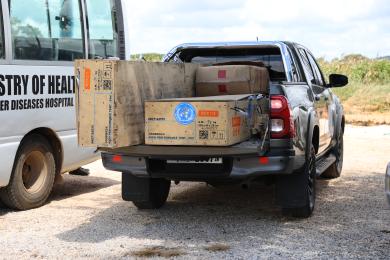
Zambia advances emergency preparedness with national SURGE roadmap
Lusaka, Zambia – Zambia is strengthening its capacity to respond more efficiently to health emergencies through the development of a national roadmap for the Strengthening and Utilizing Response Groups for Emergencies (SURGE) initiative.
The roadmap was developed during a four-day workshop that brought together 58 experts from the Ministry of Health, Zambia National Public Health Institute, emergency response agencies, academia and partners, reflecting strong national leadership and multisectoral collaboration.
“Zambia is demonstrating what effective preparedness looks like through the SURGE initiative, with strong leadership, coordinated action and a clear commitment to building resilient capacities that can respond rapidly and decisively to public health emergencies,” said Dr Patrick Otim, Programme Area Manager, Emergency Response, WHO regional office for Africa.
Aligned with the Regional Strategy for Health Security and Emergencies 2022–2030 and the National Action Plan for Health Security, the roadmap sets out priority actions to address critical gaps in workforce readiness, coordination and rapid response systems.
The focus was on ensuring systems are operational, scalable and ready for rapid activation.
“Strengthening national surge capacity is fundamental to effective emergency response. Zambia is taking decisive steps to ensure that systems, people and coordination are in place to respond rapidly and save lives,” said the WHO Representative in Zambia, Dr Clement Peter Lasuba
The SURGE initiative supports countries to mobilize coordinated, multidisciplinary teams within 24 to 48 hours. In Zambia, this includes building rooster of trained responders, strengthening Public Health Operating Centres (PHEOCS) at national and provincial levels, strengthening supply chain for critical commodities and improving deployment processes to enable faster, more effective action.
“This milestone reflects Zambia’s leadership in strengthening systems to respond effectively to public health emergencies,” said Dr Kakungu, Director of Public Health, representing the Permanent Secretary Technical Services. “It also highlights the value of collaboration across sectors and partners in advancing health security.”
WHO, in collaboration with Africa CDC and partners, will support the next phase of implementation through training, system testing and readiness verification to ensure operational performance.
Zambia’s progress contributes to regional efforts to close response gaps, strengthen preparedness and protect communities.
Chinyere Nwonye
Emergencies Communications Officer
WHO Africa Regional Office
Kristina Seris
External Relations and Communications Officer
WHO Zambia Country Office