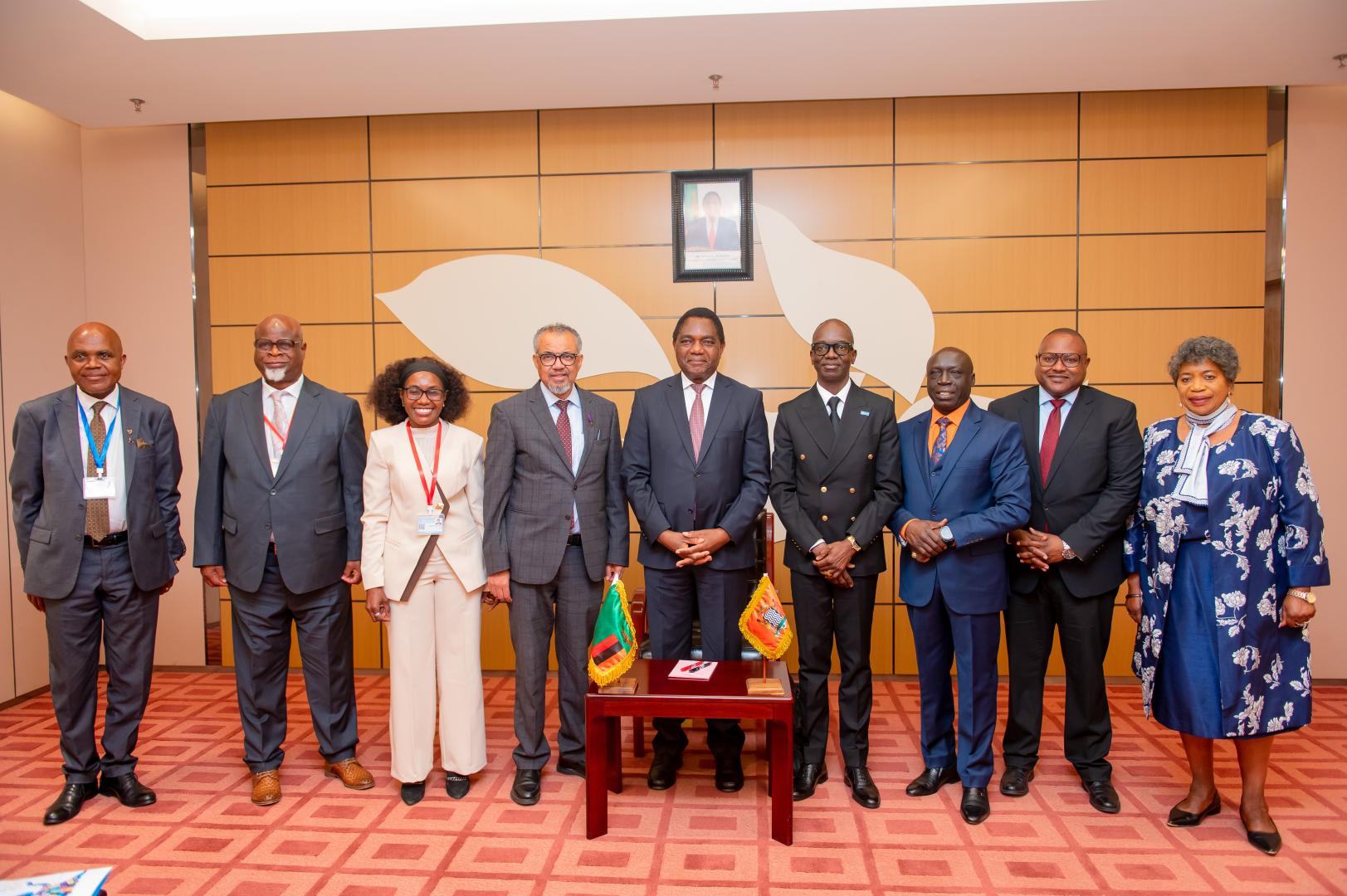
Unity in health: Zambia hosts the 75th session of the WHO Regional Committee for Africa
In late August, Lusaka, Zambia’s capital city became the heartbeat of African public health as it hosted the seventy-fifth session of the WHO Regional Committee for Africa, the highest decision-making body on health on the continent.
From 25–27 August 2025, the Mulungushi International Conference Centre welcomed over 700 delegates, including ministers of health from 47 countries of the African Region, WHO leadership, civil society, and development partners to address challenges and endorse key health resolutions to improve and shape the future of health in the region.
The opening ceremony was a moment of pride for Zambia. His Excellency, the President of the Republic of Zambia, Mr Hakainde Hichilema, addressed delegates with a message of hope and determination, emphasizing health diplomacy, regional manufacturing, and harmonized public health regulations. He highlighted Zambia’s achievements, including a 12% health budget allocation, recruitment of 20,000 health workers, and expanded infrastructure.
The President also called for collaboration and a commitment to humanity in making decisions that enhance health and well-being across the region. President Hichilema also reaffirmed his commitment as the WHO Global Cholera Control Champion.
The event also marked a leadership transition, with Dr Mohamed Yakub Janabi making his debut as WHO Regional Director for Africa. His call for bold, African-led health solutions resonated deeply. He called on member states to reframe health not as a cost, but as a cornerstone of prosperity, build systems that are efficient, inclusive and sovereign and place people, especially the most vulnerable at the centre of every policy, programme and partnership.
Faced with a challenging global financial landscape, WHO Director-General Dr Tedros Adhanom Ghebreyesus indicated the 75th session of the WHO Regional Committee for Africa could not have come at a better time, allowing the continent and WHO to chart a more sustainable future for the health of all people in Africa.
He called on countries to capitalize on the great potential Africa offers in health, to overcome the financial and security challenges. He praised Zambia’s progress in maternal health and digital transformation, setting a tone of optimism and urgency.
But the RC75 was more than speeches and strategies, it was a call to unity. Delegates deliberated on priority issues. They adopted a resolution to fast-track progress on oral health, long neglected despite affecting millions, to ensure improved services across the region by 2030. Delegates also debated on how to end chronic blood shortages that endanger mothers, children and patients with sickle cell disease. As a result, a new plan to modernize supply systems and expand voluntary donations was endorsed.
The meeting further considered strategies to expand access to rehabilitation services, which remain unavailable to two-thirds of Africans in need, and to transform care for women, children and adolescents, an area where the region still accounts for 70% of global maternal deaths.
Health security, a pressing issue, was under the spotlight, with new plans to strengthen early detection and crisis preparedness in a region that recorded more than 250 public health events in 2024 alone.
The 75th session of the WHO Regional Committee for Africa, closed with twelve (12) procedural decisions and three (3) landmark resolutions adopted, that will define Africa’s trajectory for years to come. These decisions made at the RC75, reflect a shared commitment to inclusive, people-centred care and regional solidarity, laying a foundation for resilient health systems that leave no one behind.
Communications Officer
World Health Organization Country Office, Zambia
Email: kapemak [at] who.int (kapemak[at]who[dot]int)