United Republic of Tanzania News

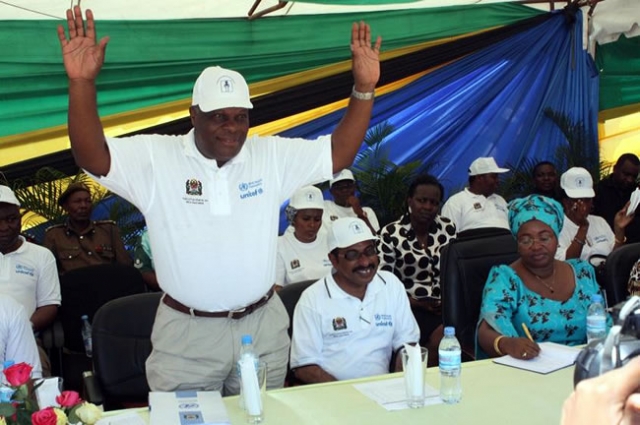
The best performing districts in immunization activities awarded prizes during annua...

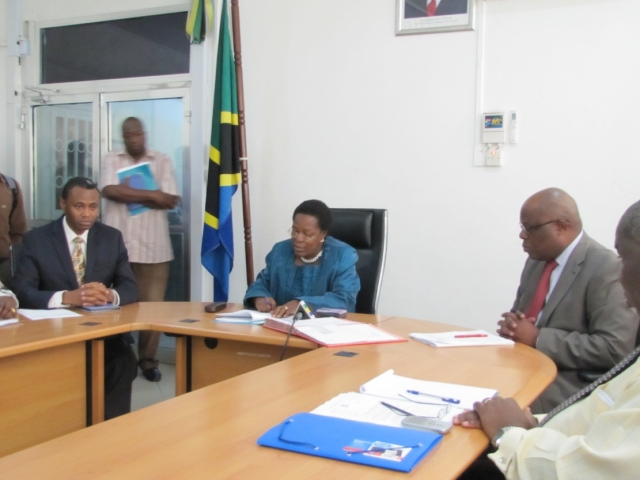
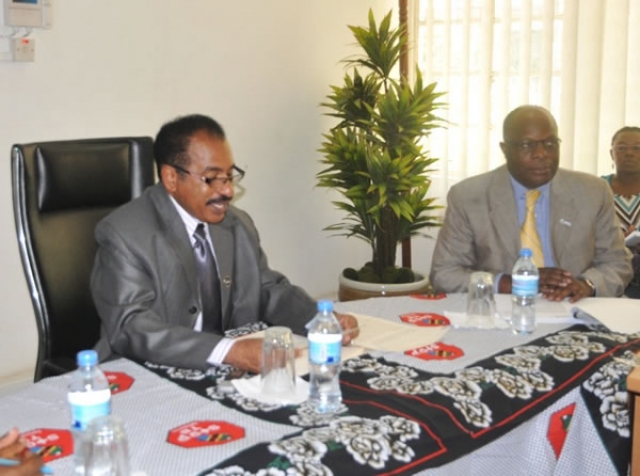
The Ministry of Health and Social Welfare (MoHSW) in collaboration with partners organizes every year an annual evaluation meeting with the objective of evaluating the performance, achievements and challenges of immunization services in the country. The meeting is attended by the National IVD and other related Units, Regional Health Management Teams, Civil Societies involved in immunization services and partners.

Tanzania hosts the Multi-country workshop to strengthen results and accountability f...

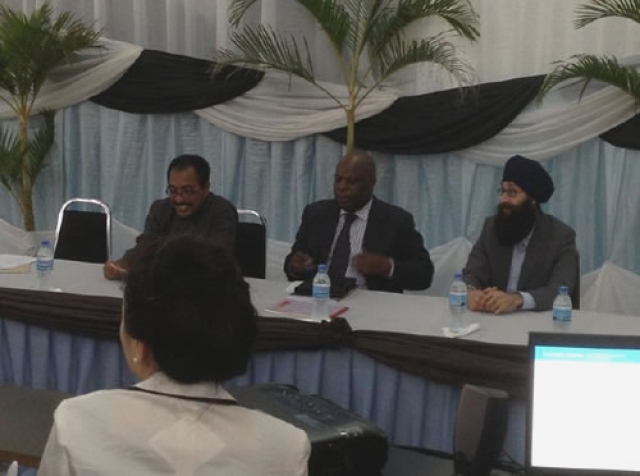
Tanzania has been honoured to host the Multi-country workshop to strengthen results and accountability for women's and children's health and the health sector as a whole.

The workshop drew about 100 participants from ten African Countries namely Ethiopia, Ghana, Kenya, Malawi, Mozambique, Rwanda, Tanzania, Uganda, Zambia, Zimbabwe, Regional institutes and Global partners namely WHO (WHO Geneva, AFRO and Country Office), UNICEF, UNFPA, UNAIDS, PMNCH, HMN, CDC, World Bank, USAID, NORAD, CIDA, DFID/E4A, GIZ, Africa MNCH Coalition, World Vision and others. 

Tanzania and Rwanda WCOs conduct Global Learning Programme in Arusha, Tanzania, 21st...

Tanzania and Rwanda WCOs are participating in an Inter-country Global Learning Programme in Arusha, Tanzania with 9 participants from WCO Rwanda and 19 from WCO Tanzania.

Training runs from 21st – 25th November 2011 and it is being facilitated by Dr. Rufaro Chatora, WR Tanzania; Dr. Habib Somanje from AFRO, Dr Andre Rusanganwa from WCO Rwanda and Dr. Martins Ovberedjo from WCO Tanzania.

Read more

Tanzania launches the National TB Prevalence Survey as part of activities to mark 50...

Hon. Minister of Health and Social Welfare Dr. Hadji Mponda (MP) on 4th December 2011 launched the National TB Prevalence as part of activities at the exhibitions to mark 50 years of the independence of Tanzania Mainland.

Tanzania has committed itself to the Millennium Development Goals that aim at a 50% reduction in TB prevalence and mortality rates relative to the year 1990 levels by 2015. Tanzania achieved the TB indicator target of 85% treatment success rate in 2006 and treatment success rate of 88% is indicated in 2010 WHO Global TB report.

GLP Training Report for Rwanda and Tanzania held in Arusha, Tanzania, 20 - 25th Nove...

The Rwanda/Tanzania GLP inter-country workshop was held from the 21st to 25th November 2011. It involved 9 technical officers from Rwanda and 21 from Tanzania respectively. Also, arising from the late cancellations only four facilitators were able to participate in the workshop.

The facilitators had two days preparatory days prior to the workshop commencement in order to make final preparatory planning and logistic fine tuning work for the workshop. The report reflects highlights of the workshop proceedings.

The Government of Tanzania expresses its appreciation for WHO support to rabies elim...

On 11th August 2011, the Government of Tanzania expressed its appreciation for WHO support offered to Rabies Elimination Project in 5 South Eastern regions of Tanzania namely Dar Es Salaam, Coast, Lindi, Morogoro and Mtwara and Pemba Island in Zanzibar.

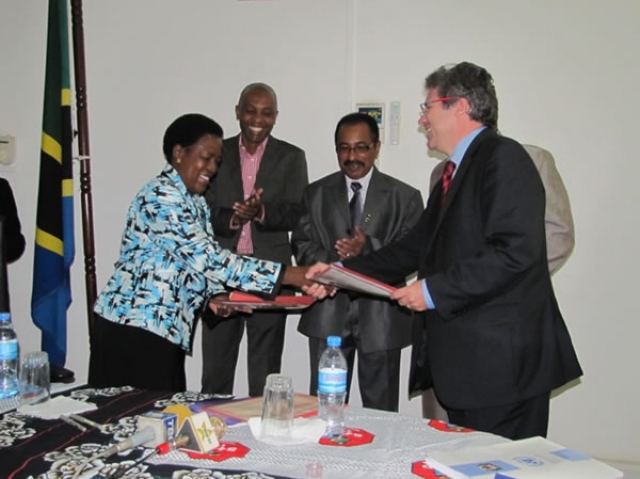
This was acknowledged by the Permanent Secretary Ministry of Livestock and Fisheries Development Dr. Charles Nyamrunda during handing over of various vaccination equipment and supplies worth USD 103,517 equivalent to Tshs 165,626,544.

Preliminary report on the Sub National Immunization Days in high risk regions in Tan...

The 55th ICC meeting held in December 2010, decided to conduct the SNIDs in the high risk regions in Tanzania to prevent the importation of Wild Polio Virus (WPV). This was also a recommendation from East Southern African EPI Managers meeting in Harare held in March 2011.

Tanzania was considered to be in a high risk of getting importation of WPV due to heavy traffic movements to and from neighbouring infected countries using the Dar Es Salaam harbour. Four regions Kagera, Kigoma, Rukwa and Mbeya were identified to be at highest risk.