Fleming Fund-supported efforts strengthen Sierra Leone’s defence against antimicrobial resistance:
Freetown—Sierra Leone has accelerated national efforts to combat antimicrobial resistance (AMR) by transitioning from fragmented initiatives to a coordinated, data-driven national response that is already delivering measurable impact. Guided by the National Action Plan and supported by the World Health Organization (WHO), the Fleming Fund and partners, the country has recorded notable achievements in governance, diagnostics, workforce development, policy reforms, research output, and public awareness, all of which are strengthening the health system and protecting the effectiveness of life-saving antibiotics.
These results stem from strong government leadership through the Ministry of Health, the National Public Health Agency and the Ministry of Agriculture and Food Security, working closely with WHO, the Food and Agriculture Organization, the Fleming Fund and other national and international stakeholders. Healthcare workers, laboratory personnel, university students, researchers and community members across Sierra Leone are now benefitting from improved systems, enhanced skills and better tools to address AMR.
One of the most transformative developments has been the strengthening of AMR governance. The One Health Coordinating Committee, supported by the Interministerial Committee, now provides clear guidance to the national AMR Technical Working Group and its sub-committees. This has enabled coherent planning, faster decision-making and stronger cross-sector collaboration. WHO supported the establishment of the national AMR coordination unit and the development of terms of reference that now guide regular, productive technical working group meetings.
A solid policy foundation for sustained AMR prevention and control has also been established. National strategies for AMR surveillance, antimicrobial consumption and use, antimicrobial stewardship and infection prevention and control standards are now in place and operational. Laboratory manuals and standard operating procedures developed with WHO support are helping hospitals apply consistent quality standards, resulting in improved detection of resistant pathogens and more informed clinical decision-making.
Strengthening diagnostic capacity stands out as another major milestone. Three fully equipped microbiology laboratories, two in Freetown and one in Makeni, are now functional and capable of conducting culture and antimicrobial susceptibility testing. For the first time in the country’s history, Sierra Leone has generated and reported national AMR data to the WHO Global Antimicrobial Resistance Surveillance System. This achievement marks a major turning point in the AMR space, where lack of data had long been a barrier. Dr Joseph Sam Kanu, National AMR Focal Point, noted: “This breakthrough represents significant progress. Sierra Leone is now producing reliable AMR data and using it to guide programme decisions.”
Human resources for health have also benefited from targeted capacity-building investments. More than 300 healthcare workers have been trained in bacteriology, WHONET, quality management systems, biosafety, infection prevention and control and antimicrobial stewardship. Importantly, the country hosted its first national antimicrobial stewardship training for 35 doctors, pharmacists, nurses and laboratory scientists, enabling hospitals to introduce stewardship practices that improve patient care. Ishmeal Jalloh, antimicrobial stewardship pharmacist at Connaught Hospital, shared: “The AMS training has changed how we approach antibiotic use, helping us apply stewardship principles more systematically to support patient safety.”
Laboratory capacity has grown through hands-on training. At Ola During Children’s Hospital, laboratory staff now perform culture and sensitivity testing with greater accuracy and confidence. As the Fleming Fund Country Lead Microbiologist, Mr Sorie I. Bangura explained: “Before these trainings, identifying resistant organisms was a challenge. Today, we confidently perform culture and sensitivity testing, and the skills gained are directly helping to save lives.”
Local evidence generation has further strengthened national response efforts. Between 2019 and 2025, researchers from WHO, the Ministry of Health and the National Public Health Agency produced more than 30 peer-reviewed publications on AMR, antimicrobial stewardship and infection prevention and control. These studies have informed national guidelines, shaped policy decisions and contributed to global understanding of AMR in low-resource settings.
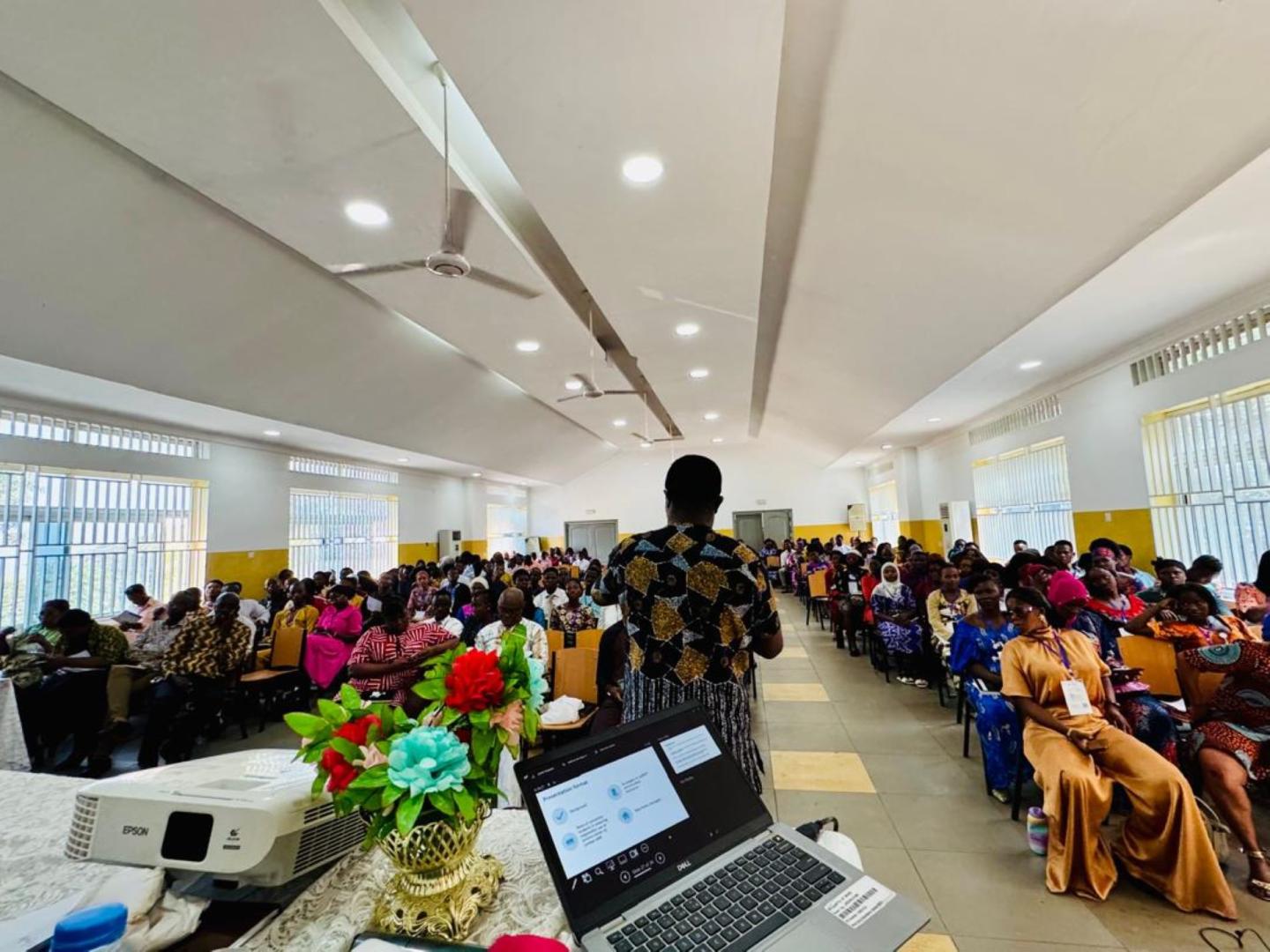
Public awareness has also expanded significantly. Since 2018, thousands of Sierra Leoneans have been reached through radio and television discussions, social media campaigns, university engagements and community outreach. In early 2025 alone, more than 500 university students were trained on vaccination, infection prevention and control and rational antibiotic use, ensuring that future health professionals and other graduates enter their careers with strong AMR literacy.
During World Antimicrobial Awareness Week 2025, WHO is supporting the Ministry of Health to expand awareness activities, engage newly graduated healthcare workers, sensitize journalists and mobilize youth networks. The commemoration will conclude with a two-day national AMR symposium on 26 and 27 November 2025, providing a platform to review progress, address remaining gaps and shape the way forward.
Sierra Leone’s experience demonstrates that with strong leadership, strategic partnerships and sustained investment, meaningful progress against AMR is achievable. Although challenges persist including human resource limitations, sustainable financing, equipment maintenance, power supply interruptions, gaps in the clinical and laboratory interface and the need for a functioning laboratory information management system, the country’s coordinated One Health approach, operational laboratories, skilled workforce, growing evidence base and informed public have laid a strong foundation for reducing the AMR burden and strengthening health system resilience.
Reflecting on the progress and the road ahead, Dr George Ameh, WHO Representative in Sierra Leone, emphasized: “We must maintain momentum through strong leadership, multisectoral collaboration and sustained investment. WHO remains committed to supporting the country to protect the effectiveness of life-saving medicines and secure a healthier future for all.”
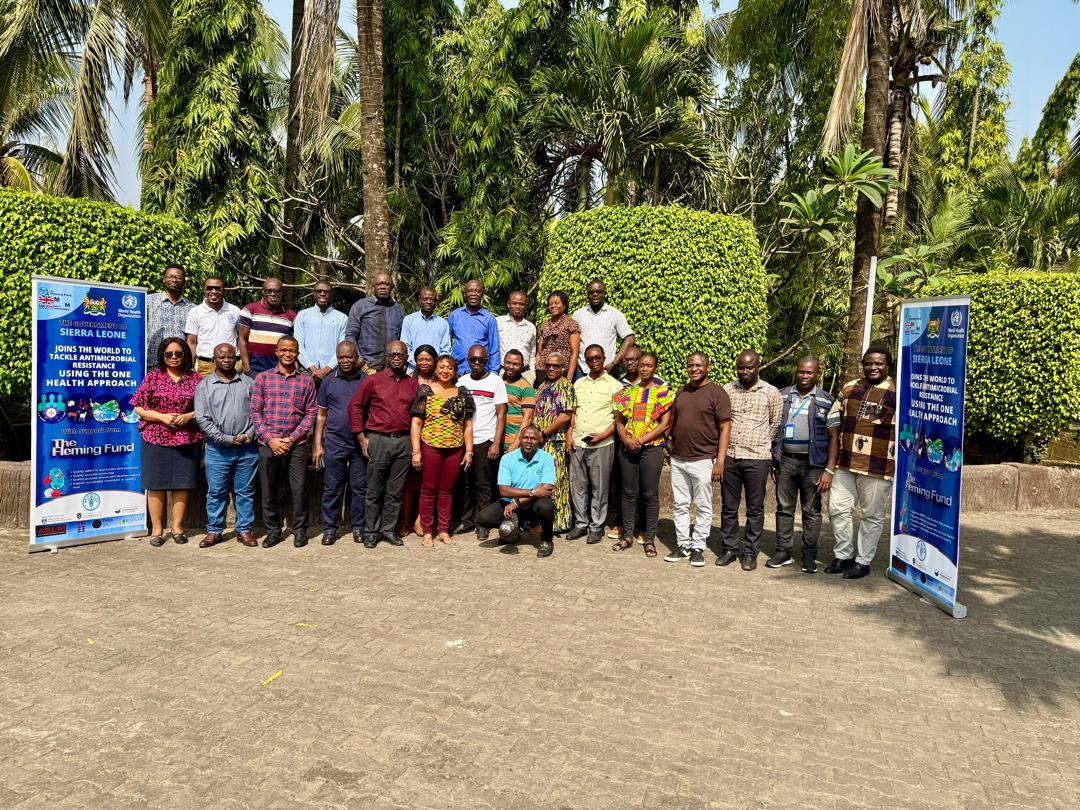
WHO Sierra Leone
Email: sharkahm [at] who.int (sharkahm[at]who[dot]int)