Ensuring food safety to protect lives in Cameroon
Douala—Since June 2023, Cameroon has been implementing the “Healthy Food Market” project in two pilot markets in Douala: Ndogpassi and New Deido. Described as a transformational and social initiative, the project is based on scientific evidence to encourage behaviour change within the community of traders.
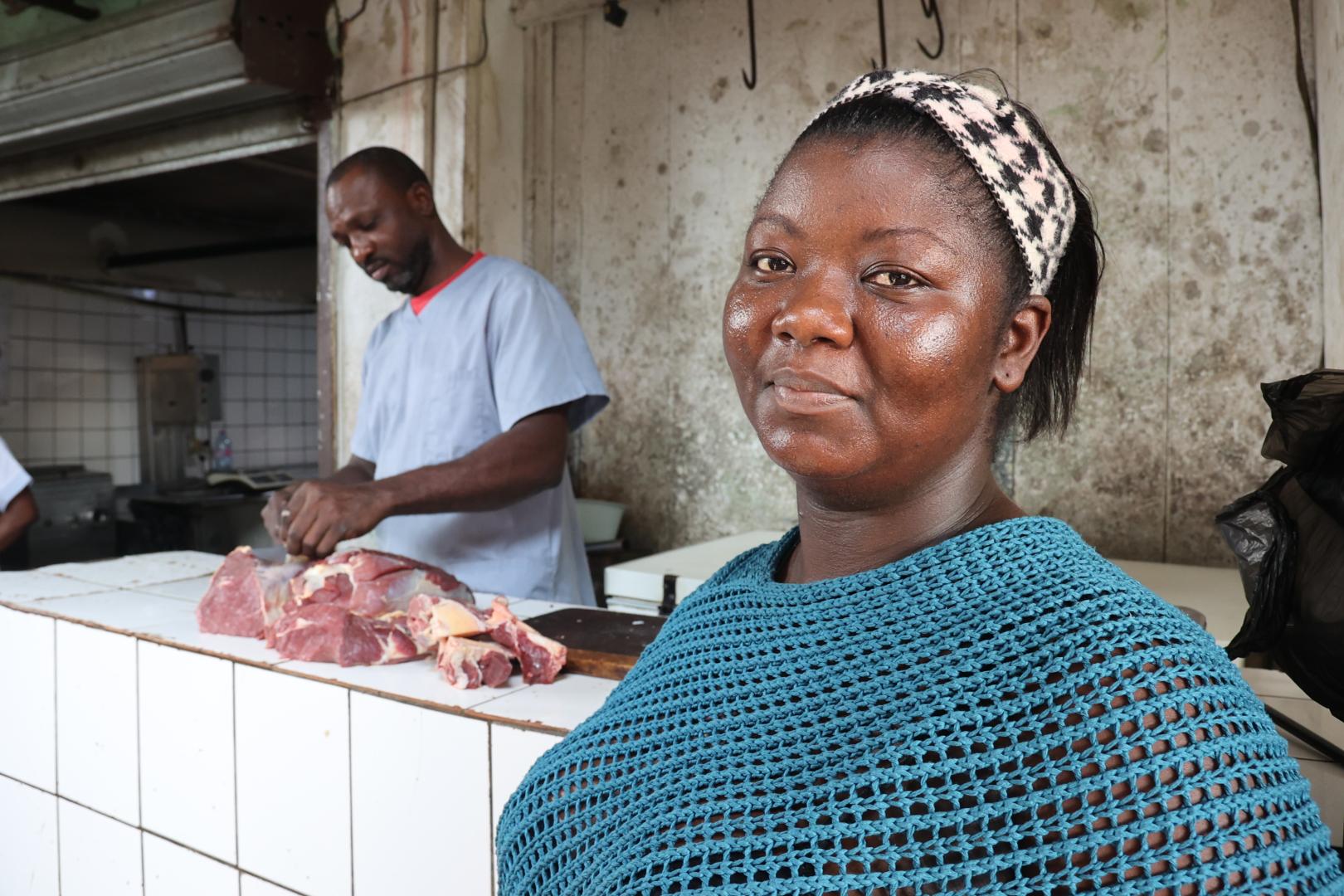
“Before, we didn’t pay much attention to hygiene conditions. We used products like formalin to preserve meat and the cleanliness of our stalls left much to be desired. This can cause diseases,” admits Zakariaou Mbaimoun, a butcher at Ndogpassi market for about twenty years.
According to World Health Organization (WHO) data, the burden of foodborne diseases is significant. Consuming food contaminated by bacteria, viruses, parasites or chemical substances such as heavy metals can cause more than 200 diseases. In the African Region, unsafe food affects over 91 million people and causes 137 000 deaths annually.
In Cameroon, more than 200 cases of food poisoning were recorded in 2024, including 35 children. Results from a 2021 pesticide residue monitoring mission in seven regions and a 2022 hygiene survey in five markets revealed that non-compliant pesticides were present in 70% of samples. Numerous poor practices in food handling, hygiene and production were also identified, which can lead to contamination throughout the food chain.
Following these findings, the “Healthy Food Market” project was introduced in a pilot phase in the two markets to encourage compliance with basic hygiene rules and prevent foodborne diseases. “The goal is to ensure progressive and sustainable improvement in food safety in markets, involving multiple sectors under the One Health approach, for holistic management of interconnected risks,” explains Dr Lusubilo Mwamakamba, WHO Regional Office for Africa’s focal person for food safety.
With financial support from Swizz Development Cooperation (SDC), WHO is supporting the project by developing normative documents on food safety, policies and guidelines, strengthening stakeholders’ capacities in surveillance and outbreak response and advocating for the integration of food safety into health policies.
“The concept does not yet appear in public policy documents, but important work is underway to highlight the urgency of transforming food markets and aligning them with the requirements of the ‘Healthy Food Market’ project,” notes Edouard Nya, Head of the National Laboratory for Diagnostic Analysis of Agricultural Products and Inputs at the Ministry of Agriculture and Rural Development.
WHO has also helped mobilize national partners through a public-private partnership. In January 2025, the Douala Autonomous Port donated sanitation equipment, enabling hygiene activities and cleaning of 26 markets in the city. WHO also trained 150 community leaders in waste management, 25 stakeholders in food safety and sensitized more than 3000 people in the two pilot markets.
“Many things have changed thanks to the ‘Healthy Food Market’ project. Agents came several times and each time they raised awareness about the consequences of our bad practices. We became aware and started changing things,” says Mbaimoun.
At its launch, the project set three specific objectives: improving governance and coordination among stakeholders, strengthening communication, education and training on good food, hygiene, and production practices to foster lasting behaviour change, and improving technical and sanitary infrastructure in markets. With the first two objectives advanced, the next stage will focus on the third.
“Funds obtained through the public-private partnership will allow us, starting in 2026, to tackle the third objective: improving technical and sanitary facilities in markets to meet “Healthy Food Market” standards. We will also strengthen communication,” says Dr Danièle Simnoue Nem, WHO Cameroon’s Nutrition and Food Safety Officer. “Food safety is a priority for WHO, just like vaccination or epidemic control. It promotes the production and consumption of safe, nutritious food and protects against foodborne diseases.”
Most traders no longer display food directly on the ground, and cleaning frequency has increased, with each trader now required to clean their sales area before closing each evening. Waste is stored in dedicated areas and removed every two days. Some market areas have been filled to reduce flooding and mud, improving food sales conditions, especially at Ndogpassi market.
Users welcome these improvements. “Lately, our market is much cleaner. Smoked fish, vegetables and other products are no longer spread on the ground. This protects us from diseases and reassures us,” says Marie Ekemla at Ndogpassi market. Traders also pass on their knowledge to customers. “My butcher often advises me: ‘Meat that has been thawed, left at room temperature, and then refrozen can cause illness.’ These tips help me make better choices,” adds Mado Enganign.
With the “Healthy Food Market” project, traders in the two pilot markets are taking ownership of their workplaces while making them safer. “Thanks to the project, we have been trained and are better organized. We now pay attention to hygiene and safety to offer a safer market for everyone,” says Raoul Youpa Kanmani, President of New Deido market traders.
Other planned measures include providing drinking water, sanitation and wastewater drainage to strengthen the project’s impact. “The ‘Healthy Food Market’ project will soon directly contribute to creating a safer sales environment through clean infrastructure, access to drinking water, waste management and reduce diarrheal diseases,” notes Fidéline Ndewege Djeme, Deputy Director of Hygiene and Sanitation at the Directorate of Health Promotion. “This will help protect vulnerable people—children, pregnant women, and the elderly—who are most at risk of foodborne diseases.”
Communications Officer
Regional Office for Africa
Email: lawsonagbluluf [at] who.int (lawsonagbluluf[at]who[dot]int)
Chargée de communication
OMS Cameroun
E-mail: wegangg [at] who.int (wegangg[at]who[dot]int)