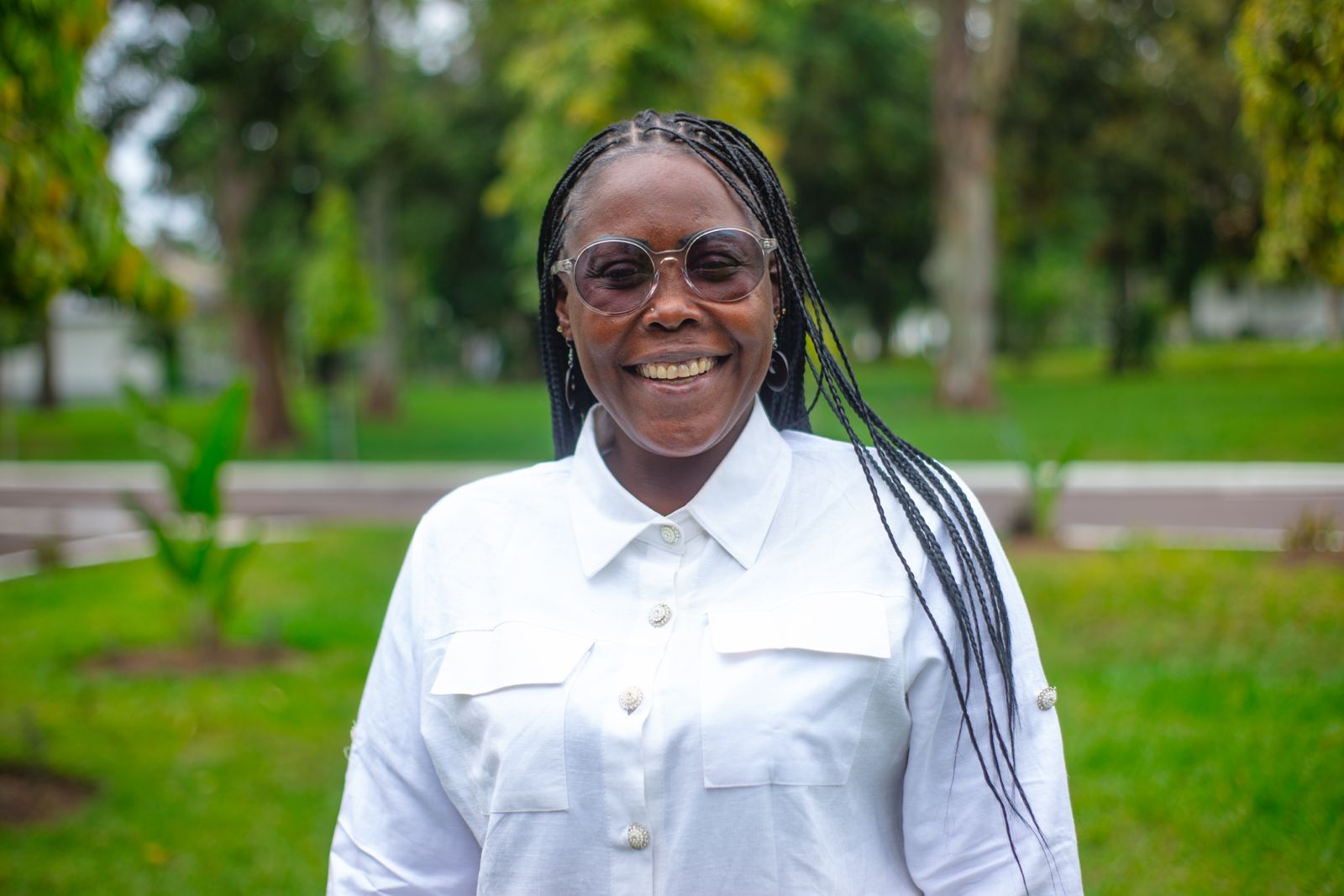
Promoting the inclusion of people affected by leprosy in the Democratic Republic of the Congo
Kinshasa—When the first patches appeared on her skin, Espérance, who lives in Kinshasa in the Democratic Republic of the Congo (DRC), did not understand what was happening to her. For more than ten years, she went to health facilities for skin problems without getting an answer. Treatments continued, the symptoms remained and the uncertainty weighed on her.
Then the diagnosis came: leprosy.
“I was very afraid. I thought my life was over. I then received care at the health centre, where I was treated well. The most difficult thing, after the treatment, was the way other people looked at me. People could not look at me twice,” she says.
Leprosy, also known as Hansen’s disease, is a chronic infectious disease caused by the bacterium Mycobacterium leprae. It mainly affects the skin and the peripheral nerves. When it is detected early, it can be cured with a simple, effective and free antibiotic treatment. However, when it is not diagnosed and treated in time, it can lead to serious complications and permanent disabilities.
Every year, more than 200 000 new cases of leprosy are detected worldwide. In the African Region, nearly 20 000 cases were reported in 2024, including 1400 in children—a sign that transmission is still active in some places. The DRC is one of the countries most affected in the region, with 3038 new cases recorded in 2024. This shows the need to strengthen political commitment, early detection and quick access to treatment.
Beyond the numbers, the disease still causes fear. In many communities, false beliefs remain, presenting leprosy as incurable, highly contagious or linked to witchcraft. Even after cure, visible disabilities can continue to fuel prejudice. Stigma still impacts people affected by the disease, limiting their participation in social and economic life.
In the DRC, the fight against leprosy is not only about treatment. It also aims to ensure that affected people can live without discrimination and fully participate in their community. Bringing in a human rights-based approach is essential to promote dignity, equality and social inclusion. This means fighting discriminatory practices, changing perceptions and involving affected people in decisions that concern them.
Diagnosis and treatment of leprosy are free of charge to remove financial barriers to care. With support from the World Health Organization (WHO) and other partners, health authorities are strengthening the training of health workers, active case finding and the integration of leprosy into primary health care services, in line with the global road map for neglected tropical diseases 2021–2030.
“Our priority is to strengthen the integration of leprosy detection into local health services, to promote contact examination together with prevention, and to organize active case-finding approaches, especially through mini leprosy elimination campaigns and village leprosy days, in order to encourage early screening and make sure that no one is diagnosed too late. By acting early, we avoid irreversible damage. But beyond treatment, it is essential that affected people can continue to live, work and fully take part in the life of their community, without being pushed aside,” said Dr Florent Ngondu, Director of the National Leprosy Elimination Programme in the DRC.
In rural or hard-to-reach areas, many challenges remain. Long distances to health facilities, poor road conditions and the cost of transport often delay early diagnosis and treatment. The limited number of staff trained in leprosy care in remote areas also reduces the quality of services, especially for managing complications. In addition, stigma and fear of social exclusion discourage some people from seeking care.
Organizations of people affected by leprosy play a central role in the fight against the disease. Their participation in the development and monitoring of national strategies helps promote more inclusive interventions that are better adapted to local realities. By sharing their lived experiences, they help reduce stigma, improve the quality of services and encourage non-discrimination.
Today, Espérance leads one of these community organizations and is actively involved in raising awareness in her community. Through meetings and discussions in neighbourhoods, she encourages people with skin lesions to seek care without delay. Her testimony reassures people and reminds them that leprosy can be cured.
Thanks to the commitment of national authorities, the technical support of WHO and the support of partners such as the Sasakawa Health Foundation, countries are strengthening early detection, the integration of services into primary health care, and the fight against stigma.
“Eliminating leprosy in Africa is possible. The tools exist. Our role is to support countries in coordination, strengthening health services, and in promoting inclusive approaches so that no one is left behind,” says Dr Yves Thierry Barogui, leprosy focal person at the WHO Regional Office for Africa.
Espérance’s journey shows this transformation. From a patient facing fear and rejection, she has become an agent of change in her community. Her story shows that it is possible to be cured, to regain one’s place and to live with dignity.
Achieving “zero leprosy” in the DRC does not only mean stopping transmission. It also means making sure that every affected person can live, work and fully take part in social life, without exclusion or fear.
“Leprosy can be cured. I am cured. I work, I live with my family. There is no need to be afraid,” Espérance says with a smile.
Communications and Documentation Officer
UCN/VPD
WHO Regional Office for Africa
Email: akambap [at] who.int (akambap[at]who[dot]int)
Chargée de communication
Tél : +243 899 330 358
Email: dimegnim [at] who.int (dimegnim[at]who[dot]int)