Act now: Protect our present, secure our future

Africa unites to address antimicrobial resistance in Africa and ensure a healthier, more sustainable world for the generations to come.
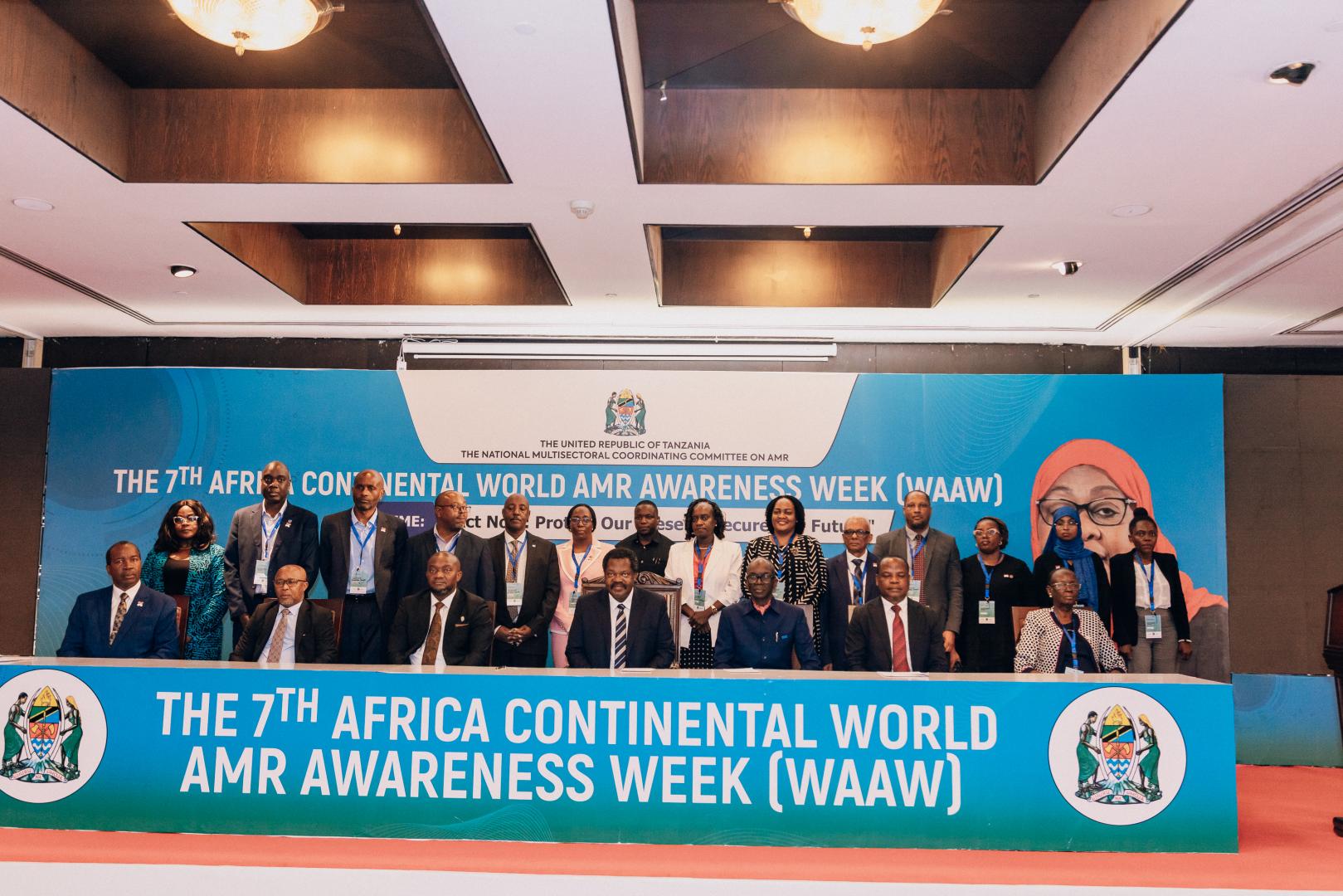
Dar es Salaam - Africa is stepping up the fight against antimicrobial resistance (AMR) as countries across the region join the global community to mark World Antimicrobial Resistance Awareness Week (WAAW) held from 2 to 6 December 2025, under the theme “Act Now: Protect Our Present, Secure Our Future.”
Significant momentum is building across the continent. Forty-seven WHO AFRO Member States have developed National AMR Action Plans, and 52 countries have joined the World Health Organization (WHO) Global Antimicrobial Resistance Surveillance System (GLASS). Additionally, 29 countries are reporting AMR data and utilizing the evidence to inform policy and practice, while 32 Member States are implementing antimicrobial stewardship initiatives, and laboratories are improving disease surveillance capacities.
Regional organizations and global partners are also deepening their support to accelerate country-level progress. Investments in workforce development, laboratory infrastructure, and regulatory systems are helping to close persistent gaps and strengthen resilience. At the same time, community engagement initiatives are empowering citizens with the knowledge to prevent infections, seek appropriate care, and avoid the misuse of antibiotics. These are critical steps in slowing the spread of resistance.
Africa shoulders the heaviest AMR burden due to unequal access to medical diagnostics, infection control, the inappropriate use of antimicrobials in both human medicine and veterinary medicine. The challenge of inadequate water, sanitation and hygiene have accelerated this silent pandemic. In 2021, more than 1.14 million AMR-related deaths were reported across the continent, topping joint fatalities due to HIV and malaria.
AMR is a complex challenge that requires both sector-specific actions in the human health, food production, animal and environmental sectors. This requires a coordinated approach across these sectors through One Health, which refers to an integrated, unifying approach that aims to achieve optimal and sustainable health outcomes for people, animals and ecosystems.
One Health recognizes that the health of humans, domestic and wild animals, plants and the wider environment are closely linked and inter-dependent due to AMR. Countries are also looking at integration of environmental considerations into national action plans on AMR.
As part of the collective efforts to address AMR, leaders, experts and community representatives will gather for the7th Africa Continental Commemoration Week in Dar es Salaam under the leadership of the Quadripartite organizations – Food and Agriculture Organization (FAO), the World Organisation for Animal Health (WOAH), the United Nations Environment Programme (UNEP), and WHO – along with the Africa Centres for Disease Control and Prevention (Africa CDC), the African Union Inter-African Bureau for Animal Resources (AU-IBAR), government officials, youth, parliamentarians, and technical experts from across the continent.
The gathering will feature key events and activities, including:
- A high-level event from 2 to 6 December hosted by H.E. Dr Emmanuel Nchimbi Vice President of the United Republic of Tanzania representing H.E Samia Suluhu Hassan It will also include panel discussions with representatives of the regional organizations and ministers of human, animal, and environmental health.
A call to Africa: Act now to secure our future
In his official message for WAAW 2025, WHO Regional Director for Africa Dr. Mohamed Janabi emphasizes that AMR demands urgent action. “Antimicrobial resistance threatens our ability to treat even the most common infections. But this is a fight we can win – with leadership, collaboration, and accountability. By acting now, together, we can protect our present, secure our future, and build a continent where preventable infections no longer steal potential or promise.”
We commend the establishment of Parliamentarians’ Alliances on antimicrobial resistance (AMR) in Tanzania—the first country to do so—and in Zambia, and we urge other nations to actively engage their Members of Parliament to make AMR a priority topic in parliamentary discussions.
He urges Member States to increase domestic financing for AMR action, integrate stewardship into primary health care, strengthen laboratory systems, promote responsible antimicrobial use across sectors, and engage communities – especially youth – to drive awareness and behaviour change.
About World AMR Awareness Week
World AMR Awareness Week is a global campaign coordinated by the Quadripartite organizations to improve awareness and understanding of antimicrobial resistance, promote best practices, and encourage coordinated action across human, animal, plant, and environmental health. The campaign guide, multilingual resources, social media materials, and communication tools for 2025 are available to all countries and partners.
Join the movement
- Learn more: WHO Africa Resist AMR Portal
- Participate online using #WAAW2025, #AMR, #OneHealth, and #ActNowAMR
- Light up your buildings and landmarks blue for #GoBlueForAMR
- Share AMR-smart behaviours in your community
Resources
Fighting AMR in Africa video: English, French, Arabic, Portuguese
Find out more about AMR: here , ANIMUSE
Join the conversation using #WAAW, #AMR and #AntimicrobialResistance
Contacts:
Africa Centres for Disease Control and Prevention
Gwehn [at] africacdc.org (Gwehn[at]africacdc[dot]org)
edwinM [at] africacdc.org (edwinM[at]africacdc[dot]org)
African Union Inter-African Bureau for Animal Resources
patricia.lumba [at] au-ibar.org (patricia[dot]lumba[at]au-ibar[dot]org)
john.oppong-otoo [at] au-ibar.org (john[dot]oppong-otoo[at]au-ibar[dot]org)
FAO
Regional Office for Africa – Zoie.Jones [at] fao.org (Zoie[dot]Jones[at]fao[dot]org)
Regional Office for the Near East and North Africa – Mohamed.Alaidaroos [at] fao.org (Mohamed[dot]Alaidaroos[at]fao[dot]org)
WOAH
Regional Office for Africa – Lyne Iyadi - l.iyadi [at] woah.org (l[dot]iyadi[at]woah[dot]org)
UNEP
Regional Office for Africa: unep-africa [at] un.org (unep-africa[at]un[dot]org)
WHO
Regional Office for Africa – Saida Swaleh – saida.swaleh [at] who.int (saida[dot]swaleh[at]who[dot]int)
Communications and Media Relations Officer
WHO Regional Office for Africa
Email: saida.swaleh [at] who.int (saida[dot]swaleh[at]who[dot]int)
Communications and marketing officer
Tel: + 242 06 520 65 65 (WhatsApp)
Email: boakyeagyemangc [at] who.int (boakyeagyemangc[at]who[dot]int)