Liberia Media Centre

WHO: Liberia - local students become active Ebola case finders

Liberia_-_local_students_become_active_Ebola_case_finders.JPG

Ever since the closure of the university due to the Ebola outbreak, Robbin George, criminology student at the University of Liberia, has been trying to help stop the spread of the Ebola virus in his country. He joined the team of active case finders to go from house to house to find out if sick people are being treated

WHO - Channelling hope – interview with psychosocial health worker E. Dash Karbar

WHO_-_Channelling_hope__interview_with_psychosocial_health_worker_E._Dash_Karbar.JPG

The Ebola outbreak in West Africa has produced increasing circles of victims beyond the infected and the dead. Survivors, families, children, and health workers are dealing with the stress and trauma left behind by the disease. Meet E. Dash Karbar Sr, a psychosocial worker working in Island Clinic Ebola Treatment Unit. Dash is one of the 57 mental health clinicians trained by WHO and the Ministry of Health and Social Welfare on how to support their fellow healthcare worker colleagues, how to support Ebola patients, and how to serve as a liaison between Ebola patients and their families and communities.

Testimony of Saah Tamba, Ebola survivor in Liberia
Testimony_of_Saah_Tamba_Ebola_survivor_in_Liberia.JPG

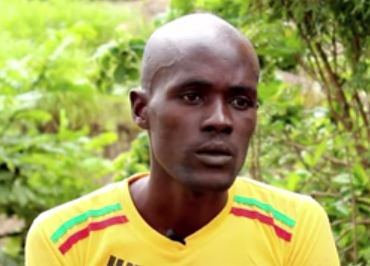
This testimony was recorded in Liberia on 17 July 2014 at Foya district's treatment centre. Saah Tamba from Lofa’s capital Voinjama lost five members of his family describes the ordeal he went through when he was sick of Ebola which he contracted from his uncle – the body pains, the chills due to high fever, vomiting and diarrhoea. He immediately went to the clinic and health staff brought him to the treatment centre in Foya. “When I got sick, my family doubted my recovery. The doctors who treated me gave me certificate that indicates I am free of Ebola, if anyone would still doubt. I am now free to go home, I am well and I am happy.”

For health systems fighting the Ebola outbreak, it is important to identify survivors in order to record their experiences and support community awareness efforts by sharing their ordeals and how they managed to survive Ebola. It indeed helps to alleviate some resistance, panic, denial, and misconceptions that local populations often have about this disease.
WHO: Cuban Health Workers in Liberia

Cuban_Health_Workers_in_Liberia.JPG

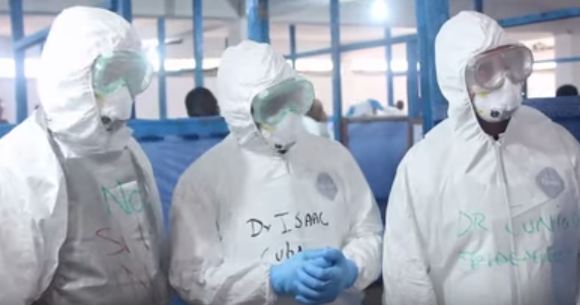
As of 22 October 2014, a delegation of 53 Cuban health workers arrived in Liberia to help fight the Ebola outbreak. The Cuban team consists of nurses, doctors, epidemiologists and intensive care specialists. Having received an initial Ebola training in Cuba, all team members received a second training in Liberia on how to work in an Ebola treatment unit. 

Being one of the first foreign medical teams to respond to the Ebola outbreak in Liberia, the Cuban delegation will stay in the country for 6 months. They will work in shifts in smaller teams mainly in the newly opened Ebola treatment unit located at the former Ministry of Defence compound in Monrovia.