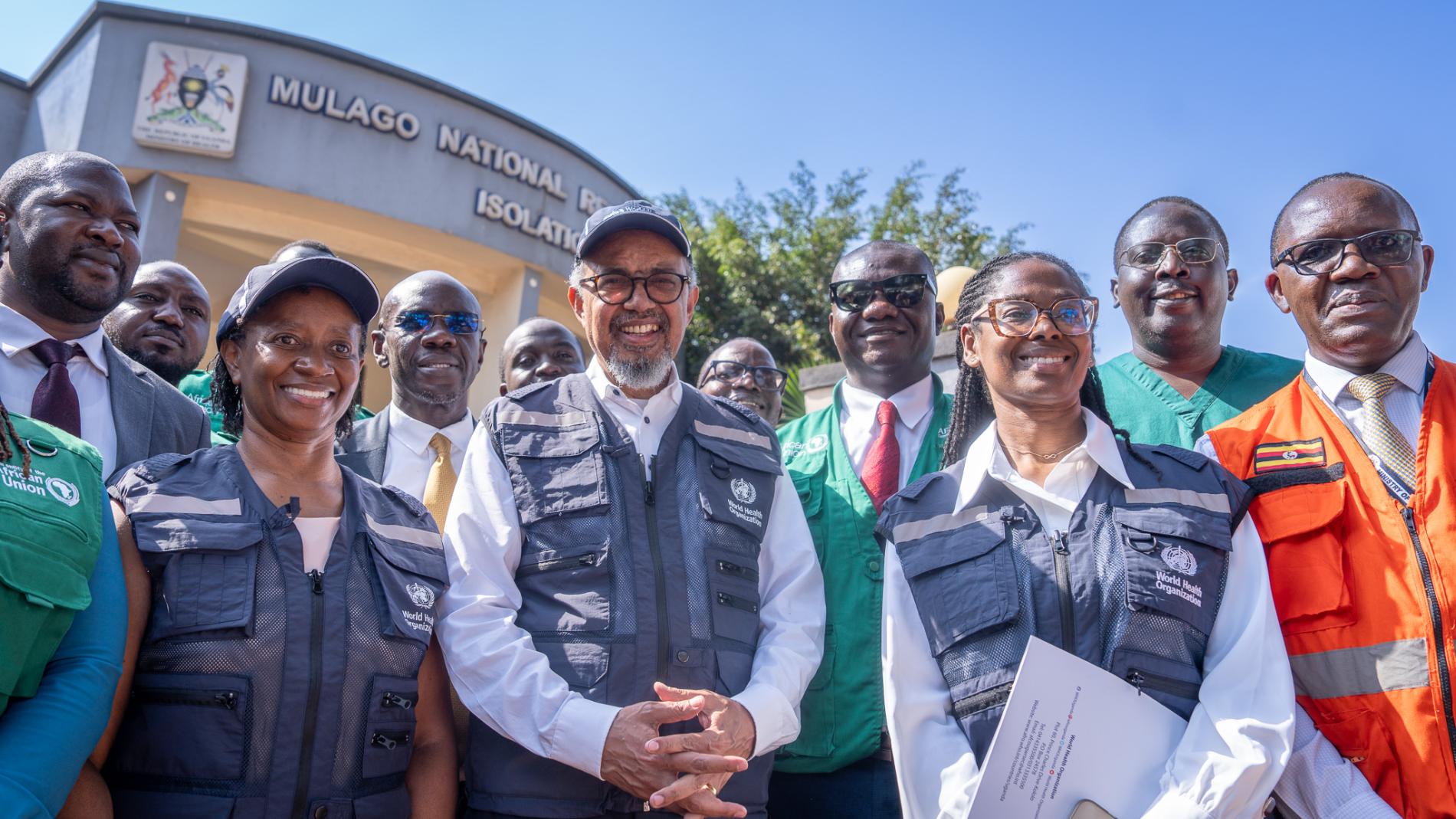
Regional cooperation and vigilance will control the Ebola outbreak
Kampala—World Health Organization (WHO) Director-General Dr Tedros Adhanom Ghebreyesus has commended Uganda’s response to the ongoing Ebola outbreak while urging continued regional cooperation, sustained investment and strong community engagement to prevent further spread of the disease.
Dr Tedros visited Uganda on 8 and 9 June 2026 as part of regional missions focused on the Ebola outbreak response that started in the Democratic Republic of the Congo, with spillover into Uganda. During his visit, he met with the Ugandan Head of State, His Excellency Yoweri Museveni, health officials, health workers and partners, and assessed efforts to contain the outbreak.
He noted that Uganda has mounted a strong response and its efficient surveillance, testing and case management systems have helped identify and manage cases quickly.
“Uganda has experience in mobilizing communities to confront public health challenges, as we did during the fight against HIV,” said President Museveni during a high-level meeting with Dr Tedros. “Through science, leadership and cooperation with partners such as WHO, we can continue to protect our people and strengthen regional health security.”
As of 15 June 2026, Uganda has reported 19 confirmed cases (and one probable case) linked largely to cross-border transmission from the Democratic Republic of the Congo. This outbreak of Ebola disease caused by Bundibugyo virus is rare and there are currently no approved vaccines or specific treatments, but early and optimized care is lifesaving.
Cases are being managed at the Ebola Treatment Unit at Mulago Hospital isolation unit which was commissioned within 6 hours of outbreak declaration. During his visit to the unit Dr Tedros praised the quality of clinical care being delivered by the country’s Emergency Medical Team (EMT) members. The 146-member team was established and trained in 2023, with support from WHO and the European Union, and was deployed within 2 hours of declaration of the current outbreak.
“The unit and the staff that we see here are because of preparedness,” said Dr Kasonde Mwinga, WHO Representative in Uganda, affirming that “preparedness saves lives”.
As the outbreak continues, Dr Tedros emphasized that vigilance must remain high. While Uganda’s response has been effective, the risk of further transmission remains. Sustained cooperation, community participation and support for frontline health workers will be critical to bringing the outbreak under control across the region.
During his visit Dr Tedros repeatedly called for countries to reconsider travel bans. “Travel bans are not helpful in controlling Ebola outbreaks and can negatively affect the movement of essential supplies, response teams and commodities needed to support control efforts,” he said. “Such measures risk undermining trust, transparency and international cooperation, and there is no public health justification for them.” WHO continues to recommend evidence-based public health measures, including entry and exit screening at points of entry, surveillance and contact tracing.
While commending Uganda’s efforts, Dr Tedros stressed that no country can control the outbreak alone. He advocated for continued strong collaboration between Uganda and the DRC. He added that controlling transmission at its source is essential to reducing the risk of further spread across the region.
Dr Tedros also highlighted the importance of community engagement, especially across the border regions where single communities extend across the border between DRC and Uganda. Disease outbreaks are more difficult to control when communities are reluctant to report symptoms, participate in contact tracing or follow public health guidance.
“A key strategy for ending this outbreak quickly is to collectively combat misinformation through continuous awareness and communication,” said Dr Diana Atiwine, Permanent Secretary for Health in Uganda. “We must all recognize the seriousness of the threat, adhere to the preventive measures in place, report any suspected cases, and actively educate our families and communities.”
In his interactions with ambassadors, heads of missions and partners, Dr Tedros drew attention to the resources needed to sustain the response. WHO and Africa Centers for Disease Prevention and Control have recently launched a joint continental response plan aimed at supporting outbreak control efforts in the Democratic Republic of the Congo, Uganda and neighbouring countries.
“The plan calls for continued financing, operational support and political commitment to ensure that surveillance, laboratory testing, case management and community outreach can continue without interruption,” said Dr Marie Roseline Belizaire, Regional Emergencies Director for the African Region.
This is Uganda’s ninth Ebola outbreak. The country’s experience in responding to previous outbreaks has helped build systems that can detect and manage public health threats quickly. Investments in surveillance, laboratory networks and emergency medical teams play an important role in the country’s response.
“I’m very proud and privileged to lead the United Nations Country Team in Uganda under the technical leadership of the World Health Organization,” said Leonard Zulu, UN Resident Coordinator for Uganda, during a meeting with Dr Tedros and heads of UN agencies in Uganda. “We are advancing a unified and coordinated response to strengthen preparedness, protect vulnerable communities and support national efforts to contain the Ebola outbreak.”
Dr Tedros also repeatedly emphasized that preventing future Ebola outbreaks requires understanding and addressing the environmental and behavioural conditions that lead to repeated Ebola disease outbreaks, including the human consumption of meat hunted from wildlife (or bushmeat). He encouraged Uganda to start a social movement on addressing the root causes of Ebola outbreaks.
Health Promotion Advisor
Tel. : +256 414 335505
Cell: +256 772 507906
Email: sensasib [at] who.int (sensasib[at]who[dot]int)
Communications and Media Relations Officer
WHO Regional Office for Africa
Email: saida.swaleh [at] who.int (saida[dot]swaleh[at]who[dot]int)