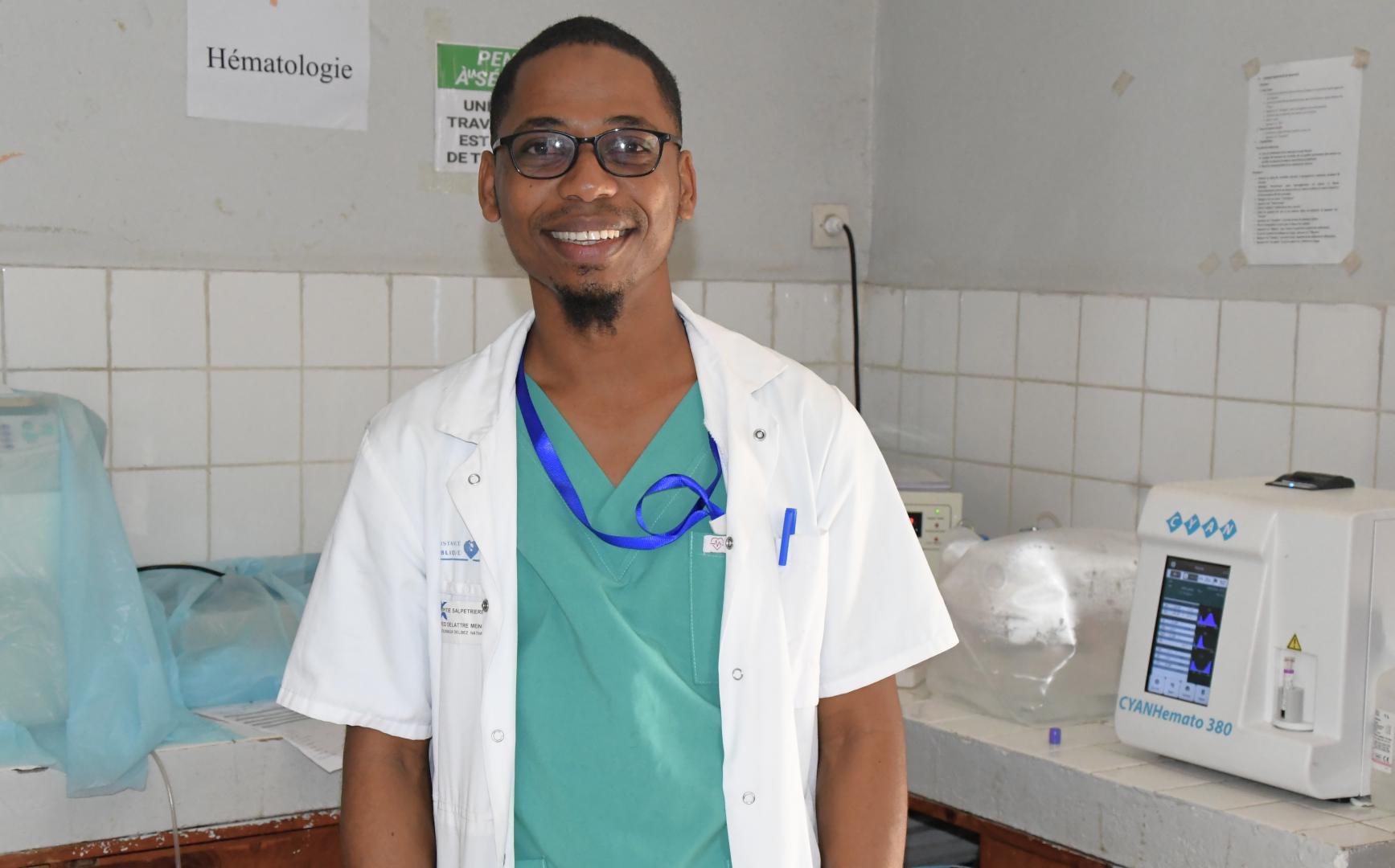
Elhabib Mmadi Ali: Responding quickly, managing stress, saving lives
Mbéni – Elhabib Mmadi Ali has been a state-registered nurse since 2018. After specializing in emergency care in 2019, he joined the Mbéni Medical and Surgical Centre (CMC) in the Hamahamet region of Comoros. One year later, he was appointed head nurse of the general emergency department.
As the first point of entry for many patients, often in critical condition, working in emergency care requires far more than technical skills. The role demands qualities such as self-control, stress management, quick adaptability, strong teamwork, and a deep sense of empathy.
“It is a place where every minute counts and where you can truly make a difference,” he explains, highlighting the importance of rapid and effective care.
In this demanding environment, where every second matters, Elhabib embodies the commitment, composure and professionalism needed to respond to the most critical situations at the Mbéni Medical and Surgical Centre.
Every minute counts when it comes to saving lives
In the emergency department, no two days are ever the same. Among the many memorable incidents, Elhabib recalls a bus accident that brought in several critically injured patients at the same time, including some with open fractures.
“The department was overwhelmed, and the team was under pressure, but everyone remained mobilized to respond to the emergency. We were able to treat most of the injured patients and referred some for more further examinations,” he recalls.
In moments of extreme pressure, teamwork, coordination and solidarity become essential. One team, one shared objective: to ensure that no patient is lost, regardless of the severity of their condition. Saving lives becomes both a duty and a responsibility
Seeing families move from tears to smiles, and sometimes even laughter, after hours of anxiety brings an indescribable sense of relief and eases the pressure instantly. These experiences reflect both the immense responsibility carried by health professionals and the emotional impact of their work.
“Behind every intervention are deeply life changing experiences.”
Communicating to Provide Better Care
In a high-pressure environment, communication is key to ensuring rapid and effective coordination among colleagues.
Communication plays a vital role. It is at the heart of patient care.”
With patients and their families, communication also becomes an essential tool for explaining, reassuring and providing support during often difficult moments.
The ability to listen and provide clear information helps humanize care, even in the most critical situations. In emergency care, treating patients also means being present, attentive and clear.
Managing emergencies with precision
Patient triage is a critical step in emergency care. Cases are prioritized based on severity: children, head injuries, hemorrhages, or any life-threatening situation. This organization helps optimize patients’ chances of survival and ensures that each emergency receives appropriate care.
Working in this department requires essential skills, including mastery of resuscitation procedures, knowledge of clinical protocols, the ability to assess patients rapidly and the capacity to work effectively as a team under pressure. Equally important is the ability to manage stress.
Ali also highlights the role communities can play in helping reduce pressure on emergency services.
“The public can help ease the burden on emergency departments by seeking care as soon as symptoms appear and by understanding that the most critical cases are treated first.”
Between pressure and hope: the meaning of the profession
Despite the challenges, the profession also brings moments of deep fulfilment. Elhabib recalls with emotion the case of a child suffering from severe seizures, likely linked to cerebral malaria, who was saved thanks to rapid and coordinated care. These successes are a reminder of the importance of every action taken.
To cope with the physical and emotional demands of the job, he relies on rest, physical activity and a strong sense of purpose rooted in saving lives. “In every situation, I remind myself of the responsibility we have towards our patients.” This sense of vocation continues to guide his daily commitment.
Beyond his work in the emergency department, Elhabib also collaborates with other hospital units, including the operating theatre, where he assists with surgical procedures, helping strengthen continuity of care for patients.
Communications Officer
Regional Office for Africa
Email: lawsonagbluluf [at] who.int (lawsonagbluluf[at]who[dot]int)
Chargé de communication
OMS/Comores
Email : bena [at] who.int (bena[at]who[dot]int)
Tél : +269 3397565