Overview

E-mail Print

Making Pregnancy Safer Mother and ChildChild and Adolescent Health

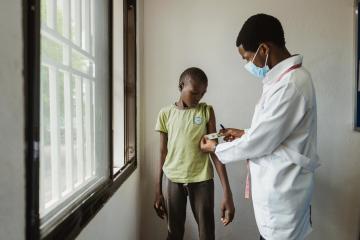
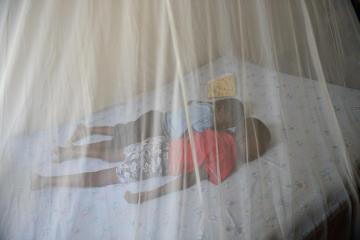
Everyday in the African Region, over 12,000 children aged 0-5 years die from preventable or treatable causes. Six diseases account for over 70% of these deaths. About one quarter of these deaths occur in the first month of life, over two thirds in the first seven days.

The majority of under-five deaths are due to a small number of common, preventable and treatable conditions such as infections, malnutrition and neonatal conditions occurring singly or in combination. In some countries, as many as 80% of those who die are never cared for by health workers and significant numbers of those who seek care succumb as a result of poor quality care. Newborns remain the forgotten children of Africa, with their deaths considered as "normal". Adolescents continue to be victims of HIV, substance abuse, and unprotected sex resulting in teenage pregnancy, unsafe abortion, sexually transmitted diseases and death.

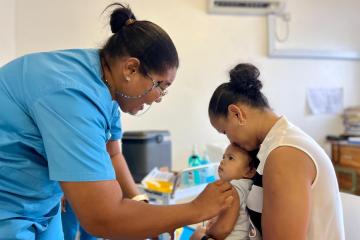
WHO promotes the continuum of care spanning from pregnancy and child birth to childhood. It also ensures that the continuum of care covers the home (through empowering families), the community (through improving primary care facilities and bringing care closer to the home), and referral health facilities.

The past 20 years have witnessed improvements in child survival due to effective public health interventions and better economic and social performance worldwide.

The average decline in under-five mortality experienced globally over the years is mainly attributed to decline in rates in countries with rapid economic development. The African Region needs to increase its average annual mortality reduction rate to 8.2% per annum if Millennium

Development Goal 4 is to be achieved by 2015. A number of affordable recommended interventions have been identified which could prevent 63% of current mortality.

The key to making progress towards attaining the goal by 2015 is reaching every newborn and child in every district with a limited set of priority interventions. New and serious commitments are necessary to prioritize and accelerate child survival efforts and allocate resources within countries.

Priority child survival interventions that will be implemented and scaled up include newborn care with a life-course approach and continuum of care; infant and young child feeding, including micronutrient supplementation and deworming; provision and promotion of maternal and childhood immunization and new vaccines; prevention of mother-to-child transmission of HIV; and using Integrated Management of Childhood Illness to manage common childhood illnesses and care for children exposed to or infected with HIV.

IMCI is one of the key child survival interventions in the African Region. Among the 46 countries in the Region, 44 implemented IMCI by the end of 2005.


Programme Manager

cah-pmDr Phanuel Habimana
Tel.: +4724139407
Mob.: +2425645006
E-mail: This e-mail address is being protected from spambots. You need JavaScript enabled to view it