Key Facts About Tobacco Use
Global Facts
- Tobacco kills up to 50% of its users and reduces life expectancy by about 10 years among smokers.
- More than 7 million deaths each year are caused by tobacco, including 1.6 million deaths due to second-hand smoke exposure.
- Nearly 80% of the world's 1+ billion smokers live in low- and middle-income countries.
In the African Region
- Over 250,000 people die annually from tobacco-related diseases.
- Around 22,000 women die each year from preventable tobacco-related illnesses.
- 13% of adolescent girls use tobacco products. Recent evidence shows increasing tobacco use among girls, with prevalence rates now similar to boys (Girls: 4.6%–36.6%; Boys: 7.8%–36.5%).
- Between 2002 and 2030, tobacco-attributable deaths in LMICs — including African countries — are projected to double.
- Women account for 64% of adult deaths linked to second-hand smoke, largely due to exposure in homes and workplaces.
Status of Tobacco Control in the WHO African Region
- 45 Member States have ratified the WHO Framework Convention on Tobacco Control (WHO FCTC).
- 40 Member States have enacted national tobacco control laws and regulations.
- 22 Member States have ratified the Protocol to Eliminate Illicit Trade in Tobacco Products.
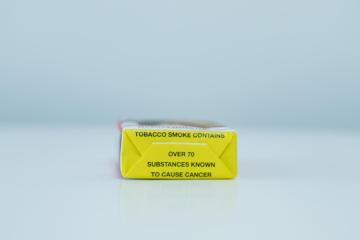
- 20 Member States require pictorial health warnings on tobacco product packaging.
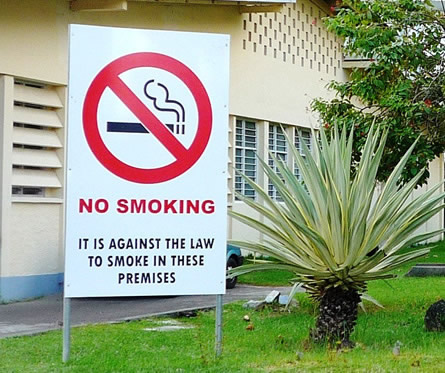 Tobacco control actions aim to substantially and continually reduce the prevalence of tobacco use and exposure to tobacco smoke.The WHO Framework Convention on Tobacco Control (WHO FCTC) lays out different tobacco control measures to be implemented in order to prevent young people from starting to use tobacco, help current tobacco users to quit and protect non-smokers from exposure to second-hand smoke.
Setting implementation goals and developing plans and strategies for the implementation of the Convention in the African Region are imperative. In addition, building the capacity of the Member States in the region for an effective enforcement of the different strategies is crucial.
The following tobacco control strategies are in line with the requirements and guidance in the WHO FCTC:
Raising awareness about the WHO FCTC ratification/accession process and requirements;
Building capacity for the development of national action plan and comprehensive tobacco control policy and legislation reflecting the different provisions of the WHO FCTC such as protection from tobacco smoke, support for cessation programmes, warning about the dangers of tobacco, bans on tobacco advertising and promotion and raising taxes on tobacco products;
Establishing a full-time national coordinating mechanism with a designed national focal point and a national multisectoral steering committee;
Establishing a system for surveillance, monitoring and evaluation of tobacco use, tobacco control policies interventions as well as tobacco industry activities;
Mobilizing resources for national tobacco control programmes with the participation of nongovernmental organizations and the private sector.